Munis see losses out long after CPI report
Munis were narrowly mixed on the short end and in the belly of the curve but saw losses out long Wednesday as longer-term U.S. Treasuries saw gains and equities ended lower.
Processing Content
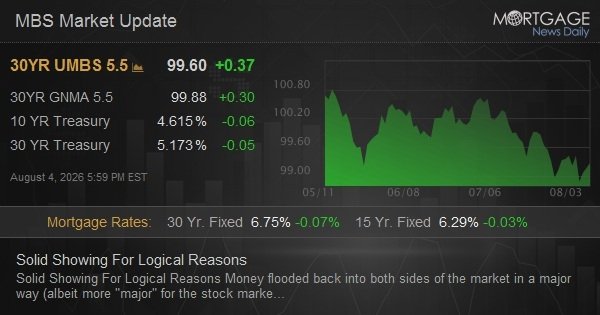
After the consumer price index release, which showed higher-than-expected inflation in the core read, “[Treasury] yields moved higher, with the 10-year Treasury yield returning to its highs for the year,” according to Angelo Kourkafas, senior global strategist, investment strategy at Edward Jones. “The bond market is now pricing in nearly four additional [Federal Reserve] rate hikes through 2027.”
However, after the initial spike around 9 a.m., UST yields fell until 2:30 p.m., when they started rising again.
By 4 p.m., the two-year UST was only slightly weaker, while the rest of the curve richened up to four basis points.
Meanwhile, muni yields were changed up to two basis points 10 years and in, but rose up to five basis points out long, depending on the scale.
The CPI data was a “reality check,” according to James Pruskowski, managing director at Hennion & Walsh. Inflation is not easing, he said, and “the market has good reason to price more hikes sooner.”
“Rates edged higher but did bounce nicely off [Wednesday’s] highs. Tuesday’s memory chip risk-off rally is adding caution heading into third-quarter earnings season,” Pruskowski added. “Valuations remain oversold, but volume was thin, and the midterms are creating hesitation. The silver lining this week is [that] high financing rates are slowing the deal machine and giving munis room to breathe.”
Elsewhere, current yields and valuations present investors with compelling opportunities regardless of risk profile, AllianceBernstein strategists said.
With the Bloomberg Municipal Bond Index offering a “whopping” 4.66% yield to worst (or 7.88% on a taxable-equivalent basis), AllianceBernstein strategists believe investors have “multiple ways to take advantage of the current environment based on their goals and tolerance for volatility.”
Short munis offer a significant yield pickup for the most “conservative investors sitting in cash or short Treasury bills,” while for investors with a higher risk tolerance, intermediate and longer maturities are the “core of the opportunity,” AllianceBernstein strategists said.
“While after-tax spreads are attractive across the curve, they are particularly wide in maturities 10 years and longer,” they said.
Even with Tuesday’s strength, the market is certainly not “out of the woods” yet, but AllianceBernstein strategists expect supply to “taper off” toward November and December.
Patience, though, can be rewarded: “the [Bloomberg] Index fell 5.2% from August through October in 2023, and then returned 8.7% in the two months following,” they said.
Volatility is expected in the near term, but “these dislocations do not last forever, and we continue to recommend investors lean into the down market, with munis looking extremely attractive relative to taxable bonds,” AllianceBernstein strategists said.
CPI data
The consumer price index was slightly hotter than expected at the core, leading analysts to up the chances the Federal Open Market Committee will raise rates when it meets later this month and sending Treasury yields higher.
“Coming into this number, given the recent Fed governors’ dovish commentary, market participants were all but writing off a Fed hike at the Oct. 28th meeting, but now, with a massive short-end of the yield curve sell-off following the number, the odds are up to over 50%,” said John Kerschner, global head of securitized products and portfolio manager at Janus Henderson. And the odds of a Dec. 9 “hike are, for all intents and purposes, 100%.”
He added, “We believe that the Fed has its work cut out for them and one hike, while giving the Fed temporary bona fides as inflation fighters, will not be enough to satiate this unruly bond market.”
While the report “bolsters the case for additional rate hikes,” Jeff Schulze, head investment strategist at Franklin Templeton Institute, said recent dovish Fed-speak suggests “the bar is high for an immediate hike;” therefore, he doesn’t expect an increase this month.
“The steady rise in long yields has increased corporate/consumer borrowing costs and tightened financial conditions alongside the Fed’s move, meaning the bond market has been doing some of the heavy lifting for the Fed,” Schulze said.
Noting the recent “substantial tightening in financial conditions,” Karen Manna, fixed income investment strategist at Federated Hermes, said, “Treasury yields have moved sharply higher this year, with additional increases following the September meeting. Combined with elevated energy prices, those higher market rates are already creating additional restraint for the economy. As a result, policymakers are likely to continue gathering evidence rather than reconsidering policy based on a single report.”
ICI data
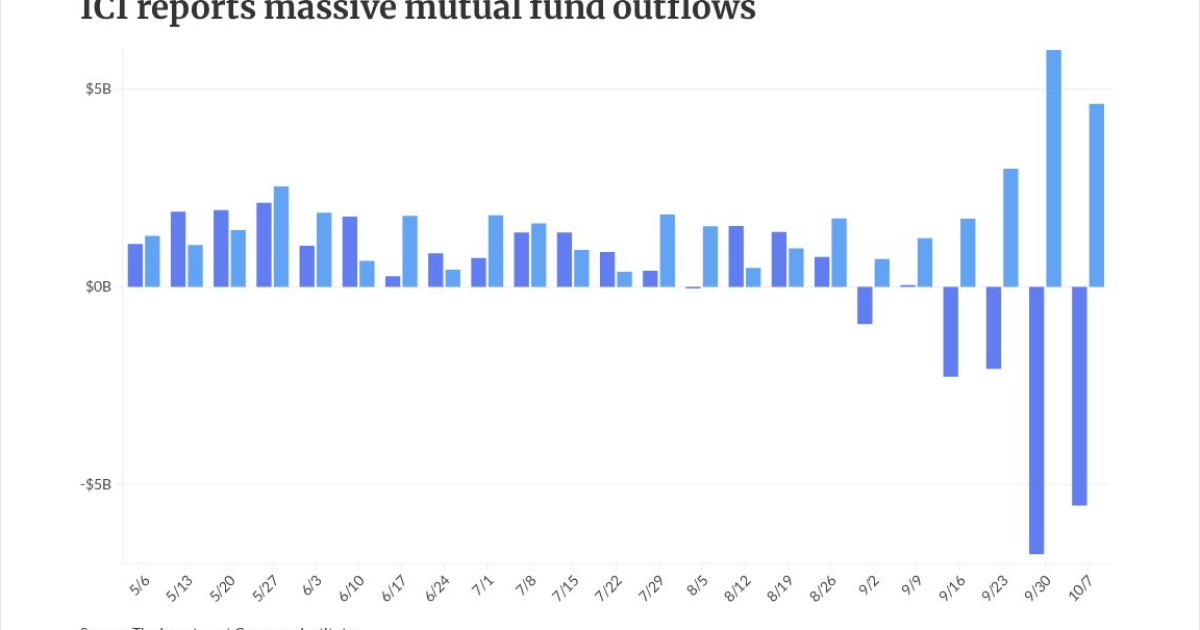
The Investment Company Institute Wednesday reported outflows of $5.536 billion for the week ending Oct. 7, following $6.762 billion of outflows the previous week. This is the fourth straight week that outflows have topped $2 billion.
Exchange-traded funds saw inflows of $4.629 billion after $5.988 billion of inflows the week prior, per ICI data.
New-issue market
In the primary market Wednesday, BofA Securities priced for the New Jersey Economic Development Authority (A1/A/A/) $785.425 million of facilities construction refunding bonds. The first tranche, $636.095 million of 2026 Series TTT, saw 5s of 6/2029 at 3.61%, 5s of 2031 at 3.80% and 5s of 2032 at 3.89%, noncall.
The second tranche, $149.33 million of taxable Series UUU bonds, saw 5.294s of 6/2028 price at par.