
Demographic changes to shrink Canada’s workforce: Bank of Canada
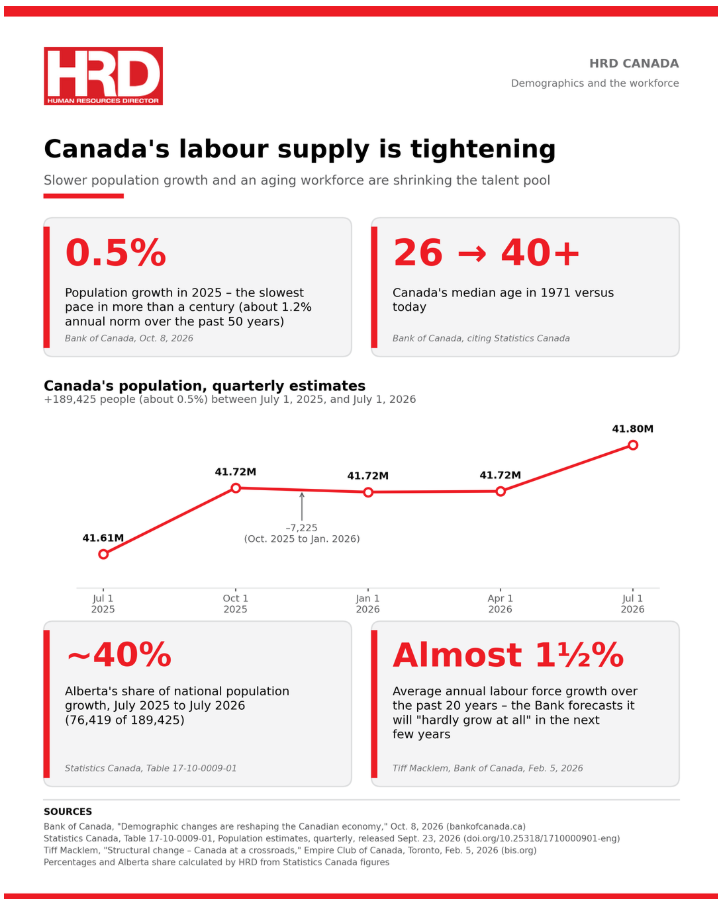
Statistics Canada’s quarterly estimates, released Sept. 23, 2026, show the population rose by 189,425 people, or about 0.5%, between July 1, 2025, and July 1, 2026, to 41,798,407. The population fell by 7,225 between Oct. 1, 2025, and Jan. 1, 2026. Alberta accounted for about 40% of the national increase over the year, while Ontario grew by less than 0.3%.
Under the 2026–2028 Immigration Levels Plan from Immigration, Refugees and Citizenship Canada (IRCC), the target for new temporary worker arrivals is 230,000 in 2026, including 60,000 under the Temporary Foreign Worker (TFW) Program. Ottawa aims to cut the temporary population to less than 5% of the total by the end of 2027, while holding permanent resident admissions at 380,000 a year and transitioning up to 33,000 temporary workers to permanent residency in 2026 and 2027.
The Bank noted that temporary workers often fill jobs in sectors with labour shortages, such as restaurants and agriculture, while highly skilled immigrants bring scarce expertise in fields such as computer engineering.
For employers that relied on these workers, the effects are visible. Some Prince Edward Island businesses are cutting staff hours and extending shifts as federal immigration cuts shrink the labour pool, while those still hiring them face heightened immigration law compliance scrutiny and audits.