₹2 lakh credit card dues vs ₹5 lakh personal loan: Which debt should you repay first? Experts explain
Having ₹2 lakh in credit card dues and a ₹5 lakh personal loan can put pressure on an individual’s monthly budget. However, when deciding which debt to clear first, the outstanding amount alone should not determine your repayment strategy, as applicable interest rate, repayment terms and their influence on your credit score and overall credit profile also matter.
In most cases, clearing high-interest credit card-related dues first can go a long way in helping reduce the overall borrowing burden, provided you also continue to clear your pending personal loan EMIs on time.
The focus of borrowers, therefore, should be on avoiding delays or defaults in such situations to prevent financial complications, psychological stress, and legal ramifications.
Why should clearing credit card dues take priority?
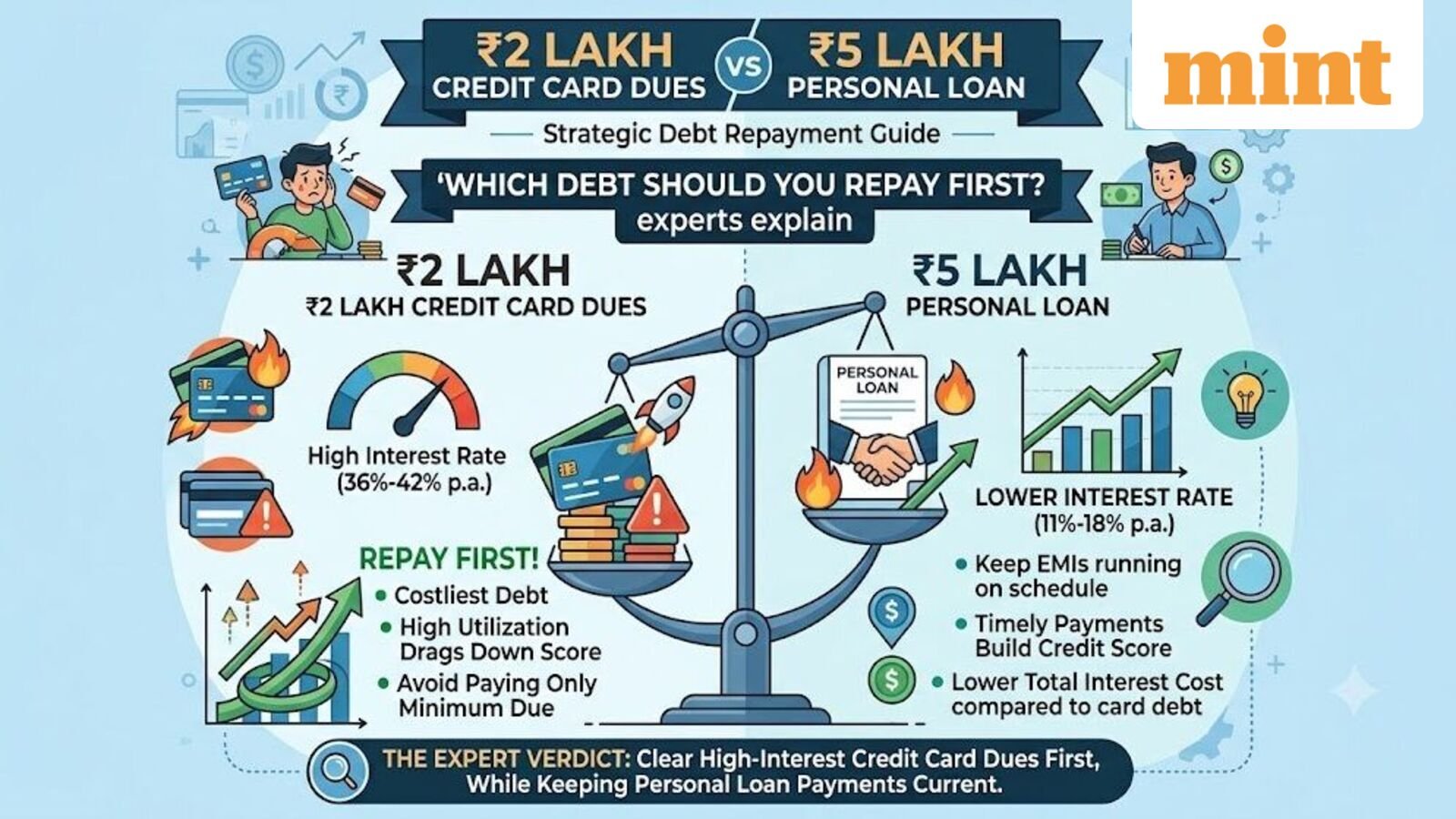
Kapil Makhija, Founder and COO at MinEMI.ai, explains: “We recommend clearing the card first, and treating it as urgent, not optional. Card debt accrues at 36% to 42% per year, compared with 11% to 16% on a personal loan, so a ₹2 lakh card debt costs more than a ₹5 lakh loan despite being smaller. The mistake we see most is paying only the minimum due and believing the job is done.”
He added, “In their mind, the 5% is paid, and they have done their part, while the balance quietly compounds at 40%. So yes, clear the smaller card debt in full first. The score effect is also unequal: a maxed card drags your score through high utilisation every month, while a personal loan paid on time actually builds it. Keep the loan EMI running as scheduled, put every spare rupee into the card, and if the surplus is small, convert the card dues into an EMI at a lower rate instead of revolving.”
Focus should be on interest costs, not just debt size
Raj P Narayanam, Founder & Executive Chairman, Zaggle, said, “The answer lies in the interest rate, not the outstanding amount. A personal loan typically carries 12–18% annual interest, while credit card debt from other issuers can attract higher charges if balances are carried forward. The smarter approach is to prioritise the higher-interest debt while maintaining timely payments on both. At Zaggle, with zagg.money, our credit cards are designed to reward spending, not penalise it. Used responsibly and paid in full, a credit card should never become a debt burden in the first place.”
Borrowers should avoid relying solely on minimum payments, compare lower-cost repayment options and ensure that they direct any additional funds, bonuses or savings towards reducing the costliest outstanding balance. The focus should be on the most expensive form of debt, i.e., the ₹2 lakh credit card debt that can compound quickly. This approach ensures that the overall debt level remains in check and that the individual credit score and credit profile remain sound.
Disclaimer: This article is for general information only and does not constitute financial advice. Borrowers should assess their financial circumstances and loan terms and consult a qualified financial adviser before making repayment decisions.