Brave new world: what cryptocurrency means for investors
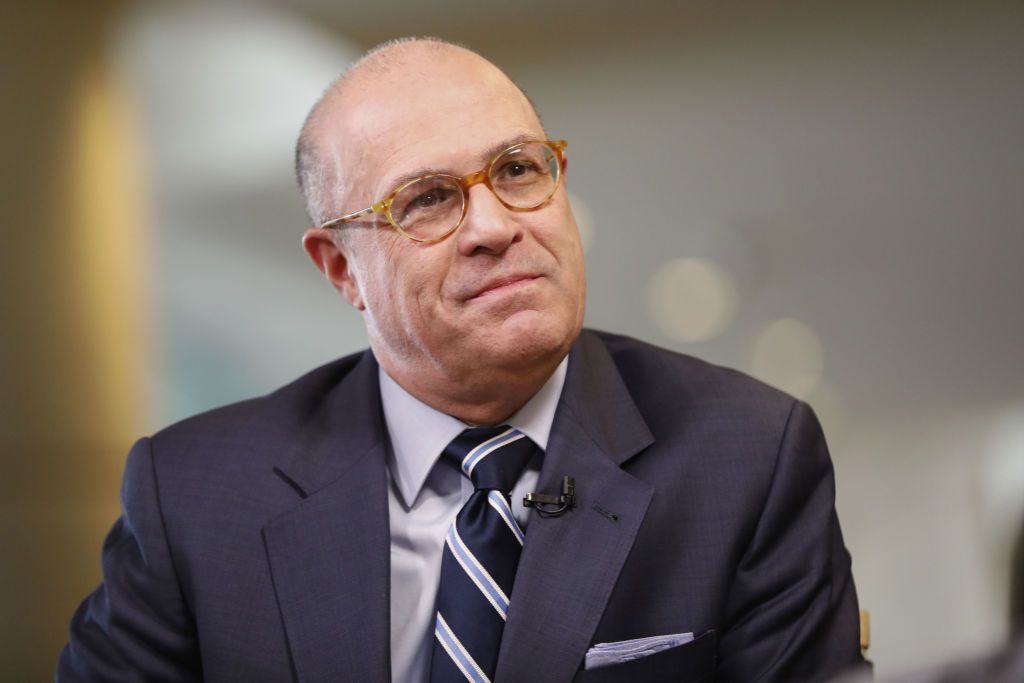
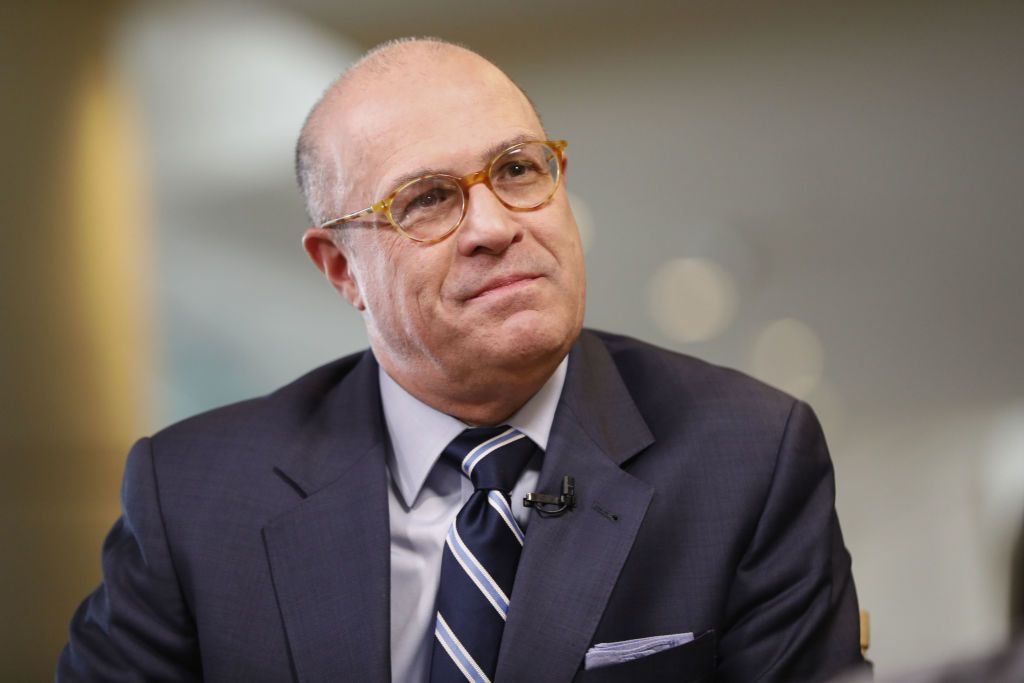
“CryptoDad” J. Christopher Giancarlo is a lawyer who was chairman of the CFTC between 2017 and 2019. He is the author of CryptoDad: The Fight for the Future of Money, and his latest book, The New Adventures of CryptoDad: The Quest for Financial Freedom in the 21st Century, will be out in October.
Matthew Partridge: How did you became known as “CryptoDad”?
J. Christopher Giancarlo: When I first became chairman of the US Commodity Futures Trading Commission (CFTC), I felt that at some stage we would be called upon to make rules for cryptocurrencies, so I worked hard to understand the area, including doing some synthetic bitcoin mining in the chairman’s conference room. Around that time, the Chicago Mercantile Exchange asked us about the listing and trading of crypto derivatives. While we gave it additional regulatory scrutiny, we eventually greenlit the launch of bitcoin futures in the face of furious opposition from Wall Street and global regulators.
Sign up for MoneyWeek’s free twice-daily newsletter.
Join more than 165,000 subscribers and keep yourself informed with latest financial news, insights and expert analysis to help you understand what really matters when it comes to your finances.
Join more than 165,000 subscribers and keep yourself informed with latest financial news, insights and expert analysis to help you understand what really matters when it comes to your finances.
I was therefore summoned to justify our decision in front of a US Senate committee. While I submitted a 60-page briefing document to the committee beforehand, I made a big show of pushing my papers away and telling the committee that I was approaching them as both a regulator and a father. I then explained that I had three college-age students whom I had tried to interest in the stock market. However, all they wanted to talk about was crypto, and I argued that we owed it to this generation to build a sensible regulatory regime so that they are not ripped off.
As a result, I was dubbed “CryptoDad” by the industry. The name stuck; I like it and use it. But what I’m most proud of is that eight years after we gave the go-ahead to bitcoin futures, that market is deep, liquid and, most importantly, well regulated by a competent federal regulator. There has been no market manipulation.
Matthew Partridge: You call Donald Trump the first crypto president. Why?
J. Christopher Giancarlo: Crypto is one example of his administration’s belief that the only way for the US to cope with its debt mountain is through unleashing innovation and securing strong economic growth. So crypto is just one technological innovation, along with nanotechnology, biotechnology, drone technology, rocket technology and AI, that will help the US grow out of its debt load. Trump was also clever enough to recognise that the Biden administration had squandered its political advantage with the crypto generation by suppressing innovation in the field.
Matthew Partridge: Do you think the crypto industry has enough momentum to withstand a possible change in the balance of political power?
J. Christopher Giancarlo: The Trump administration’s message to the crypto community is that if they stand by it, the president will do everything possible to ensure that even if the Republicans lose the White House in two years’ time, the roots of crypto innovation will have become so deep that they can’t be pulled up by the opposition. Whether this will actually happen is another matter. Still, I would say that crypto is no longer a political dividing line between the parties. Data centres and the development of AI are far more contentious.
Matthew Partridge: You talk about property records as being one of the “killer apps” of the crypto revolution. What exactly do you mean by this?
J. Christopher Giancarlo: Property is one of the most analogue financial assets. For one thing, many property records are still stored on physical paper. During the Great Chicago Fire, all the property records were housed in a building that went up in flames and it took decades to figure out who owned what. What’s more, many systems have complicated rules, such as 100-year leaseholds in the United Kingdom. Even in the US, many property buyers have to take out insurance against ownership claims from other people. Establishing ownership of the title can be difficult, especially the further back you go.
Putting all these records on the blockchain [the digital ledger underpinning a cryptocurrency], as my county in New Jersey has done, will greatly reduce ambiguity around ownership, while speeding up the selling process by allowing for easy transfer of titles. It will even allow people to sell fractional shares in property. Most importantly, it will make it much less onerous for people to borrow money against their property, which will be transformational, given that property is one of the biggest assets in most people’s portfolios.
Matthew Partridge: What is the Digital Dollar project?
J. Christopher Giancarlo: When I left government, I believed that eventually every major economy would put its currency on a blockchain-based system and tokenise the instrument [making a digital version of its currency, similar to bitcoin]. I therefore founded the Digital Dollar project to focus on the answers to three questions.
Firstly, how do we future-proof the dollar by putting it on the blockchain? Secondly, how do we do so while retaining, if not enhancing, the dollar’s status as a reserve currency? But the third and perhaps most important mission is to make sure that the dollar is future-proof and put on a blockchain in a way that secures free enterprise, free trade and individual privacy.
This is important, as China’s digital yuan is a digital modernisation, but it’s also meant to be a way to control its population. The European approach to its digital euro doesn’t purport to be an instrument of control, but does seem to be a surveillance tool. Agustin Carstens of the Bank for International Settlements has even talked about using a digital single currency to track every euro. By contrast, I believe that government shouldn’t be able to know what you do with your money unless there is a probability that you’re up to something illegal.
Getting that balance right is crucial, so we founded the Digital Dollar project to work on those three elements – and we’ve now secured continuous funding from our benefactors through 2028. We take no view as to whether that digital modernisation of money should be done by the private sector or the public sector. The Trump administration is clear that this modernisation will take place through private stablecoin operators. [Stablecoins are cryptocurrencies linked to real-world assets such as the US dollar or gold.] Congress has passed the Genius Act, which legalises the modernisation of the dollar through the private sector.
Matthew Partridge: Are there any countries other than the US that are doing interesting things with crypto?
J. Christopher Giancarlo: I think Japan will become a leader in private-sector, non-dollar-based stablecoins. Singapore and the United Arab Emirates have been very innovative in their licensing regimes. However, while Europe has passed the comprehensive Markets in Crypto-Assets Regulation (MICA), this has not unleased the wave of innovation that it hoped it would, and has largely been overlooked by other regulators. I’m also a bit disappointed by the UK, which was ahead of us ten years ago.
Matthew Partridge: What should the UK do to regain its position at the forefront of crypto?
J. Christopher Giancarlo: I would use an Italian word, coraggio, which means courage. I think that since Brexit, for whatever reason, the UK has been unwilling to take risks when it comes to financial innovation. My approach is to let innovation flourish, but make sure the regulator is just one step behind and well equipped with some of the best minds available to help it understand the sector’s innovations.
Matthew Partridge: Bitcoin and crypto generally have become mainstream assets in recent years. Do you think that means the huge price gains we’ve seen in the last decade are much less likely in future? Is crypto likely to begin behaving more like a currency than an investment?
J. Christopher Giancarlo: I think the triple-digit percentage gains we’ve seen are probably a thing of the past. When it comes to a new technology, the outsized gains for investors often come early. So as the asset class matures, the scope for 100%-plus gains dwindles.
The same thing happened with the internet revolution 25 years ago. The big gains for companies such as Cisco Systems and Microsoft were in the early years. And you see that in all new technology revolutions; the biggest gains in the AI companies came about two years ago. That’s why investors are always looking for the next new thing.
Matthew Partridge: What is the latest thing in financial technology (fintech) that could become the next crypto?
J. Christopher Giancarlo: Decentralised financial markets. Markets used to be closed on weekends, so if an event occurred on a Saturday, you couldn’t hedge your position until Monday morning. Well, along comes a decentralised exchange called Hyperliquid, with its own specialised blockchain, and suddenly people are trading within minutes of a Saturday event. Traditional exchanges are now starting to operate 24/7, because the decentralised exchanges have revealed demand on weekends.
The same thing is happening with so-called perpetuals. Futures contracts used to be dated, with the parties settling up at a particular time. But now perpetual futures allow you to hedge a position indefinitely; you just continue to fund the margin. Again, that began in many offshore markets. Decentralised exchanges are forcing traditional markets to up their game.
Matthew Partridge: You’ve said that crypto is a young person’s financial revolution. Do you think it still has a role to play in a low-risk portfolio of someone who is retired, or close to retirement?
J. Christopher Giancarlo: As you age, you move from equities to debt and ultimately cash, and the biggest risk becomes inflation. Since bitcoin is anti-inflationary, with many people seeing it as the equivalent of gold, it certainly has a place in such a portfolio. More broadly, I think the traditional financial system served the second half of the 20th century very well. But times are changing, and the current system has proved slow and expensive. Moreover, crypto is another element of how the internet has changed how we communicate with each other.
What I would say to the older generation is that the new generation, which grew up trading tokens on video games and has never set foot in the bank branch, is going to bring this new system with it, so there’s no going back, and everything of value is ultimately going to be tokenised and put on a blockchain. Instead of fighting the trend, you should learn about it and consider putting some crypto in your portfolio to protect you against the one trend that, unfortunately, doesn’t seem to be reversing: Western governments debasing their money.
This article was first published in MoneyWeek’s magazine. Enjoy exclusive early access to news, opinion and analysis from our team of financial experts with a MoneyWeek subscription.