Credit card overlimit facility: Eligibility, charges and 6 factors to consider before opting in
A sudden medical bill, surgery, or an unexpected expense can push an individual’s credit card spending beyond its approved limit. In such cases, an overlimit facility may help you complete these transactions, but the extra spending can still come at a meaningful cost.
That is why, before opting in, credit cardholders should understand how the facility works, what fees may apply, and how using such a service can affect an individual’s credit profile.
It is vital to keep in mind that, as of October 2026, major Indian financial institutions generally charge a credit card overlimit fee of about 2.5% on the amount exceeding the assigned credit limit, subject to a minimum charge of approximately ₹500- ₹600, along with applicable GST. This fee may vary by banking institution and credit card variant.
For example, SBI Card sets a minimum fee of ₹600 for credit card overlimit charges, whereas HDFC Bank, Axis Bank and ICICI Bank specify a minimum of ₹550, ₹500 and ₹500, respectively.
That is why credit cardholders should check their respective banks’ latest terms, eligibility requirements (if any) and associated conditions and refer to their official websites for complete details before availing of this facility.
What is a credit card overlimit facility?
To put it simply, a credit card overlimit facility permits a credit card holder to spend money beyond their assigned credit limit. This spending is permitted subject to the issuer’s terms, approval and conditions. For example, if your credit limit is ₹1 lakh, the facility may permit an eligible transaction that might take your total outstanding balance beyond this amount.
Still, it is essential to keep in mind that this facility is not ‘automatic’ and the issuer might also decline transactions or impose fines for exceeding the limit, as per their predetermined policies in such cases. This calls for a conceptual understanding of the credit card overlimit facility so that this facility can be utilised meaningfully to the advantage of a credit card holder.
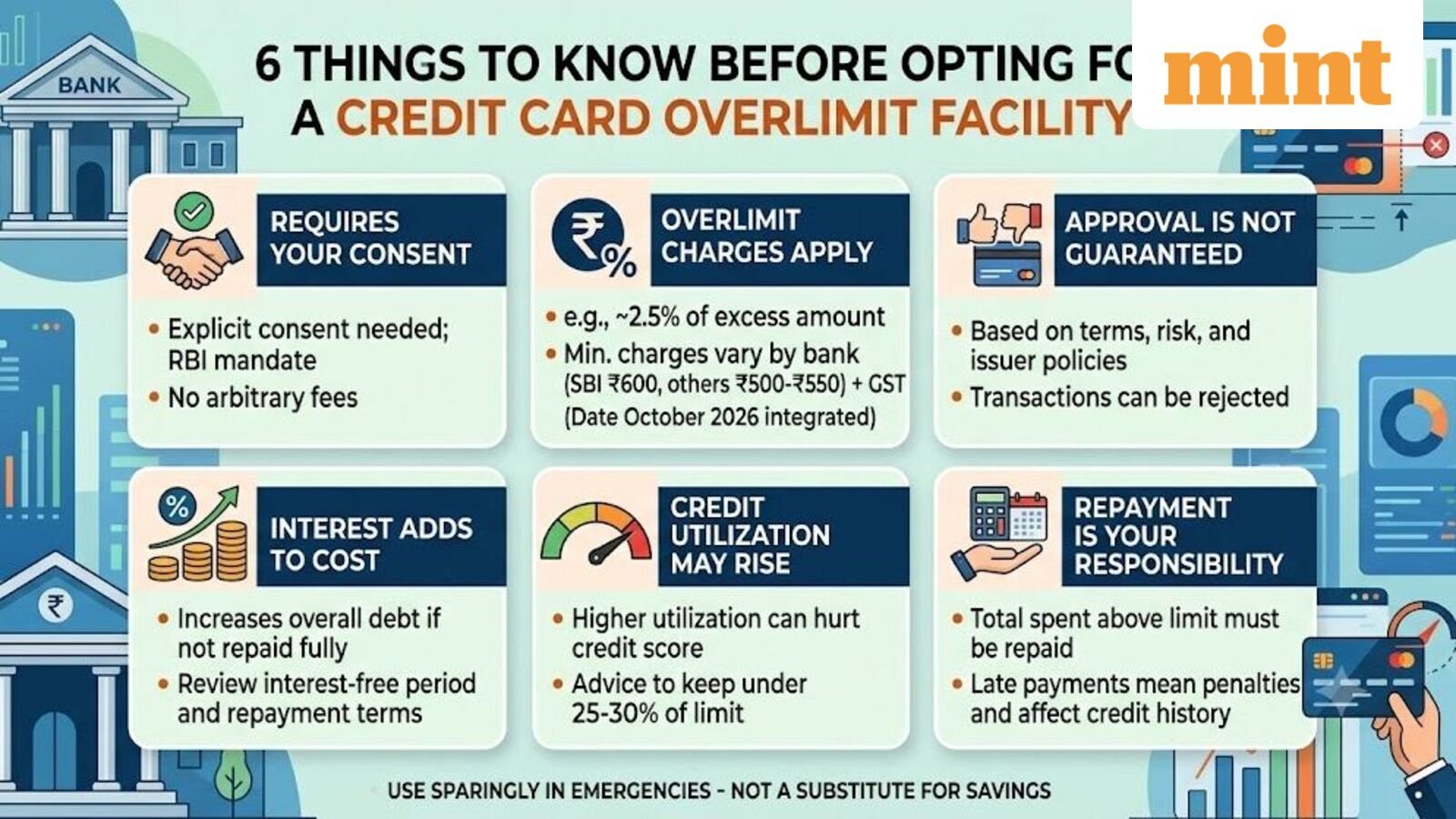
6 factors you should know before opting for it
1. It requires your consent
As per the Reserve Bank of India (RBI) rules, all card issuers are mandated to obtain clear and explicit consent from the respective credit card holder before extending an overlimit facility. In case the user opts out of this consent, such a facility cannot be extended to them. No fee can be imposed arbitrarily by the credit card issuing institution if the credit card holder did not voluntarily opt for this facility.
2. Overlimit charges may apply
If an individual explicitly opts for this service, the terms and conditions of the respective credit card institution will apply. In such cases, banks may levy fees when an individual’s outstanding balance exceeds the approved limit, depending primarily on their terms and applicable regulations. To gain complete clarity on this, credit card users should check the latest applicable fees, speak to the customer service team if they have doubts, and check whether charges apply only to the excess amount or on another specified basis.
3. Approval is not guaranteed
This is yet another vital aspect that requires due consideration. This means that opting in alone does not guarantee that every transaction above an individual’s credit card limit will be approved. Based on the terms, conditions, risk assessment and policies, the credit card issuing institution might still reject or withhold a transaction.
4. Interest can add to your cost
If you opt for the service, utilise funds, and do not repay the outstanding amount in full, this may increase your overall debt. To avoid late surprises, you should carefully review your credit cards’ interest-free period rules and repayment terms, rather than simply ignoring these aspects and treating the facility as ‘extra income’. In case of doubts, it is wise to first speak to the designated customer service team so that the facility is availed only after a complete understanding.
5. Your credit utilisation may rise
When you spend beyond your credit card limit, it can increase your credit utilisation ratio. Such a development can adversely affect your credit score. To put it simply, if your total credit limit is ₹1 lakh, as a general guideline, you should keep your credit utilisation ratio to about 25-30% of this limit, i.e., ₹25,000 to ₹30,000. This is because higher utilisation can signal greater dependence on borrowed funds, particularly if it persists.
6. Repayment remains your responsibility
Finally, the total amount spent above your credit limit must also be repaid in accordance with the stipulations and regulations. Missing the repayment deadline, even delaying it by one day, can result in serious consequences, such as late-payment penalties, and can also decisively alter an individual’s credit history.
In summary, a credit card overlimit facility can definitely provide flexibility to individual credit card holders during emergencies. Still, it should not be looked at as a substitute for adequate savings or careful budgeting.
One should consider opting into this service only after acknowledging and understanding the associated charges, interest costs, possible penalties, and long-term ramifications. Using it sparingly to avoid unnecessary debt is a wise way to handle this facility.
Disclaimer: Charges and terms may vary by bank and credit card variant. Check your card issuer’s latest terms and conditions before opting for an overlimit facility. If in doubt, seek guidance from a qualified financial expert before proceeding.