The Marines Are Getting a New Combat Ration: Here’s What’s on the Menu
Marines are deploying with a new combat ration — that is, stuff to eat — built for the first days of war
After entering service last year, the Close Combat Assault Ration, or C-CAR, is now deploying with frontline Marine units.
The new ration condenses what would normally be three Meal, Ready-to-Eat packets into a single daily package, reducing the weight troops carry to free space for ammunition, batteries, and other mission-essential gear.
The Defense Logistics Agency, which manages and develops the rations, told Business Insider that the C-CAR is intended for use during the first 72 hours of a conflict, when troops need a lighter, less bulky alternative to traditional MREs.
Carrying less food gives Marines more room. It reduces the need for risky resupply missions during the first few days of a conflict, Capt. Matt Burdick, a logistics officer with the 13th Marine Expeditionary Unit, told Business Insider.
US Army
The 13th MEU recently deployed to the Middle East with the new rations after they entered service last year. Business Insider spent three days on the USS Makin Island with the 13th MEU off the coast of California this summer as they prepared for their deployment.
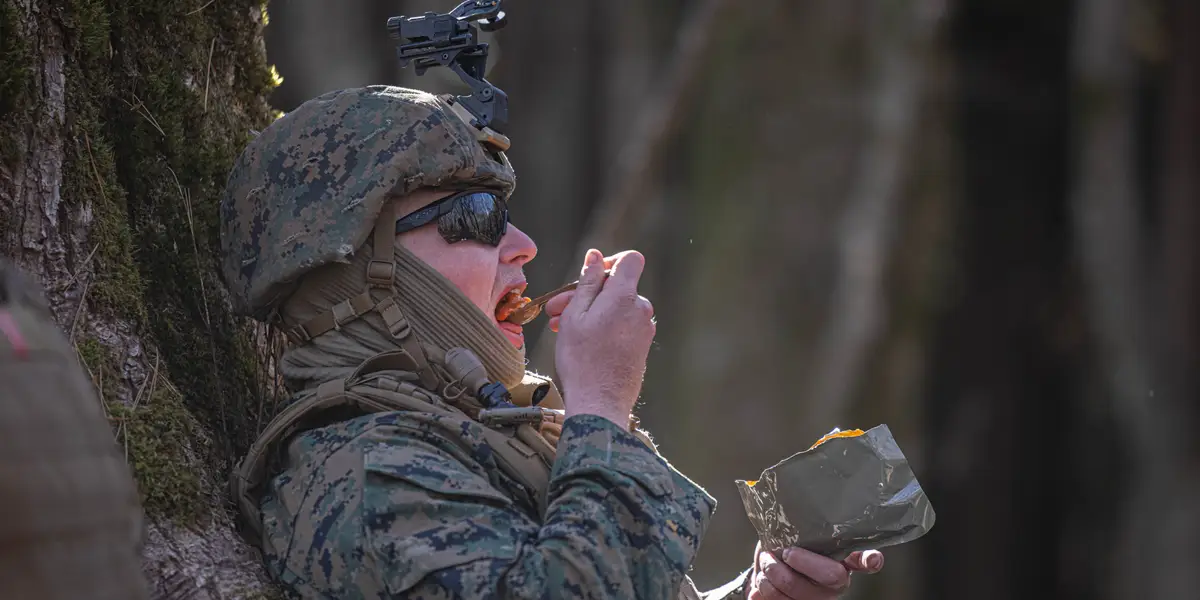
Unlike traditional MREs, which are designed to be heated and eaten during longer pauses, C-CARs are built for troops on the move, Burdick said. Meals come in squeeze pouches that can be eaten without heating or utensils, eliminating the need for water to prepare them (though most service members rarely heat MREs).
There are just three menu options— spaghetti, chicken burrito bowl, and beef stew.
Troops have frequently stripped MREs ahead of training, throwing away unwanted extras or heavier food packets to pack more compactly and carry less weight. The C-CAR, Burdick said, arrives in a more bare-bones fashion.
Katie Lange/Defense Department
Burdick said his unit first encountered the rations during an exercise last year— because each of the nearly 300 Marines he was responsible for feeding carried enough food from the outset, logisticians conducted fewer resupply missions, reducing both the supply burden and its signature in the field, he explained.
The new ration won’t replace the MRE, which Burdick said is designed to be distributed at scale and for longer-term operations, though it does replace the older “First Strike Ration,” which was also meant to provide troops more food in a smaller package.
The rations remain in the early stages of fielding, Burdick said, with Marines using them alongside traditional MREs as the Corps gathers feedback from units to guide future ration development.