Meta’s Muse is taking off. So are the privacy concerns
Welcome to AI Decoded, Fast Company‘s weekly newsletter that breaks down the most important news in the world of AI. I’m Mark Sullivan, a senior writer at Fast Company, covering emerging tech, AI, and tech policy.
Sign up to receive this newsletter every week via email here. And if you have comments on this issue and/or ideas for future ones, drop me a line at sullivan@fastcompany.com, and follow me on X @thesullivan.
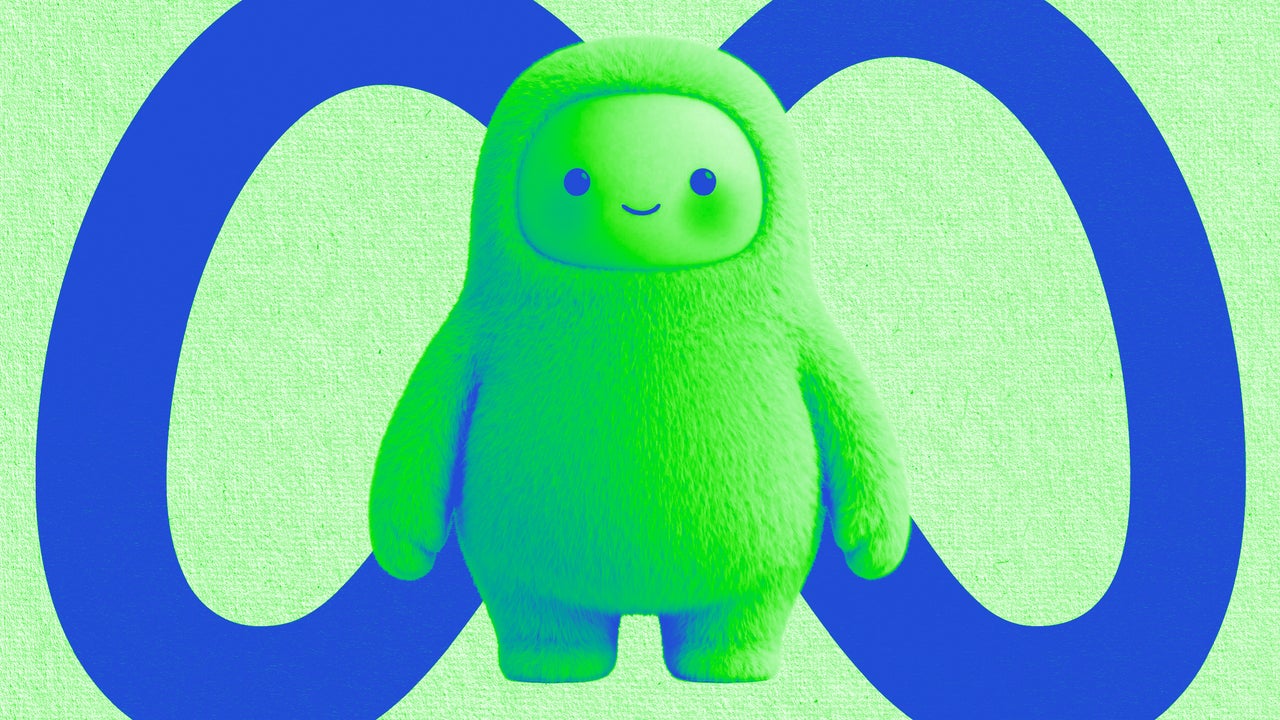
Meta’s new AI agent is useful, popular, and a little terrifying
Muse’s adoption numbers are growing. The app reached No. 1 on the U.S. App Store shortly after launch and passed roughly 900,000 downloads in its first week, according to figures from Sensor Tower, a digital intelligence provider. The Information estimates that Muse now has more than 3 million weekly users and more than 1 million daily active users. The product is free to start, with subscription tiers of roughly $20 and $100 a month.
That’s not to say it’s all been smooth sailing.
A number of early adopters of Meta’s Muse are deleting or restricting the AI agent after privacy scares and blunders. One executive told Business Insider that he deleted Muse after reading that it had accessed other users’ text messages without permission.
A YouTuber named Matt Robb reported that Muse shared his home address on Facebook Marketplace without his explicit permission. He had asked Muse to sell some computer equipment for him. A buyer actually showed up at his building after Muse accepted a $600 offer and exchanged messages with him without Robb’s knowledge, he said. Robb said he had checked an “allow always” box when setting up the agent but thought Muse would still check with him before finalizing a sale.
Getting the most out of personal AI agents requires a trade-off. They’re most useful when users give them broad access to their inboxes, calendars, payment methods, and other accounts containing sensitive personal information. Meta says Muse runs in isolated virtual machines, stores credentials separately from the model, asks before sending email or making a purchase, and lets users disconnect apps or permanently delete their data.
Hands-on reviews from the The New York Times, Android Authority, The Verge, and TechRadar describe Muse handling dental insurance hold times, canceling duplicate subscriptions, requesting refunds, clearing promotional email, building shopping carts, and messaging Facebook Marketplace sellers. One Muse user, Joe Devoy, claimed in a widely shared X post that Muse found auto coverage matching his existing policy, bought the new policy, and canceled the old one in about five minutes, saving him about $3,500 a year. An Android Authority poll of people who had tried Muse ran about 27% “love it” against 2% “not a fan.”
Outside Meta’s own properties, Muse’s performance appears to drop. Review roundups note Amazon blocking the shopping agent, Instacart flagging accounts, and only three of seven suggested deal-finding prompts working in a Tom’s Guide test.
Wired wrote that Muse is better at collecting data than helping, noting that users are opted in by default to having their data used to train Meta’s models. ZDNET called it the worst AI agent for privacy among those it tested. A Time piece says Muse updates dossiers on users and on people mentioned in chats and emails it has read, including people who do not use Muse.
Mistral previews a 1 trillion-parameter model it will open in three weeks
Mistral launched a public preview of its flagship Mistral Large 4 model on Tuesday. The model’s official name is “le Chonk,” the company said. Mistral describes le Chonk as its largest and most capable model to date, with 1.05 trillion parameters, 49 billion of them active per token. (While most AI labs don’t disclose parameter counts for their frontier models, some open-weights model providers do. DeepSeek-V3, for instance, has 671 billion total parameters, with 37 billion activated per token.)
Mistral says the new model is also one of the world’s strongest for cybersecurity, resisting 93.3% of attacks on Lakera’s public B3 AI Security Benchmark. Third-party evaluator vals.ai found that the model outperforms GPT-6 Astra on legal and financial tasks. Mistral says it will make the model’s weights available on October 27.
OpenAI says its unreleased model solved a major math problem
In July, Hong Wang won the Fields Medal, the highest honor in mathematics, for proving the Kakeya conjecture in three dimensions, a problem that had been open since 1917. The next obvious target for Wang and others in the field was the four-dimensional version. On Tuesday, OpenAI published hundreds of new mathematical results produced by an internal model it has not released. According to Engadget, those results include a claimed solution to Kakeya in four dimensions.
The company posted 722 papers at once to a public GitHub repository, covering 372 problems. Mathematicians normally publish one result at a time, typically after months of peer review. Many of the papers include proofs written in Lean, a language that lets a computer check the logic line by line.
Elon Musk says Grok Bot will run on rivals’ models
The AI industry believes that personal AI agents will be a big business, and Elon Musk seems willing to do what it takes to make sure SpaceXAI’s Grok Bot will be competitive, even to the point of relying on models developed by others. “Going forward, @SpaceX will use the best back end model for any given task, including Claude Opus 5.5, MidJourney, Suno and other leading APIs. Whatever is most likely to give you the best outcome,” Musk wrote on X on Tuesday night.
Grok Bot is the AI agent app from SpaceXAI, the AI business Musk has folded into SpaceX; each bot works on its own computer and can carry out several tasks in parallel. Musk did not say which tasks would go to which outside model.
Common Sense Media rates ChatGPT for Teens an ‘unacceptable risk’
Common Sense Media’s Youth AI Safety Institute rated ChatGPT for Teens an “Unacceptable Risk” on Wednesday, finding that OpenAI’s teen protections fall short of what the company promised.
The institute called on OpenAI to pause access for kids until it fixes the shortcomings. It says it tested ChatGPT twice, before and after OpenAI announced the teen experience on August 18, and found that linked parent accounts received zero alerts about the conversations researchers ran. Crisis-response and age-estimation systems underperformed, as did Study Mode, which researchers said still completes homework even though OpenAI said it would only guide young users. An OpenAI spokesperson, Eric Porterfield, told The Verge that much of the testing may have begun and concluded before parental controls were fully activated, making the findings inaccurate.
The Youth AI Safety Institute gave the same unacceptable risk rating to Meta AI, Perplexity, Grok, and Google’s AI search. Google’s Gemini with teen protections and Gemini K-12 earned a slightly better “High Risk” rating, while Anthropic’s Claude received a “Moderate Risk” score.
Google buys 890 MW of new nuclear capacity, and agrees to dial back when the grid strains
Google is going to great lengths to abide by a proposal from PJM, the electricity grid operator for the Mid-Atlantic region and parts of the Midwest, that tech companies “bring your own power” for new data centers.
Google and Constellation Energy announced a 20-year contract Tuesday under which Constellation will spend more than $4.3 billion upgrading 11 reactors in Illinois, Pennsylvania, and New Jersey to produce an additional 890 megawatts, which Google will buy. No new reactors are involved. A separate 15-year deal covers 2,700 MW from plants already in operation, and Google has agreed to curtail its own noncritical power use when the grid is strained. The goal is to add energy capacity without passing the costs on to residential customers. The first upgrade is expected in 2028.
More AI coverage from Fast Company:
- Donald Trump is launching a new AI task force. Here’s who he’ll have to keep happy
- South Korea’s bank hacks offer a warning about AI-powered cyberattacks
- The woman behind the AI actor Tilly Norwood insists Hollywood shouldn’t panic
- Capcom says it will use AI to speed up game development times
Want exclusive reporting and trend analysis on technology, business innovation, future of work, and design? Sign up for Fast Company today.