EMIs set to rise as RBI begins rate-hike cycle with 25 bps increase | Banking
Equated monthly instalments (EMIs) for retail and small business loans will rise after the six-member rate-setting panel of the Reserve Bank of India (RBI) unanimously voted on Wednesday to raise the policy repo rate by 25 basis points (bps) to 5.5 per cent, in line with expectations.
The surprise was the change in the policy stance to “calibrated tightening” from neutral. Four members backed the change, while external members Ram Singh and Nagesh Kumar favoured retaining the neutral stance. The Monetary Policy Committee (MPC) votes on the rate decision, while only views are expressed on the stance.
Retail loans — including home and auto loans and lending to the micro, small, and medium enterprises (MSME) sector — are linked to external benchmarks, most commonly the repo rate, and will therefore become more expensive immediately. Banks’ retail deposit rates are also expected to rise, although with a lag.
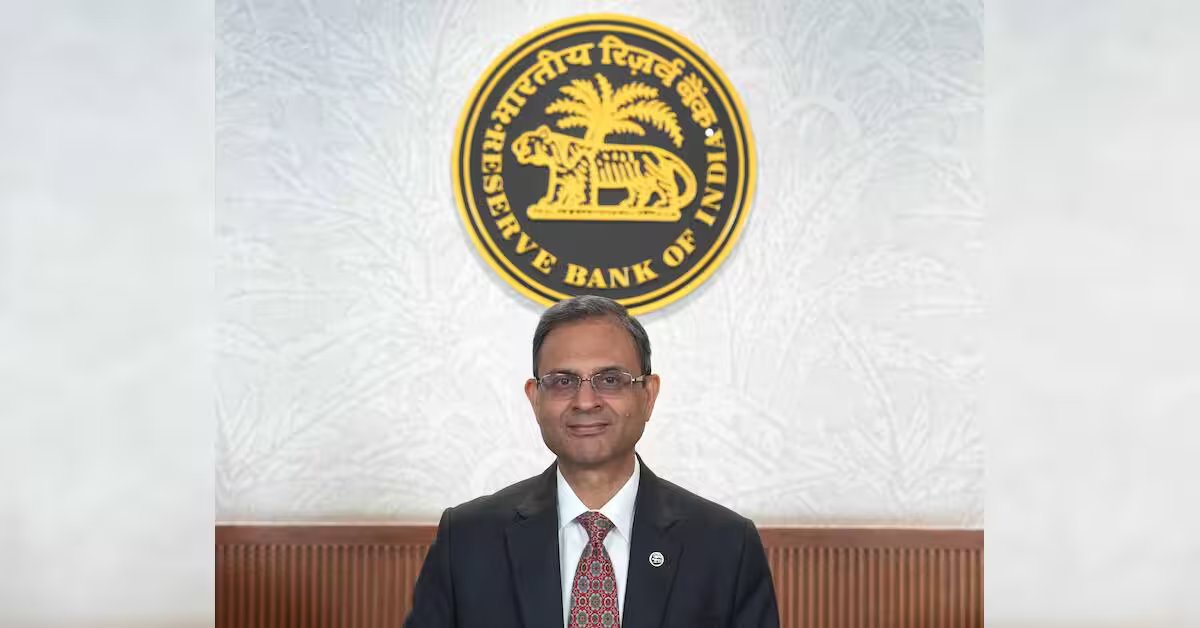
The policy tone was hawkish, with RBI Governor Sanjay Malhotra categorically stating that “rate cuts are off the table in the near term, and policy action ahead can only be a rate hike or a pause, depending on the evolving conditions and
the outlook”.
Inflation and its outlook, he said, were no longer as benign as they had been last year.
Headline consumer price inflation is expected to average almost 5.8 per cent over the next three quarters, while core inflation is projected at 4.4 per cent for the current financial year. The FY27 inflation forecast was raised to 5.2 per cent from 5 per cent projected in August.
“In this milieu, recalibrating the policy rate is imperative,” Malhotra said, explaining the rationale for the decision.
Wednesday’s increase was the RBI’s first rate hike since February 2023 and the first under Malhotra, who took over as the central bank’s 26th Governor in December 2024.
Malhotra said calibrated tightening should imply milder or more measured increases, with the MPC remaining data-dependent and without a pre-determined terminal rate.
The RBI said the near-term inflation outlook pointed to continued supply-side pressures from a deficient monsoon, ongoing El Niño conditions and high energy and other commodity prices, with the pass-through of those costs still continuing. While there was limited evidence of demand-side pressures, the central bank flagged risks from strong growth in monetary and credit aggregates.
Importantly, Malhotra indicated that headline inflation would not be the sole consideration.
In a note, Barclays said: “Even as headline (and core) inflation forecast for FY27 and Q1FY28 have been revised up, the Governor’s statement says that it is difficult to identify what part of the increase is coming from supply-side pressures, or indirect and second-round effects, suggests to us that though headline CPI (Consumer Price Index) inflation continues to be the MPC’s target, it doesn’t work alone.”
The MPC would also assess the trajectory of core CPI, diffusion indices and base effects in determining the underlying inflationary pressure.
The hawkish commentary has prompted economists to raise their expectations for the terminal rate of the cycle.
“Given the MPC’s clear focus on containing second-round inflation effects, we now add two more 25 bps hikes to our baseline. We expect a further 25 bps hike at each of the February and April meetings, following a 25 bps hike to 5.75 per cent in December, taking the terminal repo rate to 6.25 per cent by end-April 2027; we had previously expected the MPC to hold rates at 5.75 per cent after December,” Standard Chartered economists said in a note.
Following real gross domestic product (GDP) growth of 7.8 per cent in the first quarter, the MPC raised its FY27 growth forecast to 7.1 per cent from 6.7 per cent projected in August.
On liquidity, the larger-than-expected foreign currency non-resident (bank) inflows have resulted in a substantial surplus. The RBI, however, believes this is unlikely to persist beyond the current financial year.
Malhotra said the RBI would use an appropriate mix of liquidity-management tools and seek to align the weighted average call rate (WACR) with the policy repo rate.
The rate increase puts the RBI alongside major global central banks including the US Federal Reserve, Bank of Japan and European Central Bank in tightening policy. Malhotra said that while the rate decision would be driven by domestic growth and inflation dynamics, the RBI could not overlook global policy tightening.
The next meeting of the MPC is scheduled for December 2-4, 2026.