Checking your own credit report? Know why it won’t hurt your credit score
Your credit report is like your financial report card. Checking it regularly is a critical part of managing your finances. Still, some people hesitate to access their own credit reports due to misconceptions, believing that doing so can lower their credit score and even harm their overall credit report. This is a common misconception that should be addressed appropriately to spread meaningful credit management information.
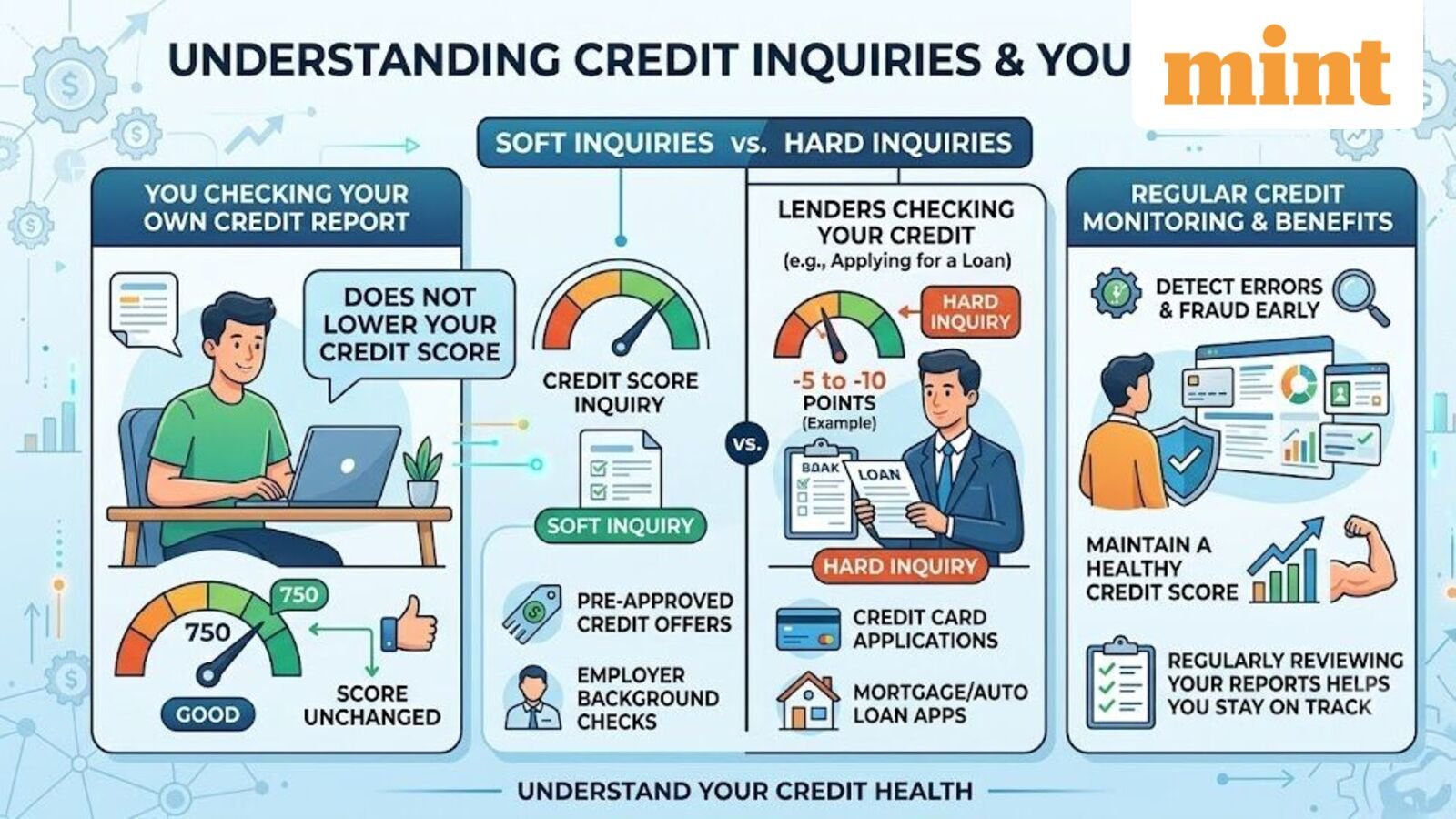
The core difference between a ‘soft inquiry’, which generally does not impact an individual’s credit score, and a ‘hard inquiry’, which can have a meaningful impact when a lending institution checks an individual’s credit history as part of a loan or credit application, should be clearly acknowledged.
Self-checks are different from lender enquiries
When an individual checks their own credit report, the inquiry is considered a soft check. It does not lower the individual’s credit score, permitting them to review their own borrowing history and credit profile without worrying about damaging their credit profile or long-term borrowing potential.
Raj P Narayanam, Executive Chairman, Zaggle, explained this in detail, discussing how this is a very healthy practice in personal finance. “Checking your own credit report is a soft inquiry; it has zero impact on your credit score. A lender pulling your report is a hard inquiry, which can shave a few points off your score. The distinction matters because many consumers avoid checking their own report, fearing it will hurt them; it won’t. In fact, regular self-checks are one of the most underutilised habits in personal finance. They help you catch errors, detect fraud and understand exactly where you stand before applying for credit. Check freely and check often.”
Therefore, it is clear that a regular review of your credit profile is not only a healthy habit. It can also assist an individual in identifying incorrect personal details, unfamiliar credit accounts or loans marked in their name, reporting errors or other discrepancies. Spotting such issues early can give an individual a fair opportunity to raise a legitimate dispute and seek remedial action to preserve their credit history, credit score, and future borrowing potential.
Why hard inquiries can affect your credit score
Now, a hard check on your credit profile, also known as a ‘hard inquiry’, generally occurs when you apply for fresh debt or credit. This is because the lending institutions check your credit report to analyse your repayment history and creditworthiness. When multiple hard checks are conducted on a profile within a short span of time, it may signal that an individual is ‘credit hungry’ and is actively seeking fresh loans. This can cast an individual borrower in a negative light and adversely impact their credit score.
This also does not mean that aspiring borrowers should completely avoid applying for fresh loans or credit. Instead, it highlights the need for proper planning before applying and for knowing how to distinguish between checking your own creditworthiness and making multiple credit applications.
Checking one’s own credit report is a credit-monitoring habit; it is not a credit-risk event. Staying disciplined and focused, and reviewing it periodically, can help an individual detect errors or potential fraud.
This also prompts borrowers to acknowledge their financial standing and prepare diligently before submitting new loan or credit card applications. Therefore, it is wise to check one’s own credit report regularly rather than avoiding it out of fear that the check will eventually hurt one’s score.
Disclaimer: This article is for informational purposes only. Credit-score impact may vary based on the credit bureau, lender and individual circumstances. Check the applicable terms and seek professional guidance before making credit decisions.