Is credit card ‘minimum due’ amount the biggest trap? Here’s why paying less now can cost you more later | Explained
Credit cards offer a convenient way to manage purchases or unexpected expenses without an immediate cash outflow. A big benefit is that you can effectively borrow money without paying any extra interest, as long as you repay the entire outstanding amount by the payment due date.
The period between a card transaction and the payment due date is referred to as the interest-free period. When used correctly, it helps you defer payments.
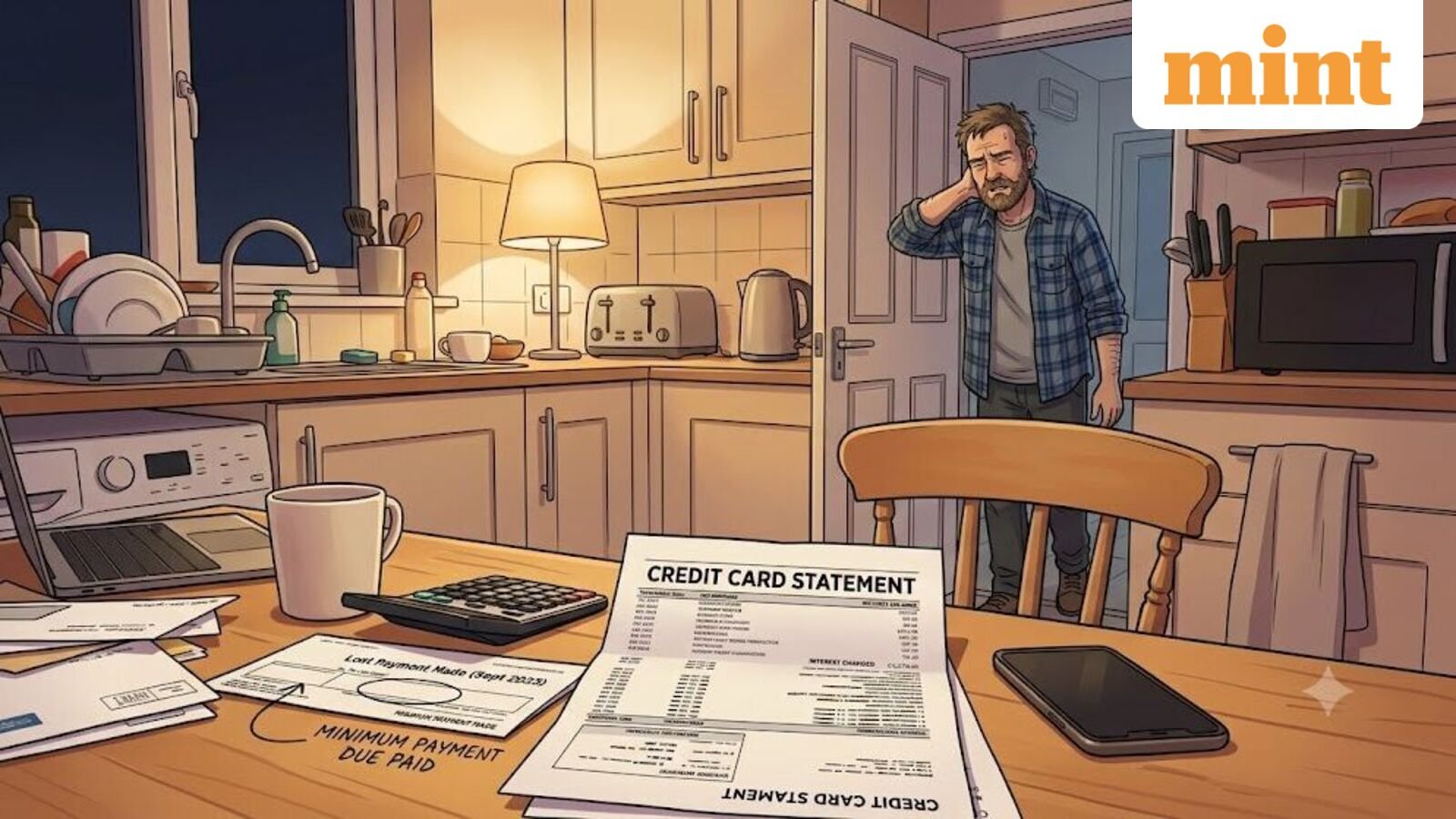
However, this benefit can be misunderstood. Many users assume that they can avoid interest by only paying the minimum amount due, which refers to the smallest payment your bank requires you to make each month on your credit card bill to keep your account active and avoid late fees.
How is minimum amount due calculated
This minimum amount due of a credit card bill usually can range anywhere between 5% to 10% of the total outstanding amount, including any accrued interest, fees, or new charges, as per a blog post by HDFC Bank.
Your credit card statement lists both the total amount due for the billing cycle and the minimum amount due. The exact percentage vary based on the kind of credit card you have and the policies of the issuer of your credit card.
For example, if the credit card balance is ₹30,000 and the minimum amount payable is 5% of the total amount payable, then the minimum amount payable would be ₹1,500 that is ₹30,000 x 0.05.
In this case, ₹1,500 would be the minimum amount payable for the billing cycle.
Why paying minimum amount due is not enough
While paying the minimum amount due on time can prevent the account from becoming overdue, the remaining balance is carried forward to the next cycle and start attracting interest. At the same time, you will also lose the interest-free period on fresh borrowings.
Let’s get back to the ₹30,000 balance and 5% minimum amount payable example. If you pay only ₹1,500, the remaining balance of ₹28,500 will be carried forward to the next monthly bill cycle.
The card issuer can charge interest on the unpaid balance, as per the card’s applicable interest rate and calculation method. Many credit cards charge monthly interest rates of around 3% to 4%, which translates to roughly 36% to 48% a year on a simple annualised basis, Livemint reported earlier. This makes carrying a credit-card balance extremely costly.
However, the user may still get their interest-free period back if they meet certain conditions. In case you no longer have access of the interest-free period benefit from a billing cycle, it is advised to keep paying the entire amount due in full for several months continuously. Once you make full and timely payments, the credit card provider will most likely reactivate the interest-free period.
Other consequences of just paying MAD
Paying only the minimum amount due does not, by itself, automatically hurt your credit score if you pay it on time each month.
However, repeatedly carrying a large due can push up your credit utilisation ratio, which refers to the proportion of your available credit that you are using. A consistently high utilisation ratio can negatively affect your credit profile and may make it harder to get loans or credit on favourable terms.
Such a practice also sends a message to credit bureaus, that you might be struggling with repayments or not managing your spending well. While it helps you avoid late fees and keeps your account from being labelled “default,” it is not seen as a strong financial habit, according to a report by Crif High Mark.
When you make payment of minimum dues for your credit card a regular habit, you may also end up in a debt trap. It is a situation where the pending debt amount goes so high that it becomes difficult for a borrower to repay it with time, prompting them to get another loan to settle the credit cards payments.
This cycle can keep repeating if you don’t have enough money to clear your credit card bills. Hence, borrowing again to pay off another loan or bill is not a solution.