Landlords are Slicing Up New York’s Former Banks, Pharmacies
About ten years ago, it seemed like the entire ground floor of Manhattan was on its way to becoming a bank. Or maybe a drugstore.
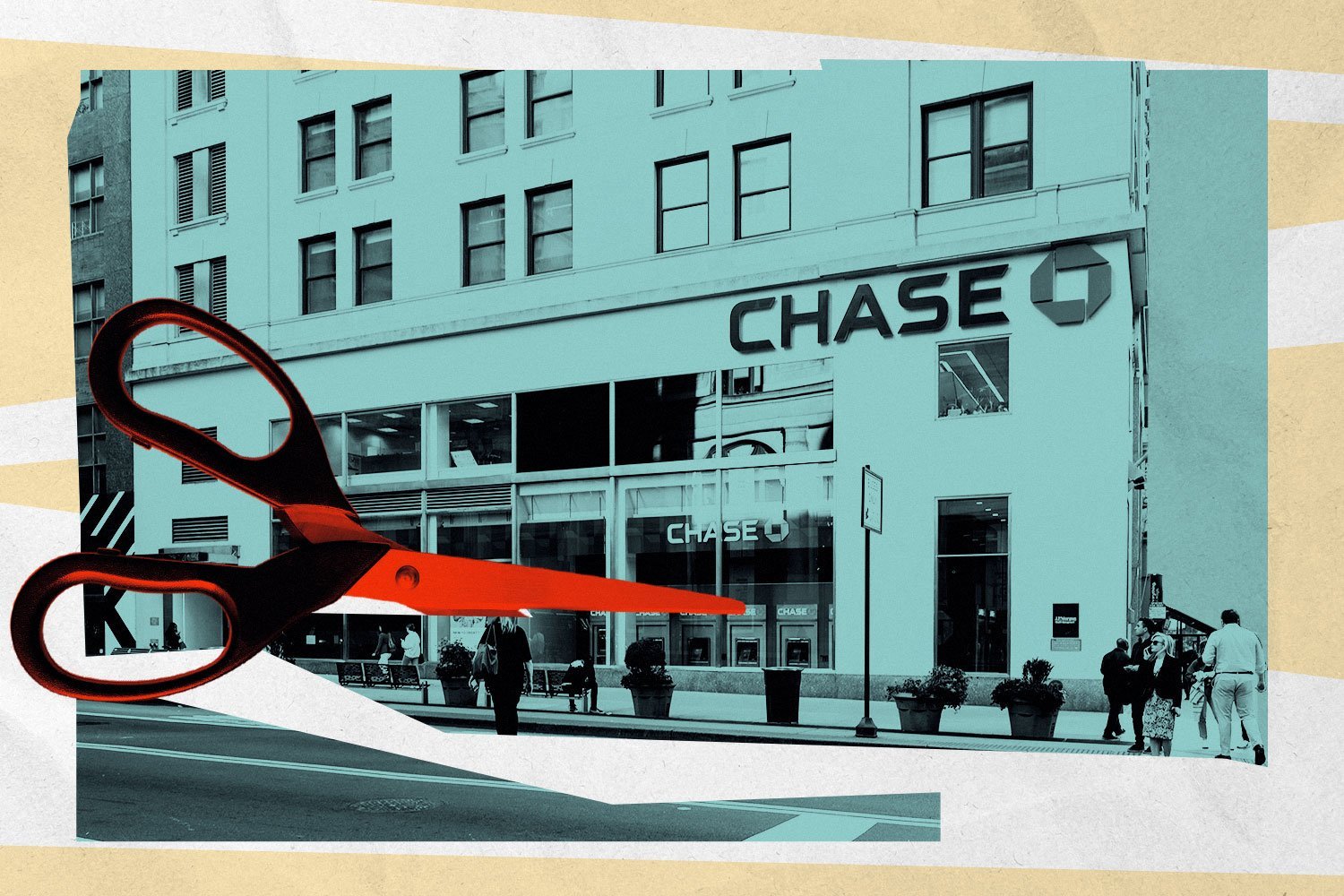
Now, spurred by changes in the economy and their businesses, chain banks and pharmacies are closing locations and downsizing their New York footprints. Landlords, facing big spaces they can’t fill, are chopping those storefronts up.
“You’re knocking a 10,000-foot Duane Reade into three or four spaces,” said Steven Soutendijk, vice chair and a retail broker at Cushman & Wakefield. “And you’re doing a Blank Street and a Naya and Sweetgreen and a million different things.”
Take for example a former Rite Aid on West 97th Street and Columbus Avenue. The space is being broken up and the food-hall chain Wonder has taken the first bay, Soutendijk noted. On Eight Avenue and West 42nd Street, a former Duane Reade is now a McDonald’s and a sushi restaurant.
Both chain banks and pharmacies fought for New York corner space from 2004 to around 2014, Soutendijk said. The retailers were highly profitable, competitive tenants, and had the drive to secure large spaces in high-traffic areas.
For banks, the directive was to get in front of people to collect their paychecks and deposits, said Michael Miller, a retail broker at TSCG.
“No one could pay more than a bank. And of course their credit’s phenomenal,” said Michael Miller, a retail broker at TSCG. “They were probably the highest and best rent payers in our entire industry.”
For stores like CVS and Walgreens, money is made from the pharmacy in the back. But the odds and ends in the front — cleaning products, greeting cards, energy drinks — bring people into the store.
Both kinds of businesses were sometimes paying much more than their neighbors, filling up the pockets of commercial landlords.
“There’s a lot of banks out there that are paying 2.5x what market is,” said Noam Aziz, managing director at Meridian Retail Leasing.
The bank and pharmacy takeover of New York’s streetscape didn’t come without backlash. In 2012, the City Council passed zoning restrictions on the Upper West Side banning banks from taking up storefronts wider than 25 feet.
Two years later, Manhattan had even more bank storefronts, peaking at 702 locations, according to an analysis from the National Community Reinvestment Coalition.
But now, both chain banks and drug stores are downsizing and closing up shops. Many of those 15-year leases signed in the aughts and 2010s are expiring.
National trends have meant that the big banks simply don’t need all that space anymore, said Jason Richardson, senior director of research at the NCRC. Federal regulations in the wake of the global financial crisis standardized mortgage lending and made it a less relational business, while fin-tech firms encroached on small business lending. National surveys show fewer people are going to bank branches. Meanwhile, consolidation in the industry has made some branches redundant.
“Every year, a bank has to look at their balance sheet and say, ‘do we really need this branch?’” Richardson said. “There’s got to be a lot of pressure on them every year to justify the existence of every branch they’ve got in their footprint.”
In the past ten years, the number of bank branches in Manhattan has fallen by nearly 27 percent, according to an NCRC analysis.
For drugstore chains, e-commerce retailers and mail-order pharmacies have cut into profits, Miller said. CVS announced in 2021 it would be closing 900 stores nationally over three years, followed by the additional closure of 271 stores announced in 2025. In New York alone, Rite Aid had 33 locations in the five boroughs before it shut down last year. The number of chain pharmacies in New York City declined by 16 percent between 2024 and 2025, according to data from the Center for an Urban Future.
It doesn’t help that chain pharmacies have been locking up their merchandise to prevent theft, which leads to a less-than-leisurely shopping experience. Walgreens’ former CEO Timothy Wentworth admitted during an earnings call in 2025 that locked-up sales cases do “impact how sales work through the store because when you lock things up, for example, you don’t sell as many of them.”
Soutendijk said he’s personally found shopping at the Duane Reade below Cushman & Wakefield’s office “not a pleasant experience.”
“You don’t need to be a retail specialist to experience that,” he said.
When these businesses pull out or move elsewhere, they leave landlords with big spaces to fill. The typical chain pharmacy was 8,000 to 12,000 square feet, Soutendijk said. A bank branch in the aughts was similarly 6,000 to 8,000 square feet.
Other retailers just don’t need that much space. And they can’t pay those rents, even if landlords have come to expect them.
Aziz said he’s marketing an 8,500-square-foot Manhattan storefront that has been vacant since 2019. Rite Aid was paying $1.3 million per year for the lease, but a new one will pull in just $500,000.
The solution then is to chop up one storefront into several. That way, the landlords can begin to approach what they were making before, he said.
Breaking up a large unit can be expensive. It typically means not just putting up walls but adding HVAC into the separate units, putting in restrooms, and splitting utilities. Converting a former bank can mean removing an old vault — a six-figure expense, Miller said.
Large, institutional landlords don’t need much convincing. They have the capital to deploy to get their spaces rented. Co-op boards and small landlords are likely to struggle more with making the investment, Soutendijk said.
When these landlords can find a single-tenant to fill their spaces, it’s typically smaller grocery stores, Miller said. Whole Foods’ small-format stores, called Daily Shops, have been popping up in former drug stores and banks. In the outer boroughs, two former Rite Aids in Ridgewood and Bedford-Stuyvesant are being converted into a Whole Foods and a Foodtown, respectively.
But overall, turning large bank branches into smaller storefronts makes for a more varied streetscape, Soutendijk said. The diversity benefits retail consumers and also landlords, who now have some protection in case one tenant can’t pay.
Those who complained about the bank and drugstore takeover, Soutendijk said, are getting their wish.
“Now drug stores are being broken up into Starbucks and Nayas,” he said. “I’m sure the next set of regulations will be anti-Sweetgreen, anti-Blank Street.”
Read more

The Manhattan luxury retail corridors where vacancy has hit multi-decade lows


NY Dirt: The murky real estate dispute behind the Kips Bay AMC closure