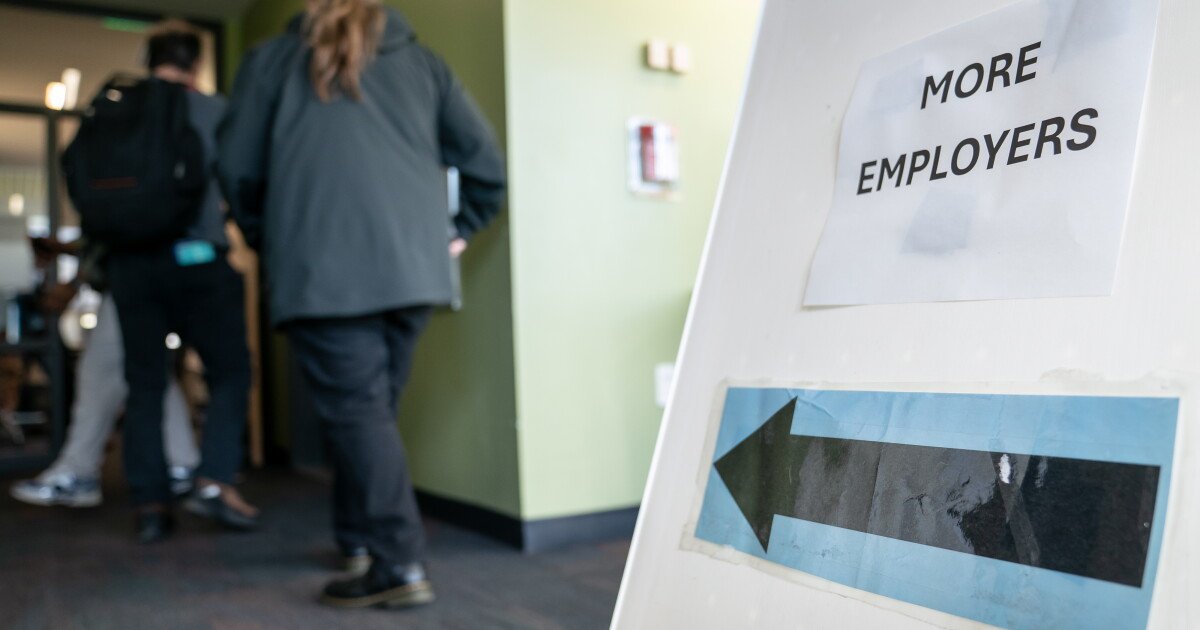
Hiring slows down significantly in September
- Key insight: Job growth was sluggish in September, adding only 29,000 jobs — well below market expectations. Revisions to previous months also showed net job losses over the summer.
- Supporting data: The Labor Department revised payroll numbers down by over 60,000 jobs for both July and August, showing a net 10,000 job loss in July.
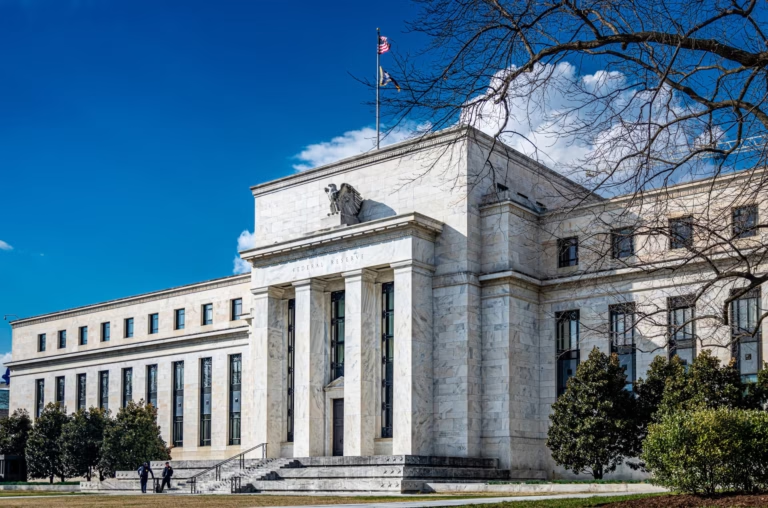
- Forward look: The reading may give some members of the Federal Open Market Committee pause when considering rate hikes to calm inflation, as raising rates could further depress job growth.
The U.S. economy added just 29,000 jobs in September, marking a major slowdown both in the monthly rate of employment and well below the pace over the last year.
Processing Content
The September gain was substantially below the roughly 162,000 jobs
Revisions to previous month’s figures also showed signs of labor market softening. The Bureau of Labor Statistics revised payroll numbers for both July and August down by a combined 60,000 jobs, showing now that the economy lost a net 10,000 jobs in July.
The unemployment rate, which was at 4.2% in September, has remained between 4.1% and 4.3% since March, while the labor force participation rate held steady at 61.8%.
Job growth was sluggish across most major industries. Jobs in the financial sector fell by 7,000 in September and have declined by 129,000 jobs — mostly in the insurance sector — since its peak in May 2025. Insurance carriers and related activities accounted for 90,000 of those losses.
Wage growth also remained modest. Average hourly earnings for private-sector workers rose 5 cents, or 0.1%, in September to $37.81. Wages were up 3% from a year earlier.
The report paints a picture of a market that is cooling despite a largely flat unemployment rate. Long-term unemployment remained steady at 1.9 million, while 5.8 million people outside the labor force said they wanted a job.
Read more:
With inflation persistently above the Fed’s 2% target and job growth tepid, policymakers will now have to mull the next steps for monetary policy. Fed Governor Michael Barr
“In my base case, further policy adjustments are likely to be needed to ensure inflation comes down to target in a timely fashion,” Barr said Tuesday, in a speech delivered Tuesday afternoon to the Economic Club of Detroit, noting that “now is the time for society to begin to consider how to address these potential disruptions” artificial intelligence could have for the market.
Administration officials have expressed a more hopeful theory in recent statements. Kevin Hassett, director of the National Economic Council
“The studies that are out right now, academic studies, show that the labor market effect of AI is that firms that start using AI see their sales go up a lot, their employment go up a lot and wages go up a lot because the people are more productive,” Hassett said. “The market’s not showing a lot of stress from AI, but to the extent that there is stress, it’s actually the workers at the firms that aren’t using AI.”