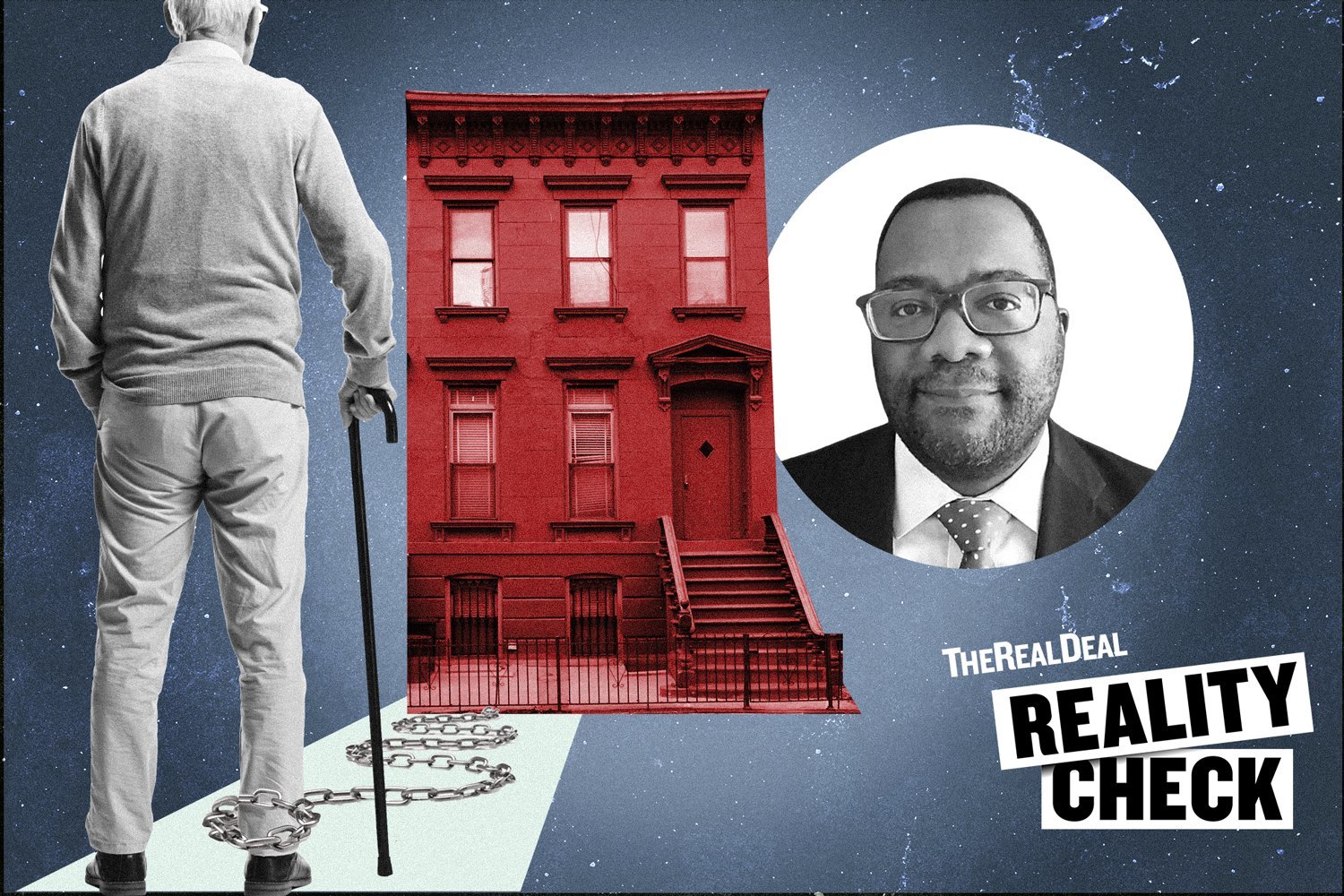
Why Stepped-up Basis is Bad for Homeowners, Real Estate Agents
“Unless something was a wreck and needed to be totally redone, I just had nothing to show,” a top agent recently told The Real Deal for a story about Westchester County’s priciest markets. “It’s unbelievable how scarce the inventory is.”
One reason is that longtime residents rarely sell.
“One of my first buyers from 30 years ago still lives in the same house,” said the agent, Sally Slater. “He told me, ‘I’m not going to sell. I’m going to be buried here.’”
She cited owners’ love of the area, but tax policies help explain the low turnover.
An individual can shield $250,000, and a couple $500,000, of capital gain from the sale of a primary residence. The law’s rationale is to not discourage people from selling when they want to.
But the exemption amount hasn’t changed since the law was passed in 1997, while home prices have soared. The once-generous exemption feels minimal to someone who paid six figures decades ago for a Scarscale colonial that would sell for millions today.
Another tax break, however, becomes more valuable as home values rise and is far more persuasive to longtime homeowners. Unfortunately, it persuades them to stay put. It’s called the stepped-up basis.
If the capital gain on the sale of an individual’s primary home were $5 million, after the $250,000 exemption, $4.75 million would be subject to a federal capital gains tax of 23.8 percent (including 3.8 percent from the ACA’s high-income surcharge). That works out to $1,130,500.
But die first and you’ll pay no capital gains tax on the increase in value during your ownership. Neither will your heirs.
The government’s unambiguous — if accidental — message is that you should hold appreciated assets until death. This life hack works for stocks as well as houses, but this policy is far worse for housing than for the stock market. It’s bad for agents, brokerages and the mortgage industry, because it means fewer sales, and bad for aging Americans who want to move but don’t because of the tax implications.
Some owners bite the bullet: On the Park Slope block where I grew up, Sandy, a woman I’ve known since childhood, recently sold her townhouse after 60 years for about $5 million more than she’d paid. She moved to a nearby co-op with three doormen, an elevator and a view. She loves it.
Living alone in a brownstone with three flights of stairs was not sustainable at her age, Sandy told me. But it was a wrenching decision, she said, not just because she treasured her old block but also because the capital gains tax was enormous.
Between the tax, the agent’s commission and the cost of the co-op, nearly all the proceeds from her townhome sale were exhausted. About $1 million went to the IRS instead of to her heirs. No one should feel sorry for Sandy or her kids, but it’s easy to see why others only leave their oversized, unmanageable homes feet-first.
The National Association of Realtors’ preferred solution for this policy failure is to exempt more of a primary residence’s capital gains from taxes. NAR supports a bill introduced in Congress last year that would double the exemption to $500,000 for individuals and $1 million for couples, and index it to inflation.
I agree that exemptions should rise with the cost of living, but we should also get rid of the stepped-up basis. Heirs who inherit homes, equities or anything else that has untaxed gains shouldn’t be able to press the reset button and start the capital gains count from scratch.
It makes no sense for the government to tax the earnings from labor but not the gain on an inherited house.
NAR disagrees, but even if you don’t give a hoot about wealth inequality, what’s the argument against more liquidity in the housing market? And why discourage seniors from moving to a more appropriate home — without stairs, or in a walkable neighborhood or warmer climate? People who want to move closer to their grandkids shouldn’t be dissuaded by tax policy.
I’m not naive: NAR will find much more support in Congress for raising the exemption than it would for killing the stepped-up basis. The latter would be an extremely heavy lift politically, as Joe Biden discovered when he floated the idea as president. But it’s the right thing to do.
Read more

President Joe Biden’s real estate checklist

Biden’s tax plan would “pull the rug out” from under the real estate industry: insiders

Why REBNY backed a program that real estate hates