Cardiac treatment can cost lakhs: What policyholders should check before buying health insurance for heart care
Cardiac treatment can quickly turn into a significant financial burden, particularly when a patient requires an advanced procedure or emergency surgery. Yet, having health insurance does not necessarily mean that the entire hospital bill will be covered.
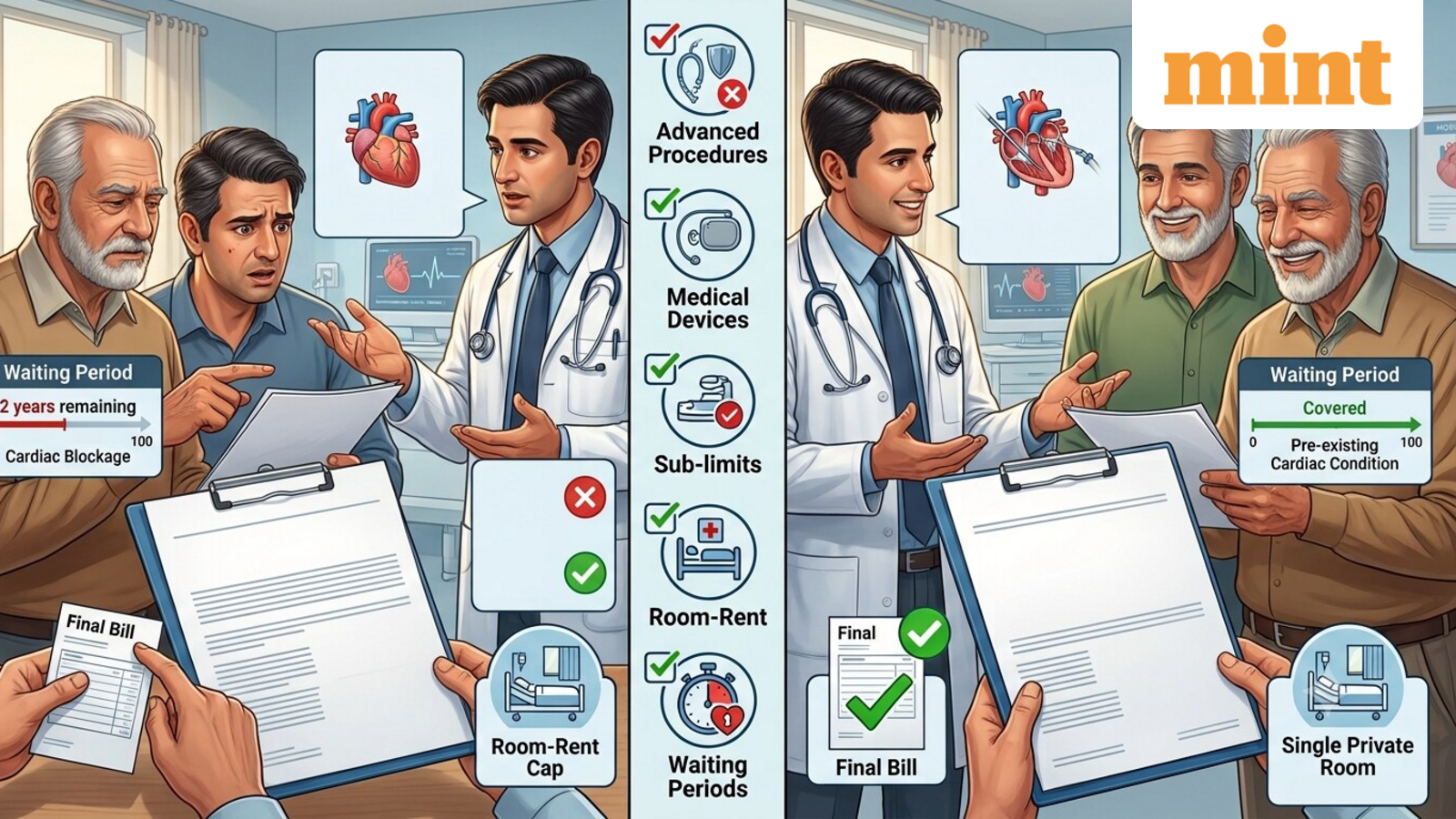
Policyholders need to look beyond the overall sum insured and understand whether their policy specifically covers advanced cardiac procedures, medical devices and related treatment costs. Waiting periods, sub-limits and room-rent restrictions can also significantly increase out-of-pocket expenses at the time of a claim.
“Policyholders must look past basic hospitalisation benefits. Standard policies cover basic open-heart surgeries, but advanced or minimally invasive cardiac interventions require explicit confirmation in the policy wordings,” said G. Srinivasan, MD & CEO, Galaxy Health Insurance.
Check whether advanced cardiac procedures are covered
A key consideration is whether the policy covers newer or minimally invasive cardiac interventions. Policyholders should specifically check the policy wording for procedures such as Transcatheter Aortic Valve Implantation/Replacement (TAVI/TAVR), Transcatheter Mitral Valve Repair/Replacement (TMVR), Transcatheter Tricuspid Valve Repair/Replacement (TTVR), along with pacemakers and Implantable Cardioverter-Defibrillators (ICDs).
Coverage for more complex treatments such as Left Ventricular Assist Devices (LVADs) and cardiac transplantation should also be verified before purchasing a policy.
The distinction matters because a policy may provide a substantial overall sum insured while still imposing separate restrictions on specific procedures or medical devices.
Sub-limits and waiting periods can increase your bill
The headline sum insured is not the only number policyholders should look at. Procedure-specific sub-limits can restrict the amount that an insurer will pay for a particular treatment.
For instance, if a policy has a ₹10 lakh sum insured but imposes a ₹5 lakh sub-limit on cardiac procedures, the insurer may pay only up to ₹5 lakh for an eligible cardiac surgery. If the hospital bill is ₹8.5 lakh, the remaining ₹3.5 lakh would have to be paid by the policyholder, subject to the policy’s other terms and exclusions.
Room-rent restrictions can also affect the final claim amount, while waiting periods can determine whether a cardiac condition is covered when treatment is required. These conditions become particularly important during emergencies, when patients may have limited scope to choose a different hospital or treatment option.
“Policy conditions like waiting periods, sub-limits and room-rent restrictions directly have an impact on out-of-pocket expenses during a cardiac emergency,” Srinivasan said.
Young policyholders should not rely only on employer cover
Younger and middle-aged policyholders may also underestimate the financial risk of cardiac treatment because they assume their employer-provided health insurance will be sufficient.
According to Srinivasan, many corporate employees under 40 rely primarily on group health insurance, with base covers typically ranging from ₹2 lakh to ₹3 lakh. However, the cost of cardiac treatment can be considerably higher, particularly in private hospitals.
An angioplasty can cost around ₹2 lakh to ₹4 lakh, while treatment involving multiple blocked vessels or emergency bypass surgery at private hospitals in metropolitan cities can cost ₹3.5 lakh to ₹6 lakh, according to the estimates cited by Srinivasan.
An advanced cardiac procedure could therefore consume a substantial portion, or even the entirety, of a basic corporate health cover. This could leave limited coverage for subsequent hospitalisation or other medical needs during the same policy year.
Before buying or renewing a policy, consumers should therefore ask whether advanced and minimally invasive cardiac procedures are covered, whether there are separate caps on cardiac medical devices and whether procedure-specific sub-limits apply.
They should also check whether pre-existing cardiac conditions are covered, what waiting period applies to cardiac ailments and whether any exclusions could affect a future claim.
A health insurance policy should ultimately be evaluated not just on the size of its sum insured, but on the actual conditions attached to using that cover when expensive cardiac treatment is required.