Marco Caffuzzi of Latham & Watkins: 5 Questions – Commercial Observer
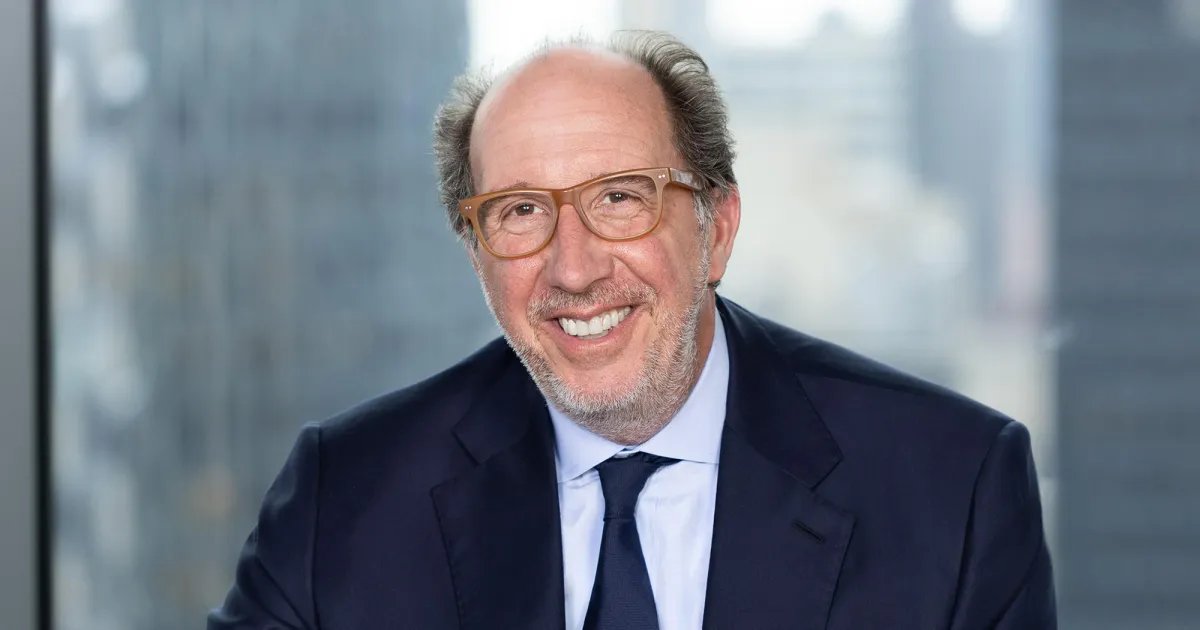
Three decades of negotiating high-profile real estate deals will teach you how to spot a good opportunity, and Marco Caffuzzi found his at Latham & Watkins. This year, the veteran real estate attorney ended his 30-year tenure at Skadden, Arps, Slate, Meagher & Flom to join Latham’s New York real estate practice as a partner.
Caffuzzi’s career was defined by its breadth, spanning work with lenders, borrowers, landlords and tenants. He’s spent 12 years representing Silverstein Properties through the redevelopment of the World Trade Center, including American Express’ nearly 2 million-square-foot transaction at 2 World Trade Center.
Rather than resting on his laurels, Caffuzzi embraced the opportunity to change offices in May. Commercial Observer caught up with Caffuzzi in early September to discuss why he made the leap, his career-defining projects, and the continued evolution of New York’s complex dealmaking world.
Commercial Observer: Is there a particular development or project that you feel has defined your career?
Marco Caffuzzi: That would be my work representing Larry Silverstein and Silverstein Properties, in connection with their rebuilding of the World Trade Center, which is ongoing to this day.
My firm, Skadden, represented the Port Authority in selling the World Trade Center to Silverstein in 2001. I became involved when we switched to representing Silverstein in 2006, when the entire deal was restructured. We had to come up with a new plan to redevelop the whole site, and that took a lot of years of fighting among interested parties until it finally arrived.
Those initial deals were extremely unique, sort of a combination of municipal bond execution with an overlay of CMBS structuring, and that really had not been done before.
I’m proud that I was involved in it, because it’s a huge part of the fabric of New York. It was one of those instances where it didn’t pay to be adversarial, it paid to negotiate in a productive way.
We’re about to do a transaction down there related to financing, and it’s sort of the same group of 20 or 25 lawyers from various constituents getting back on the phone again. We’ve all sort of lived it, and it’s particularly poignant with the anniversary of 9/11 this year.
So you found a lot of success at Skadden. Walk me through the decision to join Latham & Watkins this year.
One reason was Doug Heitner, who is now the global head of the real estate group at Latham, and one of my best friends. Doug was once a first year associate under me in real estate at Skadden, and he worked with me on the World Trade Center. We always talked about working together again.
Another reason was Latham itself. It’s had enormous growth in the last 12 or 15 years, and the real estate practice has grown a lot. There’s just so much energy and enthusiasm. It was a little contagious.
From a personal level, I was ready to try a new adventure at 58 years old. Why not? All the stars fell into alignment. And I think there’s a poeticness of Doug starting his career with me, and I’m in a sense ending my career with him as the boss, and I like that full circle.
You advise across a wide variety of clients and transactions. Is that breadth especially valuable to your practice, and is that atypical in your line of work?
I think it’s becoming less common. More big law partners are focusing on particular types of transactions.
For example, in the industry, there’s a common split between debt and equity, and then there’s people who only do leasing work. I had no interest in ever specializing. There’s the saying, “Jack of all trades, master of none,” but from my perspective — and I think my clients agree — I may not know every facet of a particular transaction, but I know 90 percent of the issues, and I have the wherewithal and personality to deal with the other 10 percent.
I think it’s a dying approach, and there are pluses and minuses on both sides. For young lawyers, my personal belief is that the broader the experience is, the more it adds to the war chest of your experiences.
For example, say you’re representing a bank on a construction loan for an office building and there’s a lease for an anchor tenant. Although you’re not a leasing lawyer, it pays to understand how leases work and what the remedies are if the developer doesn’t deliver on time. Having worked on some of those deals, you know what to look for or what to expect. I think it’s an advantage.
You’ve also referenced the increasing complexity of the transactions. How does that manifest in your work today, versus your early career?
Financing has gotten way more complex. Different clients are providing different components of the capital stack and they have different executions, then there’s the borrower who brings in equity. When you put all that together on a typical deal, you could have a mortgage loan, a mezzanine loan and preferred equity.
More frequently, on the borrower side, there’s partnerships between domestic operators and foreign investors. The foreign investors — depending on whether they’re sovereign wealth funds, a private equity fund, or a family office — have different goals and needs, and there will be a whole complex layover of tax issues.
If you go back 25 or 35 years, you had U.S. banks and insurance companies lending money, and they made mortgage loans. That was it.
Then the mezzanine loan came into being, and more and more foreign lenders got into the business. Slowly but surely the complexities would arise whenever you inject an international investor or a highly tax-sensitive investor. That’s what every deal these days brings.
I have clients who even complain to us, like, “Oh my God, you guys have overcomplicated this so much.” They’re looking at these ridiculous structure charts, and we tell them, “We didn’t. You decided to pick a sovereign wealth fund from Asia as your partner, and there’s a lot of baggage that comes with that, tax-wise and legally.”
The other thing is, everyone is looking to maximize their returns as much as possible, whether it’s on the lender side or the borrower side. You want to get every dollar out of an investment, and there’s a lot of attention paid to small structural changes in a deal transaction that can lead to increased economics in the future.
Is that a particular trend or shift in New York City’s real estate market that’s getting your attention these days?
A couple things, actually. First and foremost, the office-to-residential conversions. It’s really interesting to see stretches of Third Avenue offices where there’s a big building here and there in the midst of conversion. I started at Skadden at 919 Third Avenue, and now I have a client who’s doing several conversions along that same strip.
In housing generally, there’s so much development and focus on addressing the housing deficit. I live in Brooklyn Heights, and the amount of development along the Gowanus Canal has really changed the face of that broad swath of Brooklyn. That’s exciting.
The other thing that I’ve seen is in the office market. Obviously, it’s been plagued with vacancies since the pandemic, but there are companies that are realizing that there’s some sort of special juju to being in the office. So you’re seeing top-notch buildings in Hudson Yards, the Trade Center and even in Rockefeller Center having successful lease ups and maintaining tenants. Even Latham is growing within its building.
Park Avenue, north from 42nd Street, seems to be having quite a resurgence, brought on by the J.P. Morgan headquarters and ongoing redevelopment of other buildings along there. I think it goes hand in fist with the sentiment of returning to the office, and people are taking that seriously.
I’ve never been one to short New York on its survival. For all its problems, the fact that we have 8 million people here, and we generally all get along, I think, is amazing. I think we’ll continue to thrive.
Emily Davis can be reached at edavis@commercialobserver.com.