Will your insurance premium get cheaper? Here’s what IRDAI’s proposed reforms could change
Insurance premiums could come under pressure if the Insurance Regulatory and Development Authority of India’s (IRDAI) proposed reforms reduce distribution and operating costs, but the regulator has not said that premiums will automatically become cheaper. The consultation paper proposes changes to insurers’ Expenses of Management (EoM), commission structures, sales incentives and disclosures, with the broader objective of reducing structural costs and improving value for policyholders.
The impact on premiums will depend on how insurers respond to lower costs. An industry expert, who did not wish to be named, said it would be too early to conclude that premiums will necessarily become cheaper. For term plans, mortality is a much larger pricing driver than distribution costs, while pricing is also periodically recalibrated based on experience and other underlying factors.
Amit Goel, Director, Equirus Raghnall Insurance Broking, said the proposed reforms could potentially put downward pressure on premiums if lower distribution costs are passed on by insurers. However, he said insurance premiums are also driven by claims experience, reinsurance costs, risk appetite, capital costs and competition. “A reduction in commission does not mechanically mean a reduction in premium,” he said.
What does lowering EoM caps mean for consumers?
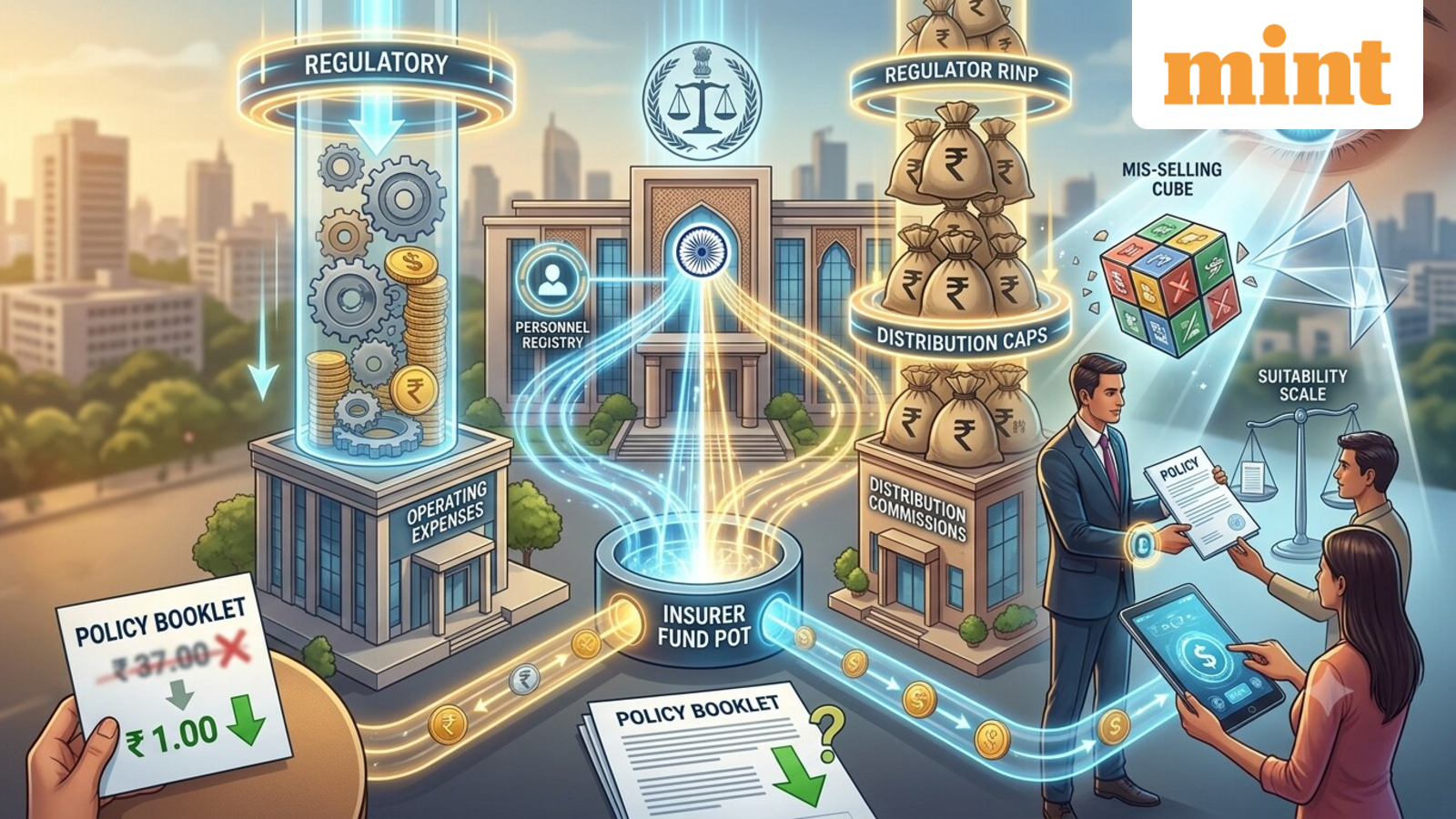
IRDAI has proposed lowering Expenses of Management limits through a phased glide path. For life insurers, the proposal is to move towards a 12.5% of gross direct premium income (GDPI) company-level EoM cap. For general insurers, the proposal is to move from 30% of gross written premium to 20% of GDPI over five years. The regulator has also proposed changes to the way EoM is calculated to prevent workarounds.
For consumers, the proposal matters because IRDAI says reducing the cost of doing business should improve value for policyholders. The consultation paper also says significant distribution costs and multiple layers of intermediation can increase the cost of delivering insurance, with consumers ultimately bearing these costs through higher premiums and lower delivered value.
Goel said the key question is where the savings from lower distribution costs go. If insurers pass those savings on, there could be some downward pressure on premiums. But lower distribution costs alone would not guarantee cheaper insurance.
More transparency when you buy insurance
The proposed reforms also seek to give customers greater visibility into how insurance is sold and the costs involved.
If a bank offers a customer a group health insurance scheme negotiated with an insurer, the bank would have to disclose the commission it receives from the premium.
The unnamed industry expert said the proposed framework would bring greater transparency around insurance products, structures and distribution. This should help customers better understand the product, its costs and the value proposition, the expert said.
The consultation paper also proposes that insurance premiums should be paid through the customer’s own UPI, credit or debit card or bank account. Third-party payments should not be accepted. IRDAI has proposed the measure to reduce the scope for fraud and mis-selling.
Sales incentives and suitability could change
IRDAI has proposed prohibiting volume-linked and reward-linked incentives for bank and NBFC staff selling insurance. The consultation paper includes foreign trips, luxury gifts, milestone bonuses and contest rewards among the examples of incentives that could fall under the proposed framework.
The proposal also seeks greater accountability when insurance is sold. For large life insurance policies, suitability could become a formal requirement, with a documented assessment of the customer’s needs. Simply obtaining a customer’s signature or consent would not, by itself, absolve the insurer or intermediary if the product is unsuitable.
The consultation paper identifies examples of mis-selling such as presenting insurance as a fixed deposit or high-return investment, making misleading assured-return claims, selling a regular-premium policy as a single-premium product and failing to explain the consequences of discontinuing premiums.
IRDAI has also proposed linking the identity of the salesperson, agent or other distribution personnel to policies sold and recording mis-selling information through a proposed Public Insurance Registry. It further proposes that mis-selling incidents should lead to commission claw-back by insurers.
For consumers, therefore, the proposed reforms could mean greater transparency and accountability in how insurance is sold. Whether they translate into lower premiums will depend on how much of any reduction in distribution and operating costs is ultimately passed on to policyholders, while other factors continue to influence insurance pricing.