Weekly Recap: Inside LCG’s Three-Year Buyout; CMC Markets Plans Prop Trading Launch
The week brought a mix of ownership changes, regulatory
action, financial results and new product launches across the retail trading
and financial services sectors. UK regulation remained a key theme, with the
FCA taking further action against CFD firms linked to overseas operations while
new businesses prepared for changes to the country’s crypto regime.
London’s trading industry is coming home!
Brokers also continued to expand into adjacent areas. CMC
Markets is preparing a simulated prop trading service, eToro is moving clients
to an AI-centred application and Capital.com appears to be preparing a UK
crypto operation. Elsewhere, BlackBull Markets postponed its IPO plans and
iFOREX reported a first-half loss.
The week also highlighted the continued convergence between
traditional finance and digital assets. The ECB launched its Pontes settlement
infrastructure, BitMEX ended its exchange operations, and developments across
tokenised securities and blockchain infrastructure continued to narrow the
distinction between crypto and conventional financial markets.
Matt Basi, Managing Director, LCG, Source: LinkedIn
Finance Magnates interviewed London Capital Group Managing
Director Matt
Basi about the broker’s management buyout, which took nearly three years to
complete. LCG is now fully owned by its management after Basi and co-director
Dave Worsfold acquired the FCA-regulated broker through MBDW Holdings from the
estate of collapsed FlowBank.
The managers had sought to buy LCG from 2022 but
could not agree on a price with FlowBank. Its bankruptcy in 2024 changed the
process, with Swiss liquidators required to test the market before accepting a
bid. MBDW ultimately made the successful offer, although the purchase price was
not disclosed.
The deal includes an upfront cash payment and a further obligation
tied to LCG’s profits over the following 24 months, while an intercompany
balance of about £200,000 was also settled.
CMC Markets Sets October Launch for Prop Trading Service
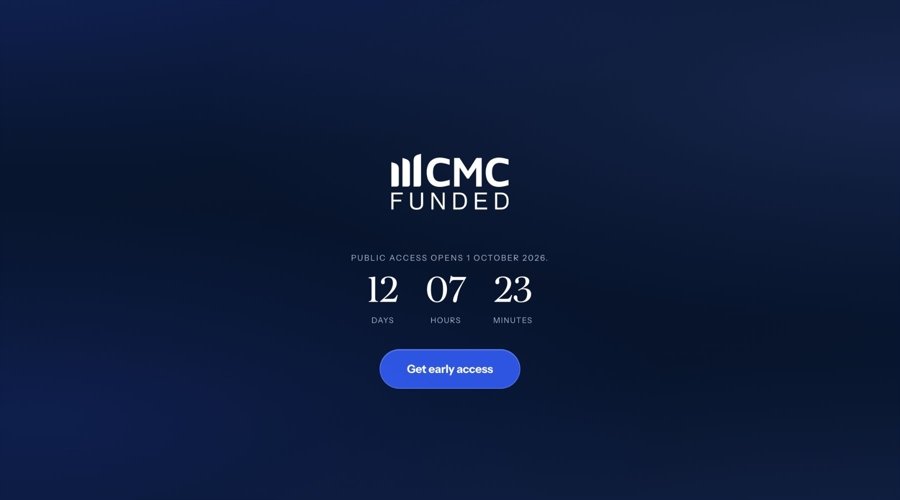
CMC Markets Funded has set 1 October 2026 as the public
launch date for its simulated trading evaluation programme. Legal documents
identify Dubai-based True North Tech as the operator, while CMC
Markets Singapore is described as the programme’s exclusive financial services
and online brokerage partner.
The documents state that CMC Singapore is not the
operator or guarantor, and that its regulatory status does not extend to the
programme. The trading infrastructure appears linked to MatchTrader, although
the terms do not confirm a commercial agreement. The platform has also shown
signs of pre-launch testing, including Trustpilot activity.
CMC Funded Terms and Conditions
Participants will
trade simulated accounts, with payouts structured as contractual rewards rather
than profits from live company capital.
BDSwiss Ruling Puts Swiss Branding Under Scrutiny
Yiannos Georgiades, Managing Partner, Georgiades & Associates LLC
BDSwiss has become the first financial firm to face a Swiss
court ruling under the country’s “Swissness” rules governing claims of Swiss
origin. The Bern Commercial Court ordered the
retail broker to remove the Swiss cross from its logo and drop “Swiss” from its
name.
The case centres on legislation requiring foreign firms using Swiss
indications in products and advertising to meet specific conditions. Legal
expert Yiannos Georgiades said the ruling highlights requirements around the
services a business actually provides, rather than simply maintaining an
address in Switzerland.
BDSwiss was given a three-month period to comply. Its
website now redirects users to BDS Markets, the brand used by its
Mauritius-registered business after the closure of its Cyprus operations.
BlackBull Postpones IPO Plans to 2027
BlackBull Markets has postponed its
planned initial public offering until 2027, according to a source familiar
with the matter, after the broker’s board decided not to pursue a listing “at
this time”. Co-founder and CEO Michael Walker said the company’s roadshow had
been constructive and investor feedback positive, but that the board wanted to
focus on business growth and upcoming milestones.
BlackBull had appointed
Barrenjoey Capital Partners, UBS and Forsyth Barr for a non-deal roadshow ahead
of a possible dual listing in Australia and New Zealand. The broker has since
reported an 85% increase in New Zealand client funds to nearly NZ$100 million.
It now processes about US$200 billion in monthly trading volume across more
than 180 countries.
FCA Shuts 21 CFD Brokers in Overseas-Linked Crackdown
Dominic Holland, Director Market Oversight at Financial Conduct Authority (Photo: LinkedIn)
The UK Financial Conduct Authority has shut down 21
CFD providers since 2025 as part of a crackdown on firms with little or no
business in Britain but links to overseas operations. The regulator cancelled
the permissions of three other firms, while two more are under investigation
over misleading customers.
The FCA said the action targets so-called “halo”
firms, where UK authorisation can give customers the impression that they
receive UK regulatory protection when contracting with an overseas entity. The
regulator did not name the firms involved. This follows its earlier finding
that around 20% of local CFD brokers were conducting little or no activity.
As
of December 2025, 74 firms were authorised to offer CFDs to UK retail clients.
iFOREX Reports First-Half Loss and Plans Cost Cuts
Itai Sadeh, the CEO of the iForex Group
London-listed CFD provider iFOREX reported a first-half net
loss of $2.5 million, reversing a $1.2 million profit a year earlier. Revenue
fell 2% to $26.9 million in the six months to 30 June. The company attributed
the loss to the stronger Israeli shekel, costs related to its February listing
and a charge linked to money owed to clients.
iFOREX
plans to reduce operating costs by about $500,000 per month from October.
Net cash stood at about $6.3 million by mid-September, with roughly $4 million
held for regulators. Active clients increased 8%, but average revenue per user
declined 9% as lower volatility reduced activity in some of the company’s core
instruments.
Capital.com Prepares UK Crypto Expansion
Capital.com appears to be preparing a
push into the UK crypto market through Capital Vault UK, with the broker
recruiting a Head of Risk for the business. A LinkedIn job advertisement
describes Capital Vault UK as the FCA-registered crypto business for Capital
Vault Group, although the entity had not appeared on the regulator’s public
register at the time of publication.
The LinkedIn job post was published on Monday, September 21
UK crypto firms remain subject to the
FCA’s anti-money laundering regime, while a broader licensing framework is
scheduled to come into effect under the Financial Services and Markets Act in
October 2027. The hiring activity points to preparations ahead of that
framework. The UK market is becoming more competitive as regulators build a
wider regime for cryptoasset firms.
eToro Begins Migration to AI-Centred Trading App
eToro will begin moving existing
clients to its redesigned trading application from 4 October, using a
phased rollout. According to a client communication reviewed by Finance
Magnates, accounts, login credentials and portfolios will carry over
automatically, with no requirement to create new profiles or transfer
positions.
The broker has not disclosed which clients or jurisdictions will
move first. An early-access application labelled “eToro AI” will be retired
once users are migrated to the updated main app.
The redesigned platform
includes revised portfolio displays, expanded asset pages, advanced charts and
different viewing modes for portfolios and watchlists. eToro’s AI assistant,
Tori, is central to the new interface. The broker has also said the rebuilt
application should operate faster.
ECB Launches Pontes for Tokenised Settlement
The European Central Bank has launched Pontes, a
new Eurosystem infrastructure designed to support settlement for tokenised
financial transactions using central bank money. The system is initially
available only to credit institutions and will operate during normal European
business hours, with 24-hour settlement planned for later stages.
Pontes is
intended to connect blockchain-based financial markets with central bank
settlement, allowing transactions involving tokenised assets to use
central-bank-backed euros rather than relying solely on stablecoins. The launch
forms part of the ECB’s work on distributed-ledger technology and tokenised
markets.
It also places Europe’s public settlement infrastructure alongside
private-sector initiatives in the US, where exchanges and financial firms are
developing blockchain-based market infrastructure and tokenised securities.
BitMEX Ends Exchange Operations After 11 Years
BitMEX officially ended its exchange operations on 23
September, closing
an 11-year run after its market share had fallen sharply from its earlier
peak. The exchange, known for pioneering perpetual swap contracts, said users
could still access their accounts and withdraw remaining balances after the
shutdown.
By the time the closure was announced in July, BitMEX accounted for
roughly 0.08% of daily Bitcoin futures volume, or about $84 million a day,
according to Finance Magnates’ report. The closure followed senior management
departures in June and came after years of regulatory pressure.
Finance
Magnates also noted that CoinEx and BitMart had shut down within the preceding
two months, highlighting a wider reduction in activity among some crypto
exchanges.
Crypto and Traditional Finance Continue to Converge
Crypto platforms are expanding into stocks, derivatives,
prediction markets and payments, while banks, exchanges and central banks are
adopting blockchain infrastructure. Coinbase is among the clearest
examples, adding products beyond spot crypto and filing with the CFTC to offer
perpetual futures on around 50 to 60 US stocks.
Meanwhile, the ECB has launched
Pontes for blockchain-based settlement using central bank money, while the
London Stock Exchange is working with Payward, the company behind Kraken, on
tokenised UK equities.
Coinbase Q2 Revenue Falls 14% as Prediction Markets Revenue Jumps 106%
Coinbase reported Q2 2026 total revenue of $1.22 billion, down 19% year over year and 14% quarter over quarter, while transaction revenue fell 21% to $599 million. The company recorded a net loss of $359 million and adjusted EBITDA of $208 million. Crypto spot trading volume declined 24% to $146.4 billion, but Coinbase’s share of total crypto trading volume rose from 9.1% to a record 10.3%.
Subscription and services revenue fell 5% to $555 million, representing 48% of net revenue, while revenue outside BTC spot trading accounted for 88%. Prediction markets revenue increased 106% quarter over quarter and exceeded $100 million on an annualized basis. Average USDC held in Coinbase products reached $20 billion.
— Wu Blockchain (@WuBlockchain) July 30, 2026
These developments are bringing crypto and traditional
finance closer through shared digital infrastructure. For retail investors, the
shift could mean more asset classes on a single platform and longer trading
hours, but also different forms of counterparty, liquidity, leverage and
regulatory risk.
AI Threats Drive Calls for Shared Cyber Defence
AI
is increasing the speed and scale of cyber threats facing financial firms,
prompting calls for greater cooperation between organisations on cybersecurity.
Manasseh Paradesi, CISO at Pepperstone, argues that brokers could improve their
defences by sharing threat intelligence, testing controls under real-world
conditions and learning from incidents across the industry.
His commentary
points to a broader shift from isolated security programmes towards collective
defence. The argument comes after a call for collective action on cyber defence
led by OpenAI and supported by more than 100 organisations across technology,
cybersecurity, financial services and critical infrastructure.
For brokers, the
focus is not only on adding security tools but also on understanding whether
controls work against evolving threats and reducing duplicated efforts.
The week brought a mix of ownership changes, regulatory
action, financial results and new product launches across the retail trading
and financial services sectors. UK regulation remained a key theme, with the
FCA taking further action against CFD firms linked to overseas operations while
new businesses prepared for changes to the country’s crypto regime.
London’s trading industry is coming home!
Brokers also continued to expand into adjacent areas. CMC
Markets is preparing a simulated prop trading service, eToro is moving clients
to an AI-centred application and Capital.com appears to be preparing a UK
crypto operation. Elsewhere, BlackBull Markets postponed its IPO plans and
iFOREX reported a first-half loss.
The week also highlighted the continued convergence between
traditional finance and digital assets. The ECB launched its Pontes settlement
infrastructure, BitMEX ended its exchange operations, and developments across
tokenised securities and blockchain infrastructure continued to narrow the
distinction between crypto and conventional financial markets.
Matt Basi, Managing Director, LCG, Source: LinkedIn
Finance Magnates interviewed London Capital Group Managing
Director Matt
Basi about the broker’s management buyout, which took nearly three years to
complete. LCG is now fully owned by its management after Basi and co-director
Dave Worsfold acquired the FCA-regulated broker through MBDW Holdings from the
estate of collapsed FlowBank.
The managers had sought to buy LCG from 2022 but
could not agree on a price with FlowBank. Its bankruptcy in 2024 changed the
process, with Swiss liquidators required to test the market before accepting a
bid. MBDW ultimately made the successful offer, although the purchase price was
not disclosed.
The deal includes an upfront cash payment and a further obligation
tied to LCG’s profits over the following 24 months, while an intercompany
balance of about £200,000 was also settled.
CMC Markets Sets October Launch for Prop Trading Service
CMC Markets Funded has set 1 October 2026 as the public
launch date for its simulated trading evaluation programme. Legal documents
identify Dubai-based True North Tech as the operator, while CMC
Markets Singapore is described as the programme’s exclusive financial services
and online brokerage partner.
The documents state that CMC Singapore is not the
operator or guarantor, and that its regulatory status does not extend to the
programme. The trading infrastructure appears linked to MatchTrader, although
the terms do not confirm a commercial agreement. The platform has also shown
signs of pre-launch testing, including Trustpilot activity.
CMC Funded Terms and Conditions
Participants will
trade simulated accounts, with payouts structured as contractual rewards rather
than profits from live company capital.
BDSwiss Ruling Puts Swiss Branding Under Scrutiny
Yiannos Georgiades, Managing Partner, Georgiades & Associates LLC
BDSwiss has become the first financial firm to face a Swiss
court ruling under the country’s “Swissness” rules governing claims of Swiss
origin. The Bern Commercial Court ordered the
retail broker to remove the Swiss cross from its logo and drop “Swiss” from its
name.
The case centres on legislation requiring foreign firms using Swiss
indications in products and advertising to meet specific conditions. Legal
expert Yiannos Georgiades said the ruling highlights requirements around the
services a business actually provides, rather than simply maintaining an
address in Switzerland.
BDSwiss was given a three-month period to comply. Its
website now redirects users to BDS Markets, the brand used by its
Mauritius-registered business after the closure of its Cyprus operations.
BlackBull Postpones IPO Plans to 2027
BlackBull Markets has postponed its
planned initial public offering until 2027, according to a source familiar
with the matter, after the broker’s board decided not to pursue a listing “at
this time”. Co-founder and CEO Michael Walker said the company’s roadshow had
been constructive and investor feedback positive, but that the board wanted to
focus on business growth and upcoming milestones.
BlackBull had appointed
Barrenjoey Capital Partners, UBS and Forsyth Barr for a non-deal roadshow ahead
of a possible dual listing in Australia and New Zealand. The broker has since
reported an 85% increase in New Zealand client funds to nearly NZ$100 million.
It now processes about US$200 billion in monthly trading volume across more
than 180 countries.
FCA Shuts 21 CFD Brokers in Overseas-Linked Crackdown
Dominic Holland, Director Market Oversight at Financial Conduct Authority (Photo: LinkedIn)
The UK Financial Conduct Authority has shut down 21
CFD providers since 2025 as part of a crackdown on firms with little or no
business in Britain but links to overseas operations. The regulator cancelled
the permissions of three other firms, while two more are under investigation
over misleading customers.
The FCA said the action targets so-called “halo”
firms, where UK authorisation can give customers the impression that they
receive UK regulatory protection when contracting with an overseas entity. The
regulator did not name the firms involved. This follows its earlier finding
that around 20% of local CFD brokers were conducting little or no activity.
As
of December 2025, 74 firms were authorised to offer CFDs to UK retail clients.
iFOREX Reports First-Half Loss and Plans Cost Cuts
Itai Sadeh, the CEO of the iForex Group
London-listed CFD provider iFOREX reported a first-half net
loss of $2.5 million, reversing a $1.2 million profit a year earlier. Revenue
fell 2% to $26.9 million in the six months to 30 June. The company attributed
the loss to the stronger Israeli shekel, costs related to its February listing
and a charge linked to money owed to clients.
iFOREX
plans to reduce operating costs by about $500,000 per month from October.
Net cash stood at about $6.3 million by mid-September, with roughly $4 million
held for regulators. Active clients increased 8%, but average revenue per user
declined 9% as lower volatility reduced activity in some of the company’s core
instruments.
Capital.com Prepares UK Crypto Expansion
Capital.com appears to be preparing a
push into the UK crypto market through Capital Vault UK, with the broker
recruiting a Head of Risk for the business. A LinkedIn job advertisement
describes Capital Vault UK as the FCA-registered crypto business for Capital
Vault Group, although the entity had not appeared on the regulator’s public
register at the time of publication.
The LinkedIn job post was published on Monday, September 21
UK crypto firms remain subject to the
FCA’s anti-money laundering regime, while a broader licensing framework is
scheduled to come into effect under the Financial Services and Markets Act in
October 2027. The hiring activity points to preparations ahead of that
framework. The UK market is becoming more competitive as regulators build a
wider regime for cryptoasset firms.
eToro Begins Migration to AI-Centred Trading App
eToro will begin moving existing
clients to its redesigned trading application from 4 October, using a
phased rollout. According to a client communication reviewed by Finance
Magnates, accounts, login credentials and portfolios will carry over
automatically, with no requirement to create new profiles or transfer
positions.
The broker has not disclosed which clients or jurisdictions will
move first. An early-access application labelled “eToro AI” will be retired
once users are migrated to the updated main app.
The redesigned platform
includes revised portfolio displays, expanded asset pages, advanced charts and
different viewing modes for portfolios and watchlists. eToro’s AI assistant,
Tori, is central to the new interface. The broker has also said the rebuilt
application should operate faster.
ECB Launches Pontes for Tokenised Settlement
The European Central Bank has launched Pontes, a
new Eurosystem infrastructure designed to support settlement for tokenised
financial transactions using central bank money. The system is initially
available only to credit institutions and will operate during normal European
business hours, with 24-hour settlement planned for later stages.
Pontes is
intended to connect blockchain-based financial markets with central bank
settlement, allowing transactions involving tokenised assets to use
central-bank-backed euros rather than relying solely on stablecoins. The launch
forms part of the ECB’s work on distributed-ledger technology and tokenised
markets.
It also places Europe’s public settlement infrastructure alongside
private-sector initiatives in the US, where exchanges and financial firms are
developing blockchain-based market infrastructure and tokenised securities.
BitMEX Ends Exchange Operations After 11 Years
BitMEX officially ended its exchange operations on 23
September, closing
an 11-year run after its market share had fallen sharply from its earlier
peak. The exchange, known for pioneering perpetual swap contracts, said users
could still access their accounts and withdraw remaining balances after the
shutdown.
By the time the closure was announced in July, BitMEX accounted for
roughly 0.08% of daily Bitcoin futures volume, or about $84 million a day,
according to Finance Magnates’ report. The closure followed senior management
departures in June and came after years of regulatory pressure.
Finance
Magnates also noted that CoinEx and BitMart had shut down within the preceding
two months, highlighting a wider reduction in activity among some crypto
exchanges.
Crypto and Traditional Finance Continue to Converge
Crypto platforms are expanding into stocks, derivatives,
prediction markets and payments, while banks, exchanges and central banks are
adopting blockchain infrastructure. Coinbase is among the clearest
examples, adding products beyond spot crypto and filing with the CFTC to offer
perpetual futures on around 50 to 60 US stocks.
Meanwhile, the ECB has launched
Pontes for blockchain-based settlement using central bank money, while the
London Stock Exchange is working with Payward, the company behind Kraken, on
tokenised UK equities.
Coinbase Q2 Revenue Falls 14% as Prediction Markets Revenue Jumps 106%
Coinbase reported Q2 2026 total revenue of $1.22 billion, down 19% year over year and 14% quarter over quarter, while transaction revenue fell 21% to $599 million. The company recorded a net loss of $359 million and adjusted EBITDA of $208 million. Crypto spot trading volume declined 24% to $146.4 billion, but Coinbase’s share of total crypto trading volume rose from 9.1% to a record 10.3%.
Subscription and services revenue fell 5% to $555 million, representing 48% of net revenue, while revenue outside BTC spot trading accounted for 88%. Prediction markets revenue increased 106% quarter over quarter and exceeded $100 million on an annualized basis. Average USDC held in Coinbase products reached $20 billion.
— Wu Blockchain (@WuBlockchain) July 30, 2026
These developments are bringing crypto and traditional
finance closer through shared digital infrastructure. For retail investors, the
shift could mean more asset classes on a single platform and longer trading
hours, but also different forms of counterparty, liquidity, leverage and
regulatory risk.
AI Threats Drive Calls for Shared Cyber Defence
AI
is increasing the speed and scale of cyber threats facing financial firms,
prompting calls for greater cooperation between organisations on cybersecurity.
Manasseh Paradesi, CISO at Pepperstone, argues that brokers could improve their
defences by sharing threat intelligence, testing controls under real-world
conditions and learning from incidents across the industry.
His commentary
points to a broader shift from isolated security programmes towards collective
defence. The argument comes after a call for collective action on cyber defence
led by OpenAI and supported by more than 100 organisations across technology,
cybersecurity, financial services and critical infrastructure.
For brokers, the
focus is not only on adding security tools but also on understanding whether
controls work against evolving threats and reducing duplicated efforts.