UPI MDR: Where will 0.4% fee go? FM clarifies banks, payment gateways & apps to get a share | Check breakdown
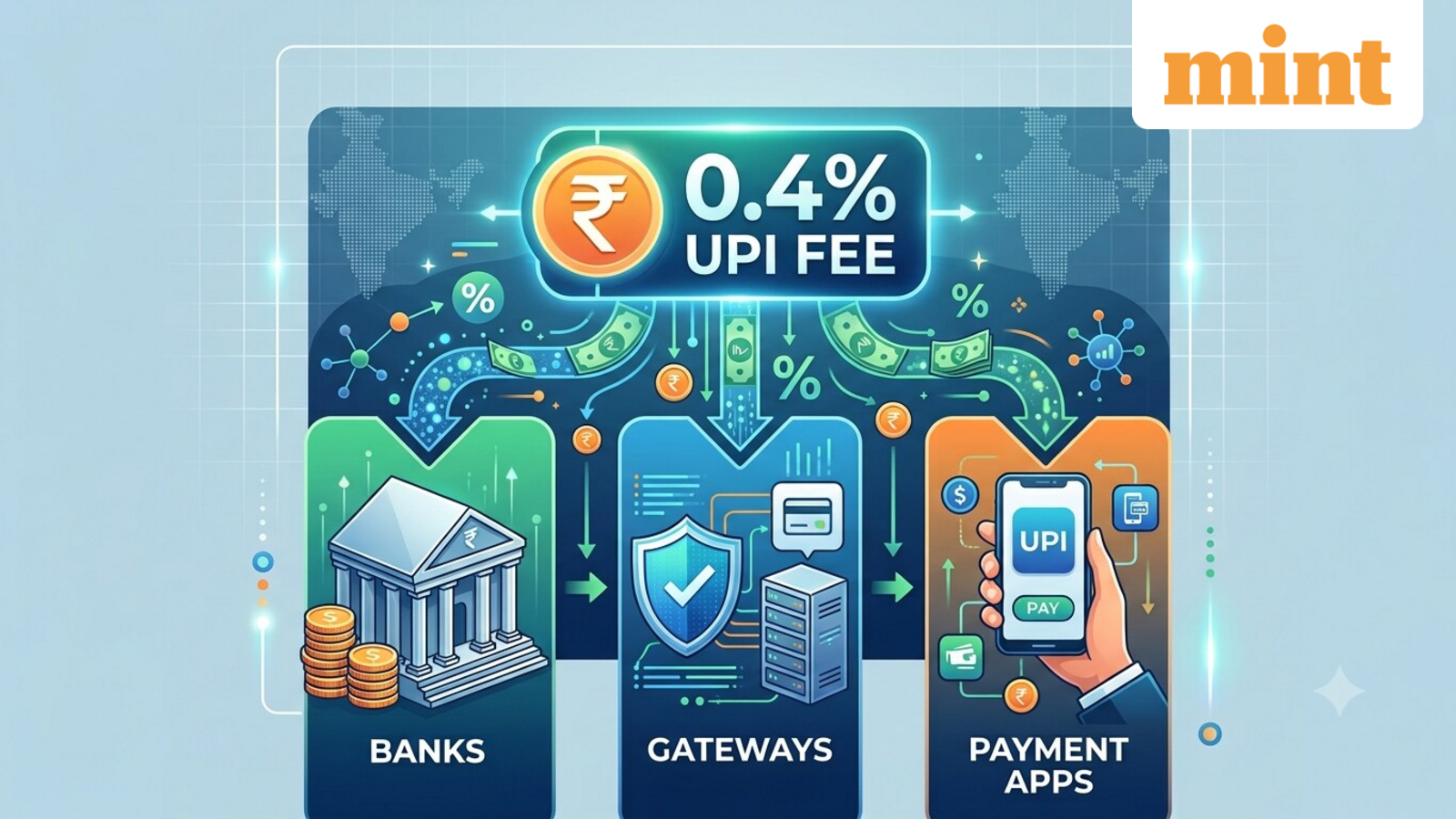
The new Merchant Discount Rate (MDR) on specified UPI transactions is set to create a new revenue stream for the digital payments ecosystem, with the money collected from merchants to be divided among banks, payment gateways, UPI apps and sponsoring banks.
Finance Minister Nirmala Sitharaman has rejected allegations that the decision to introduce the charge was driven by external pressure, saying the framework was a professional decision taken by participants in the payments ecosystem.
“Absolutely baseless. And I totally deny it,” Sitharaman said when asked about Opposition allegations that the UPI MDR decision was taken under external pressure, particularly from the US.
UPI MDR revenue: Who gets the 0.4% fee?
Under the new framework, 40 per cent of MDR collections will go to customers’ banks, 30 per cent to payment gateways, 20 per cent to the UPI app and the remaining 10 per cent to the sponsoring bank of the UPI app.
The revenue-sharing structure is different because UPI transactions have historically operated without a conventional merchant fee. The new model is intended to provide a financial framework for sustaining and expanding the payments infrastructure.
Sitharaman said the government would not receive the money collected through MDR.
“This is not a tax, this is not a cess, this is not even a surcharge. And the collection is not coming to the Consolidated Fund of India.”
The government has said MDR is a charge within the payment ecosystem rather than a government levy, with the proceeds distributed among participating financial institutions and payment service providers.
UPI charges from October 15: What changes?
From 15 October 2026, a 0.4 per cent MDR will apply to specified person-to-merchant UPI transactions above ₹2,000. The charge will be borne by merchants, while banks have been advised to ensure that it is not passed on to customers.
The MDR will be capped at ₹300 for transactions of ₹75,000 or more.
Person-to-person UPI transfers will remain free, irrespective of the amount. Merchant payments up to ₹2,000 will also remain outside the MDR framework.
Small merchants receiving up to ₹1 lakh a month through eligible UPI QR transactions will continue to receive zero-MDR treatment. As a result, around 96 per cent of person-to-merchant transactions are expected to remain unaffected.
Why banks and UPI apps are getting MDR revenue
The revenue split gives the largest share to the bank holding the customer’s account, followed by payment gateways and UPI applications.
The structure could provide an additional source of revenue to companies and financial institutions that support UPI transactions, at a time when the payment system operates at enormous scale.
Reuters reported that the new fee framework is expected to benefit major UPI platforms, while also changing the economics of an ecosystem that has long relied on zero-cost merchant payments.
The government, however, has positioned the change primarily as a measure to support the long-term sustainability of India’s digital payments infrastructure.
UPI MDR: Special rates for fuel, telecom and capital markets
Not every transaction above ₹2,000 will attract the standard 0.4 per cent MDR.
Transactions in essential sectors including railways, telecom, fuel and insurance will attract a flat ₹5 fee above the threshold. Certain capital market transactions, including mutual funds and stockbroking payments, will carry a lower MDR of 0.02 per cent, capped at ₹300.
A dedicated fund will also be established to encourage UPI adoption among small merchants. Five per cent of total MDR collections will be allocated to the fund, with the stated aim of expanding acceptance and usage among small businesses.