Miami’s Building Boom Means Keeping Renters Is Just As Hard As Finding Them
South Florida multifamily developers are starting to realize that the challenges of operating in one of the deepest supply overhangs in the country don’t end with the lease-up.
These days, just as important is the ability to get renters to stay put.
:quality(75))
Bisnow/Chloe Gallivan
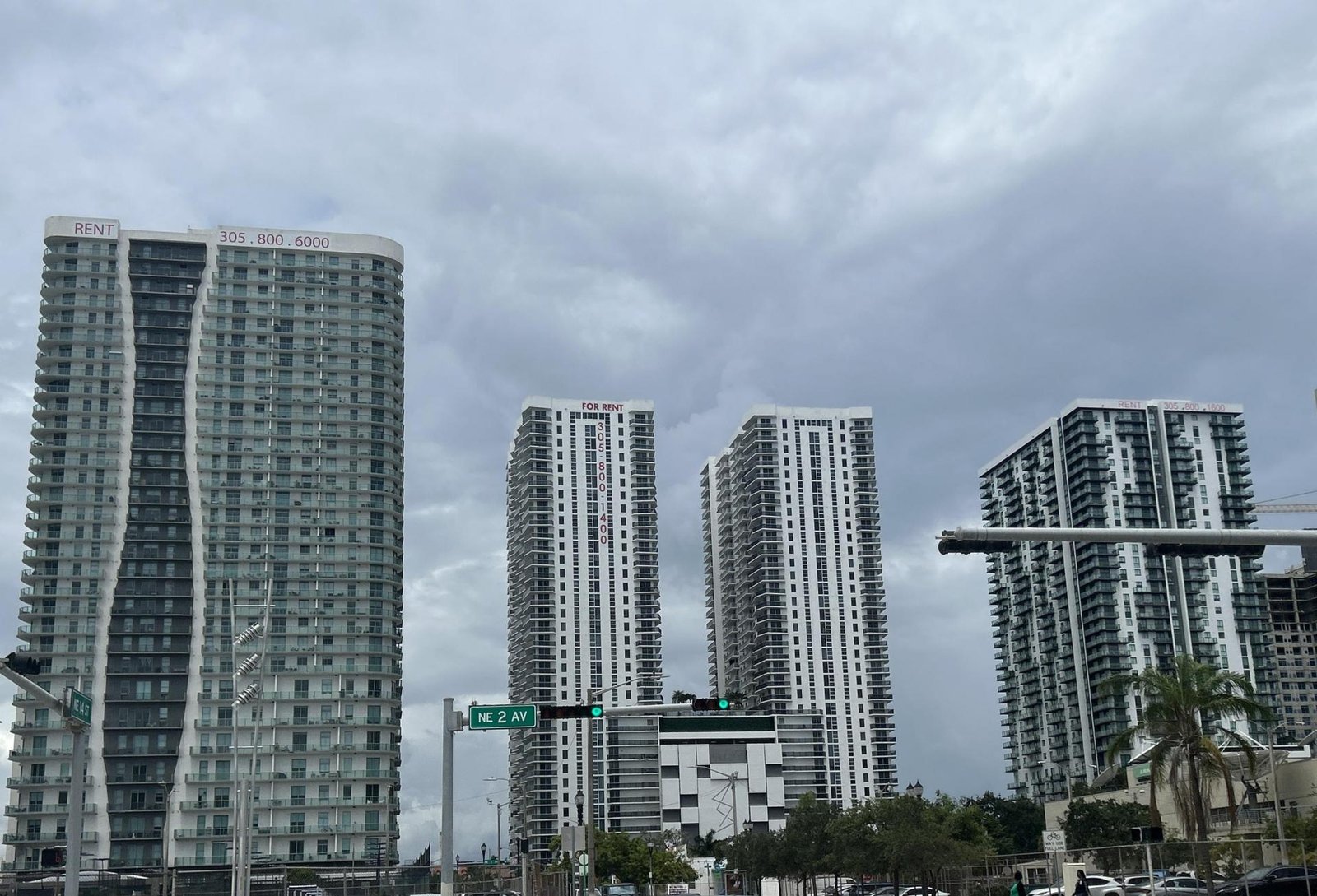
Miami has the most intense multifamily construction in the nation.
“There’s a lot of supply out there in the market, so if I’m a renter and I have multiple places to choose from, I’m going to take the one that gives me the best incentive,” Baron Property Group LLC President Matthew Baron said at Bisnow‘s Miami State of the Market on Wednesday.
Developers have been offering free months of rent to lure tenants amid a seemingly never-ending flood of new product. But concessions have become a slippery and competitive slope that can cost much-needed renewals, industry professionals said onstage at Jungle Island.
Multifamily construction across the nation has softened significantly from its peak, but South Florida has barely tapered off.
The region is experiencing the most intense multifamily construction in the country, with 34,965 units underway in July, according to a Miami Realtors + RWorld report. The bulk of it is in Miami-Dade County, with more than 19,000 units in the pipeline, equivalent to nearly 10% of the county’s existing inventory — well above the 3.5% national average, according to the report.
The region’s pace of construction has been among the highest in the country since 2024, which has led to a sluggish market dominated by flat rents and plummeting values as population growth has stagnated.
Miami-Dade apartment rents averaged $2,590 a month as of the second quarter, no change from the previous year, according to Colliers.
A large driver in flat, instead of falling, rents is concessions, which allow developers to offer a discounted rate without lowering their base rent.
They are mainly used to quicken the pace of lease-up at new buildings, residential brokerage and advisory firm MNS Real Estate CEO Andrew Barrocas said.
But they can be a double-edged sword.
:quality(75))
Bisnow/Chloe Gallivan
Neology Group’s Lissette Calderon, PGIM’s Chad Musgrove, The Estate Cos.’ Jeffrey Ardizon, MNS Real Estate’s Andrew Barrocas, Baron Property Group’s Matthew Baron and Gunster’s Javier Vazquez
Developers risk a lack of cash flow and renters taking advantage of the concession before terminating the lease if they provide free months up front, The Estate Cos. principal Jeffrey Ardizon said at the event.
But there is also danger in spreading out the concession over 12 months, because it gets renters used to paying a discounted rate, rather than the actual rate, when it comes time for renewal.
“We never allowed people to pay the net rent,” Barrocas said.
“They’re paying $3K, all of a sudden, they’re getting a renewal at $4K, and they’re going online … they got two months [free at another building], they’re seeing three months, and it’s just a bad cycle.”
Barrocas recalled a conversation with someone in the market earlier this week where they offered three months free at their property, but once renewals came back around, they only offered one month free.
The landlord lost 80% of their residents, he said.
“If you’re competing with renewals in your original lease-up, it’s going to be a disaster, and you’re constantly going to be chasing and playing that concession game,” Barrocas said.
Even if a tenant isn’t already looking for the next best deal, leasing agents in the market know which buildings are coming off a recent lease-up.
“[The brokers] put somebody in your building, and 10 months later, there’s a new building coming up,” Barrocas said.
“That broker’s calling them up, and they want to get paid again, and they’re pulling them out of your building,” he added. “We’re seeing that over and over again.”
:quality(75))
Bisnow/Chloe Gallivan
Rinaldi Group’s Anthony Rinaldi, Cumming Group’s Heidi Wigand, BEC Group Services’ Francisco Espinosa, Integra Investments’ Cory Yeffet, Taubco’s Laura Tauber and Celerity Fiber’s Leo Martinez
The market is on the precipice of giving developers some leeway. While units under construction are up in the second quarter from a year ago, deliveries have fallen from 3,152 to 2,692, according to Colliers.
The slowdown has allowed absorption to catch up — surpassing the amount of apartments completed in the second quarter for the first time in three years, The Real Deal reported, citing CoStar data.
The market is on its way to pulling back from concessions, said Ardizon, whose company owns properties like The Holly by Soleste in Hollywood and The Atlantic by Soleste in Pompano Beach.
Still, renters are sensitive to any increases in one of the nation’s most unaffordable housing markets.
“You’re going to give them sticker shock at the end and say, ‘Hey, we’re only giving you one month free, but your rent’s going up 300 or 400 bucks a month,'” Ardizon said. “That’s a car payment for them.
“It’s all about psychology for the tenant.”