FCNR(B) funds find a runway ahead of festival season-led credit demand | Finance News
With the festival season approaching and credit demand in the economy remaining strong, banks that have mobilised $133 billion through foreign currency non-resident (bank), or FCNR(B), deposits under the Reserve Bank of India’s (RBI’s) concessional swap window will have an opportunity to deploy the liquidity over the next few months, RBI Deputy Governor Rohit Jain said on Thursday, while stressing that lending decisions will continue to be guided by banks’ credit standards, pipelines, and asset-liability positions.
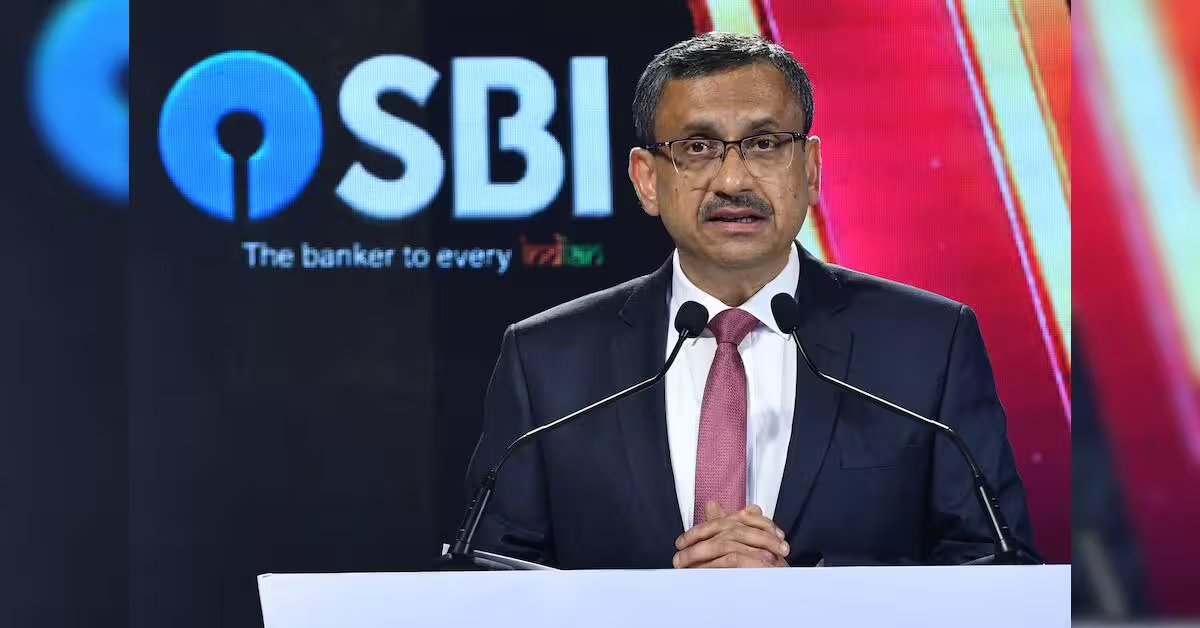
Jain was speaking on the sidelines of the 13th SBI Banking & Economics Conclave 2026.
Banks are flush with liquidity following strong mobilisation through FCNR(B) deposits. While this has raised concerns in the industry about exuberant lending, particularly by smaller banks that have mobilised more funds than anticipated and do not have a larger wholesale book, most banks have indicated that they would first look to replace high-cost deposits with these funds. This is already playing out, with volumes in the certificate of deposit market falling and rates softening. The remaining liquidity is expected to be deployed towards lending to corporates and the retail segment.
The surge in FCNR(B) deposits pushed bank deposit growth to 17.8 per cent as of August 31, narrowing the gap with credit growth, which stood at 19.1 per cent, to just 130 basis points.
“In general, credit demand has been quite broad-based. All sectors and segments have been growing recently. We do not have any concern about any particular sector or segment that we need to flag to banks. Banks themselves have been quite cautious about credit and doing the right thing, and we believe that healthy credit standards will be maintained,” said Jain.
Jain highlighted that the RBI’s concessional swap window, which saw mobilisation of over $143 billion, has thrust India’s foreign exchange (forex) reserves to over $780 billion as of September 11. A week prior, India’s forex reserves had climbed to a record high of $785.7 billion, lifted by a wave of inflows under policy measures to fortify the country’s balance of payments.
“With the latest amount of forex reserves, India has now become the fifth-largest holder of forex reserves globally,” Jain said, adding that the principal considerations for the RBI in managing forex reserves are three: safety, liquidity, and return. All three are important, but the order is also important — safety, liquidity, and return, he said.
“Because these are borrowed funds, forex reserves have to be handled very carefully. Return should not be the only consideration when deploying these reserves, and that is why a lot of care is taken,” Jain stressed, adding that the RBI manages the reserves with the intent that they provide strong external resilience for the country. “Foreign investors and foreign counterparties should have the confidence that the country has enough forex reserves to support its needs,” he said.
“We have expert internal and external asset managers. We deploy forex reserves across geographies and currencies, in different durations and asset classes. We track market variables and parameters very closely and keep looking for better opportunities,” he further said.
Jain said the RBI has been impressing upon states to undertake more reissuances of state development loans, through which states raise funds from the market, to deepen secondary-market activity in these securities.
“To manage state government borrowing requirements, we need a good, diversified investor base and, secondly, liquidity in the market. Liquidity is currently lacking in the state government securities market because it is a very fragmented market. What we have advised states is to engage in more reissuances to promote the development of secondary-market activity. They should also adhere to their borrowing calendars. Through these follow-ups with state governments, we have seen reissuances increase,” Jain said.
The RBI has also been encouraging states to adopt a benchmark issuance strategy, similar to the approach followed for central government securities. So far, 19 states have adopted the strategy, with the remaining states expected to follow shortly.
“This will greatly improve liquidity and secondary-market activity in state government securities, and I believe we will be able to manage state government borrowings much better,” Jain said.
Meanwhile, in his speech, Jain said “technology architecture risk” should be treated as a “first-order enterprise risk”, comparable in importance to traditional balance-sheet risks. Technology is now embedded across core banking, payments, customer onboarding, credit assessment, fraud monitoring, and regulatory reporting, making failures in the underlying architecture capable of disrupting essential financial services, he said.
Banks may outsource technology, but they cannot outsource accountability for the risks arising from those dependencies, Jain said. Lenders need to understand their exposure to external providers, including risks related to access controls, concentration, data protection, recoverability, and exit arrangements. A vulnerability at a financial technology company, software provider, payment interface or common Cloud platform could have implications across the wider financial system when multiple institutions rely on the same provider, he said.
Artificial intelligence (AI) is expected to fundamentally change financial services, but banks need to ensure that governance keeps pace with its deployment, Jain said.
“Governance must precede scale,” he said, warning that AI can amplify errors as quickly as it amplifies efficiency. Automated systems can influence credit decisions, fraud alerts, customer access, pricing, and service delivery, making validation, monitoring, human oversight, and clear accountability essential.
Jain also called for banks to strengthen their cyber defences by moving beyond identifying individual suspicious transactions to detecting broader suspicious patterns. This would require real-time transaction monitoring, behavioural analytics, device and identity intelligence, network analysis, and greater information sharing among relevant stakeholders, he said.
The banking system should also move towards coordinated use of AI for cybersecurity, including centralised threat intelligence and automated detection and response mechanisms, Jain said. The objective should be to identify and contain emerging threats at the speed of the financial ecosystem, rather than only after individual institutions have been targeted.
Boards and senior management will ultimately have to take greater responsibility for technology governance, Jain said. They need sufficient technological understanding to challenge assumptions, assess dependencies, and determine whether resilience arrangements have actually been tested.