Planning a joint home loan with your spouse? Know how it affects eligibility, tax benefits, EMI and repayment
Buying your first home often means balancing a large upfront cost with a long-term EMI commitment. For couples, taking a joint home loan can increase the amount they are eligible to borrow because the lender considers both spouses’ incomes. However, a larger eligible loan does not necessarily mean that taking on a larger debt is the right choice.
Reader’s question: My spouse and I are considering a joint home loan for our first house. How does a joint loan improve eligibility, and what are the key benefits? What else should we know before opting for one?
Pankaj Gadgil, MD & CEO, Aditya Birla Housing Finance , explains that a joint home loan can make buying a first home more manageable because the lender considers the income and repayment capacity of both applicants. Here is what couples should know before opting for one.
How does a joint home loan improve eligibility?
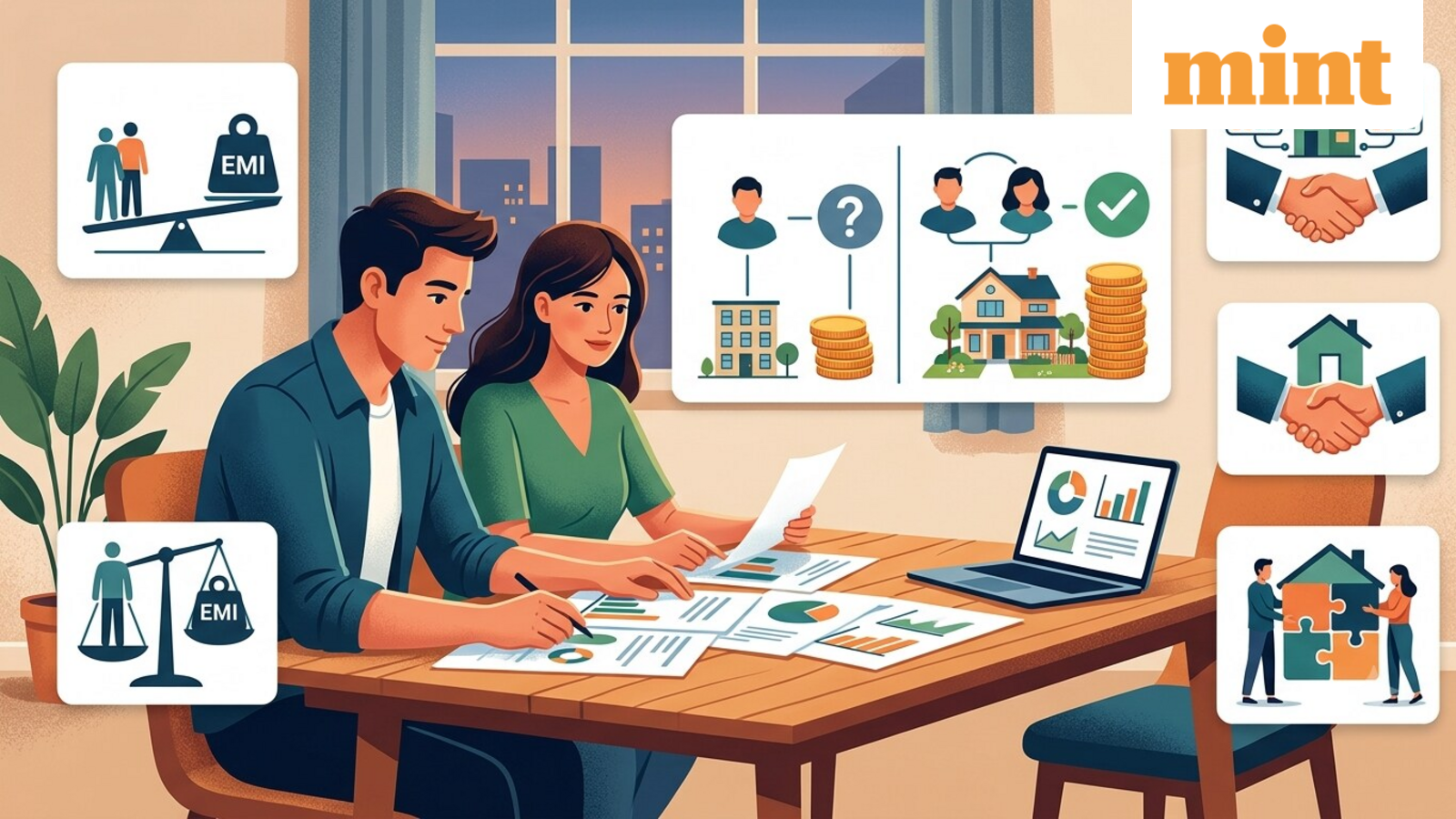
The most immediate advantage is that the lender can consider the incomes of both spouses while assessing their repayment capacity. If one spouse’s income alone supports only a certain loan amount, adding the other spouse as a co-borrower may improve the couple’s overall eligibility.
This could allow the couple to consider a property that may not have been affordable on the basis of one income alone. However, the final loan amount will depend on the lender’s assessment of factors such as income, credit history and existing financial obligations.
What are the key benefits of taking a joint loan?
A joint loan allows both spouses to share the repayment responsibility. Instead of the EMI depending entirely on one person’s income, both can contribute towards it, which can make household cash-flow management easier.
There may also be tax benefits for both applicants. Subject to prevailing tax laws and applicable conditions, both co-borrowers may be able to claim deductions on principal repayment under Section 80C and on home-loan interest under Section 24(b)
However, being a co-borrower does not automatically mean that both spouses can claim the same tax benefit. The ownership structure of the property and each person’s actual contribution towards repayment are important.
Does higher eligibility mean you should borrow more?
Not necessarily. Couples should not treat the maximum loan amount offered by a lender as the amount they should borrow.
Before finalising the loan, they should assess whether the EMI can be comfortably paid after accounting for household expenses, existing loans, emergency savings and other long-term financial goals.
“Higher eligibility should not automatically translate into borrowing the maximum amount available,” Gadgil said. Couples should evaluate whether the proposed EMI can be managed comfortably alongside their regular financial commitments and savings needs.
What else should couples check before taking a joint loan?
A joint home loan is a shared financial obligation, which means both borrowers are responsible for timely repayment. Even if the couple decides that one spouse will pay a larger share of the EMI, a delay or default can affect the credit profiles of both borrowers.
Couples should also decide how the property’s ownership will be structured and have clarity on the down payment, EMI contributions and other property-related expenses.
It is equally important to plan for situations such as a temporary loss of income or a career break. Maintaining an adequate emergency fund and suitable life insurance coverage can help ensure that the family can continue servicing the loan during an unexpected financial setback.
A joint home loan can therefore help couples combine their borrowing capacity and share the repayment burden. But the decision should ultimately be based on what they can comfortably repay over the long term, rather than simply on how much the lender is willing to offer.