Rising Inflation Could Make Festive Celebrations Costlier This Year; What Families Should Consider Before Spending
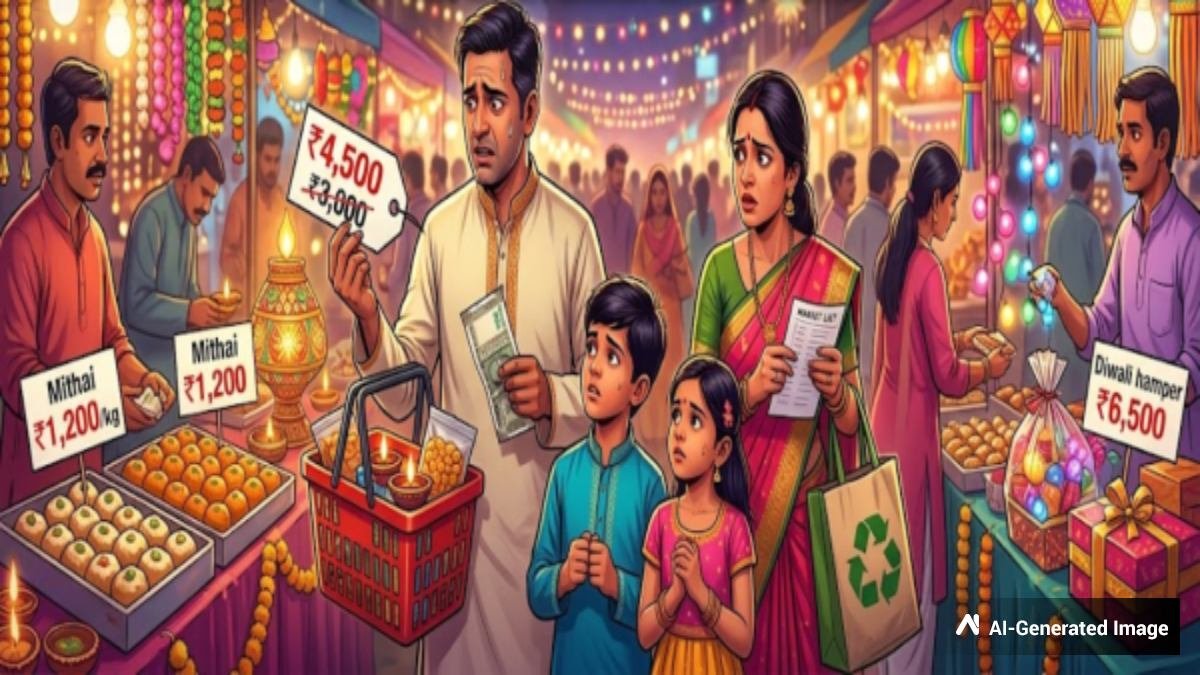
India is heading into another major festive spending season, with Durga Puja, Dussehra and Diwali set to bring a rise in spending on food, clothing, travel, gifts, home purchases and precious metals. But the latest government data shows that the cost pressures facing households are not uniform across categories.
Diwali, Dussehra Shopping Alert: Rising Prices Could Stretch Family Budgets
Retail inflation rose to 4.82% in August 2026, according to the latest Consumer Price Index (CPI) data released by the Ministry of Statistics and Program Implementation (MoSPI). Food inflation was higher at 5.95%, while some categories closely linked to festive spending recorded considerably sharper price increases.
/img/2026/09/inflationdiwali1-86671790108740.jpg "Rising Inflation")
For households, this means the festive bill cannot be judged by the headline inflation rate alone. What a family spends and where it spends can make a significant difference to the overall impact on its budget.
Festive Season Inflation: Jewellery Costs Have Risen Sharply
Precious metals are likely to remain an important part of the festive shopping season, particularly around Dhanteras and other traditional occasions for buying gold and silver. The latest official CPI data shows that inflation in gold, diamond and platinum jewellery stood at 35.53% in August 2026. Silver jewellery recorded an even sharper 107.11% inflation during the month.
For families planning to buy precious metals during the festive season, this makes it important to consider the purchase as part of the overall household budget rather than as a separate traditional expense.
“Gold buying is another important festive tradition for many families. Gold can play a useful role in a portfolio as a diversifier, but investors should also look at their existing exposure through jewellery, coins, ETFs, sovereign gold bonds or family holdings before making fresh purchases. The focus should remain on overall asset allocation rather than accumulating gold simply out of habit,” said Saurabh Bansal, Founder, Finatwork Investment Advisor, a SEBI RIA.
Food Inflation Can Add To Festival Expenses
Food is another major component of festive spending, whether through larger grocery purchases at home, sweets and snacks, family gatherings or eating out. Food inflation stood at 5.95% in August 2026, according to the latest official data. Rural food inflation was 6.13%, while urban food inflation stood at 5.64%.
The cost of eating out can add another layer of pressure. Inflation for food and beverage serving services was 8.41% in August 2026. This means households celebrating across several festivals may find that food-related expenses accumulate over a longer period rather than being concentrated around a single occasion.
Inflation in India in Last Five Years
Looking at the broader trend helps put the latest inflation number into perspective.
The Economic Survey 2025-26 reported average headline CPI inflation of 6.65% in 2022-23, 5.36% in 2023-24 and 4.63% in 2024-25. For April-December 2025-26, average headline inflation was 1.71%.
MoSPI’s latest national accounts estimates show that Private Final Consumption Expenditure (PFCE) at constant prices reached Rs 179.94 lakh crore in FY2025-26, compared with Rs 166.99 lakh crore in FY2024-25. Real PFCE therefore grew by 7.7% during FY2025-26.
At current prices, PFCE rose to Rs 196.51 lakh crore in FY2025-26, from Rs 179.71 lakh crore in the previous year. Per-capita PFCE at current prices increased to Rs 1,38,324, compared with Rs 1,27,627 in FY2024-25.
Festive spending is not limited to large purchases. Gifts exchanged with family members, friends, colleagues and business contacts can gradually increase the total bill. Social expectations can also make it difficult for households to stick to a predetermined amount.
Setting a total gifting limit for the entire festive season can be more useful than fixing separate amounts for individual occasions without considering the cumulative expense. This becomes particularly relevant when several festivals fall within a relatively short period and families have multiple rounds of shopping and celebrations.
The festive season is also associated with discounts on cars, electronics, appliances, smartphones and other high-value purchases. A discount can reduce the purchase price, but it does not necessarily make an otherwise unaffordable purchase financially comfortable.
Households considering an EMI should look at the total repayment obligation and its impact on monthly cash flow, particularly when existing home loans, education expenses, insurance premiums and other commitments are already present.
“Big-ticket purchases such as cars, electronics or home appliances are also common during the festive season because of attractive offers and discounts. While there is nothing wrong with making these purchases, they should ideally be planned rather than made impulsively, so that EMIs do not strain future finances,” said Saurabh Bansal, Founder, Finatwork Investment Advisor, a SEBI Registered Investment Advisor.
What Should You Do With Festive Bonus?
For employees receiving a bonus or additional income during the festive period, the money can be divided between current celebrations and longer-term financial priorities.
One portion can be used for planned festive expenses, while another could be considered for emergency savings, debt repayment or investments, depending on the individual’s financial situation. Pre-deciding the allocation can reduce the risk of spending the entire bonus simply because additional money is temporarily available.
“A simple way to approach festive spending is to earmark a separate budget in advance, use bonuses or dedicated savings where possible, and avoid taking on unnecessary debt. Celebrations become more meaningful when they fit comfortably within one’s broader financial plan, allowing families to enjoy the present without compromising future goals,” the expert added.
Disclaimer: The views and recommendations expressed are solely those of the individual analysts or entities and do not reflect the views of Goodreturns.in or Greynium Information Technologies Private Limited (together referred as “we”). We do not guarantee, endorse or take responsibility for the accuracy, completeness or reliability of any content, nor do we provide any investment advice or solicit the purchase or sale of securities. All information is provided for informational and educational purposes only and should be independently verified from licensed financial advisors before making any investment decisions.