WareSpace Expands Microbay Flex Industrial Concept With South San Francisco Acquisition
:quality(75))
Courtesy of WareSpace
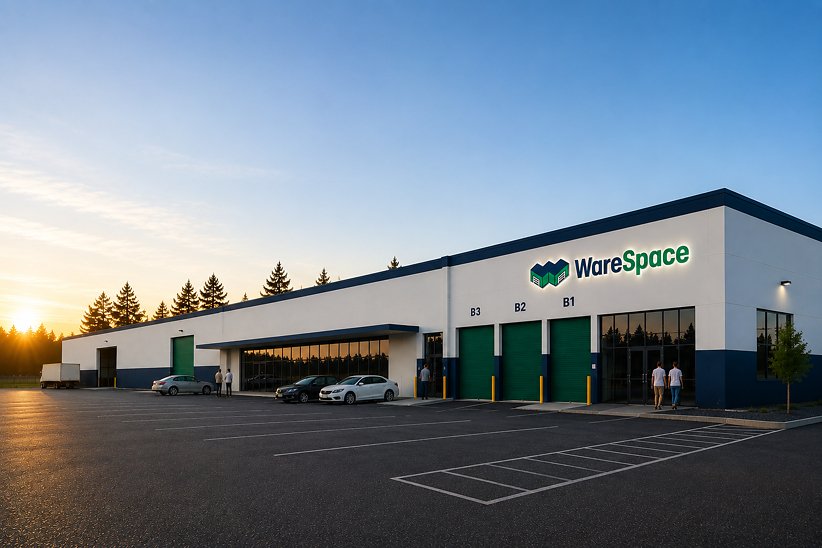
WareSpace is transforming a 64K SF industrial building in South San Francisco into 86 microbay flex suites ranging from 200 SF to 2K SF.
As some functionally obsolete, low-slung industrial buildings in the San Francisco Peninsula are being targeted for demolition to make way for new multifamily towers, one developer is zeroing in on those same assets to create dozens of new small-bay flex industrial warehouses.
Washington, D.C.-based WareSpace beefed up its portfolio of 34 industrial assets spanning more than 3.2M SF with the acquisition of 161 Starlite St. in South San Francisco. WareSpace plans to renovate the 1965-built, single-story industrial property into 86 move-in-ready microbay flex spaces ranging from 200 SF to 2K SF.
WareSpace paid just over $16M for the property and will spend a few million more renovating and subdividing the building, co-founder and CEO Joseph Ely told Bisnow.
It is the first acquisition in the Bay Area for WareSpace, which has stood up its model of flex industrial spaces in major metros such as Austin, Atlanta, Houston, Seattle and Chicago.
“The Bay Area has a great small-business presence, but like a lot of other major cities, it has had a dwindling supply of small spaces,” Ely said. “They are being taken offline or are at capacity when more small businesses are being created or growing.”
Rising rents and tightening vacancy rates for all types of commercial real estate in cities up and down the Peninsula have developers targeting obsolete office and industrial buildings for a wave of new mid-rise multifamily projects. Industrial vacancy for the Peninsula was 5.6% in the second quarter, according to CBRE. At 15.1M SF of inventory, South San Francisco accounts for nearly half of the Peninsula’s 35.1M SF of industrial space.
Small industrial spaces, however, are virtually nonexistent. A LoopNet search of spaces 2K SF or smaller yielded just two available options in South San Francisco.
That dearth of small-bay space creates opportunity for WareSpace to reposition the property and deploy its business model of rolling shared racking, loading docks, utilities, WiFi, security, trash and cleaning into a flat monthly bill.
This model simplifies move-in and operations for small contractors, service firms, distributors, e-commerce companies and other small enterprises, Ely said. WareSpace leases are inked on six- or 12-month terms, and tenants can shrink or grow their footprint at any time, he added.
“The LoopNet search tells the whole story,” he said. “There are no options for [small] businesses. We try to make it a one-stop shop, and they can rightsize at any time to adapt to their current business realities.”
WareSpace is able to repurpose much of the building’s existing infrastructure, including restrooms, office space, and loading and drive-in docks, Ely said. Once the existing four tenants in the building move out, the warehouse space will be gutted and developed into private microbay flex suites. WareSpace is working through development plans and will let the project go to bid once building plans are approved and permits are secured.
The property is expected to come online in Q2 2027, although that target could shift, Ely said.
“The actual space build-out is pretty quick, but there are a lot of compliance and zoning requirements that you have to go through,” he said. “This market in particular has seen a lot of transaction activity around the AI boom, with businesses and companies buying their own buildings or trying to upgrade power. Building departments are inundated with plans and permits right now.”