Long-duration debt funds offer 7.8% yields, but further rate hikes could hurt returns. What should investors do?
Indian bond yields have climbed sharply in recent weeks, with the benchmark 10-year government bond yield rising to around 7.07% on 21 September, its fifth consecutive weekly increase. For debt investors, that means higher yields are now available, but the decision is not as simple as choosing the highest yield. If bond yields rise further, the prices of long-term bonds can fall sharply, which can drag down the fund’s NAV despite the higher income.
With the outlook for interest rates and inflation still uncertain, investors face a choice between locking in current yields and taking the risk that yields could move higher. Vaibhav Porwal, Co-founder of Dezerv, expects Indian bond yields to rise further in Q3 and Q4 FY27 and cautions against aggressive long-duration exposure in the current environment.
High yields do not mean low risk
Long-duration funds currently offer running yields of around 7.50-7.80%, while the benchmark 10-year government security yield is around 7.05-7.20%, Porwal said. This may look attractive compared with other fixed-income options, but investors also need to consider interest-rate risk.
Long-duration bonds are more sensitive to changes in yields. When yields rise, bond prices fall, which can result in mark-to-market losses for debt funds. These losses can offset the income earned from the bonds, particularly over shorter periods.
“Long-duration funds offer high running yields (accrual) and the potential for substantial capital gains during interest rate cuts,” Porwal said. However, he expects Indian bond yields to rise further in Q3 and Q4 FY27 due to rate hikes and inflation pressures.
“If yields rise, the mark-to-market price losses due to high duration sensitivity can erase short-term accrual income,” he said.
How long-duration funds compare with other options
Investors looking for relatively high fixed-income yields have several alternatives.
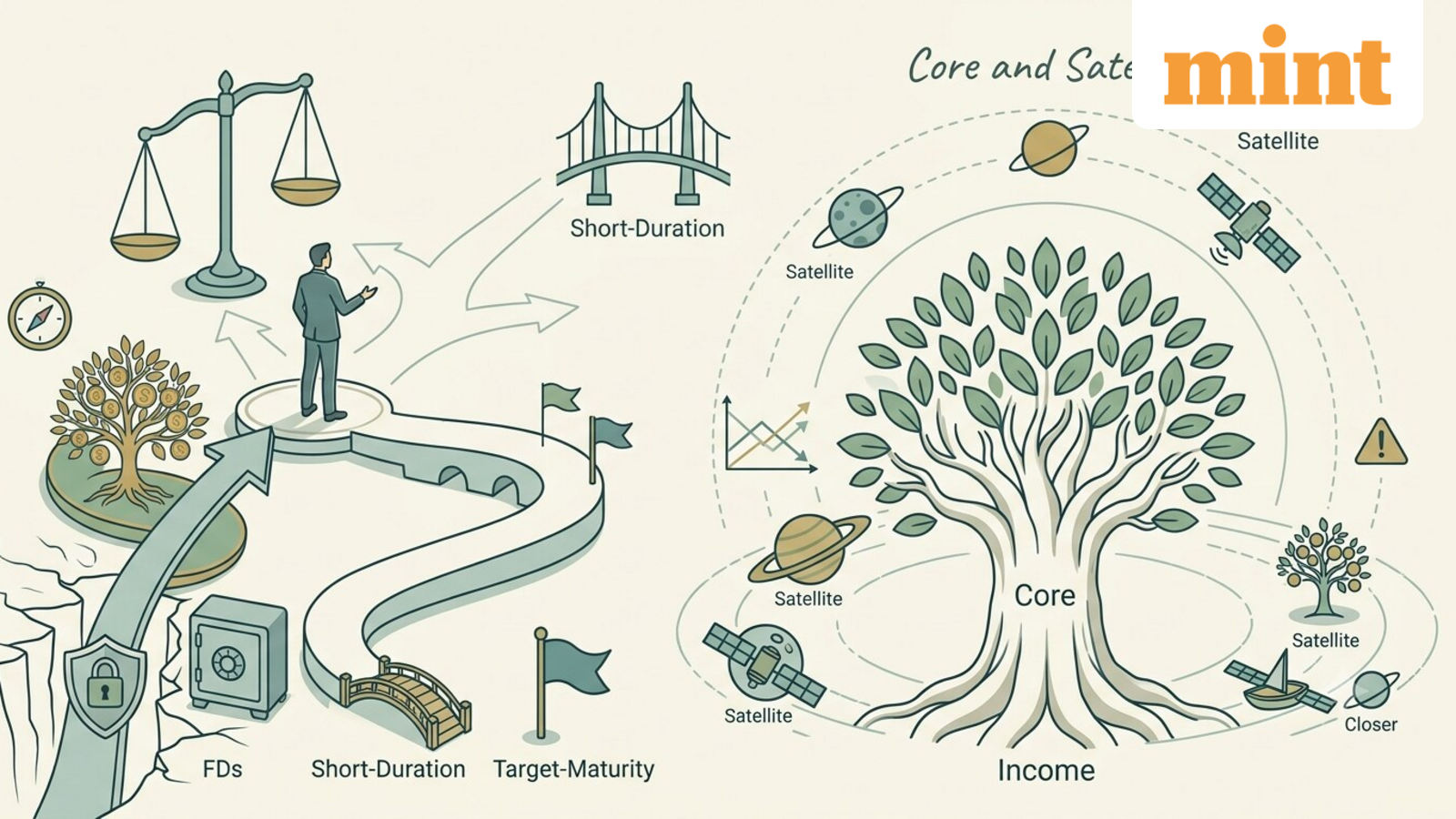
Major bank fixed deposits currently offer rates of around 6.50-7.15%, according to Porwal. Unlike debt funds, FDs do not face mark-to-market volatility from changes in bond yields, although they offer less liquidity.
Short-duration debt funds offer running yields of around 7-7.50%. With a duration of roughly one to three years, they have lower sensitivity to interest-rate movements. They can also reinvest in higher-yielding securities relatively quickly if rates rise.
Three- to five-year target-maturity funds currently offer yields of around 6.75-7.10%, Porwal said. If held until maturity, investors can largely avoid the impact of interim price fluctuations on their realised returns.
The comparison shows why investors should not look at yield in isolation. A higher yield can come with higher interest-rate risk, particularly when the fund holds bonds with long maturities.
Match the fund’s duration with your investment horizon
For investors with a three- to five-year investment horizon, Porwal does not favour locking into funds with seven- to 10-year or longer duration.
“Holding a 7-10+ year duration fund for a 3-5 year horizon creates a fundamental duration mismatch,” he said. Such investors could face unnecessary NAV volatility if yields rise before they need to withdraw their money.
Porwal believes investors with a three- to five-year horizon could instead consider target-maturity funds or short-duration funds, which more closely match their investment timeframe and have lower sensitivity to rising yields.
He views long-duration debt funds primarily as a tactical investment that can benefit when the RBI reaches the end of a tightening cycle and starts cutting rates.
In a core-and-satellite debt strategy, Porwal suggests keeping 75-90% of the debt allocation in lower-volatility, income-generating instruments such as short-duration funds. Long-duration funds, if used, would form a tactical satellite allocation of around 0-15%.
Given his expectation of higher yields in FY27, he believes this tactical allocation should currently be kept at or near zero.
For investors, the key takeaway is that high yields alone are not a reason to lock into long-duration debt funds. The potential for higher returns depends not just on the income from the bonds but also on where interest rates and bond yields move from here.