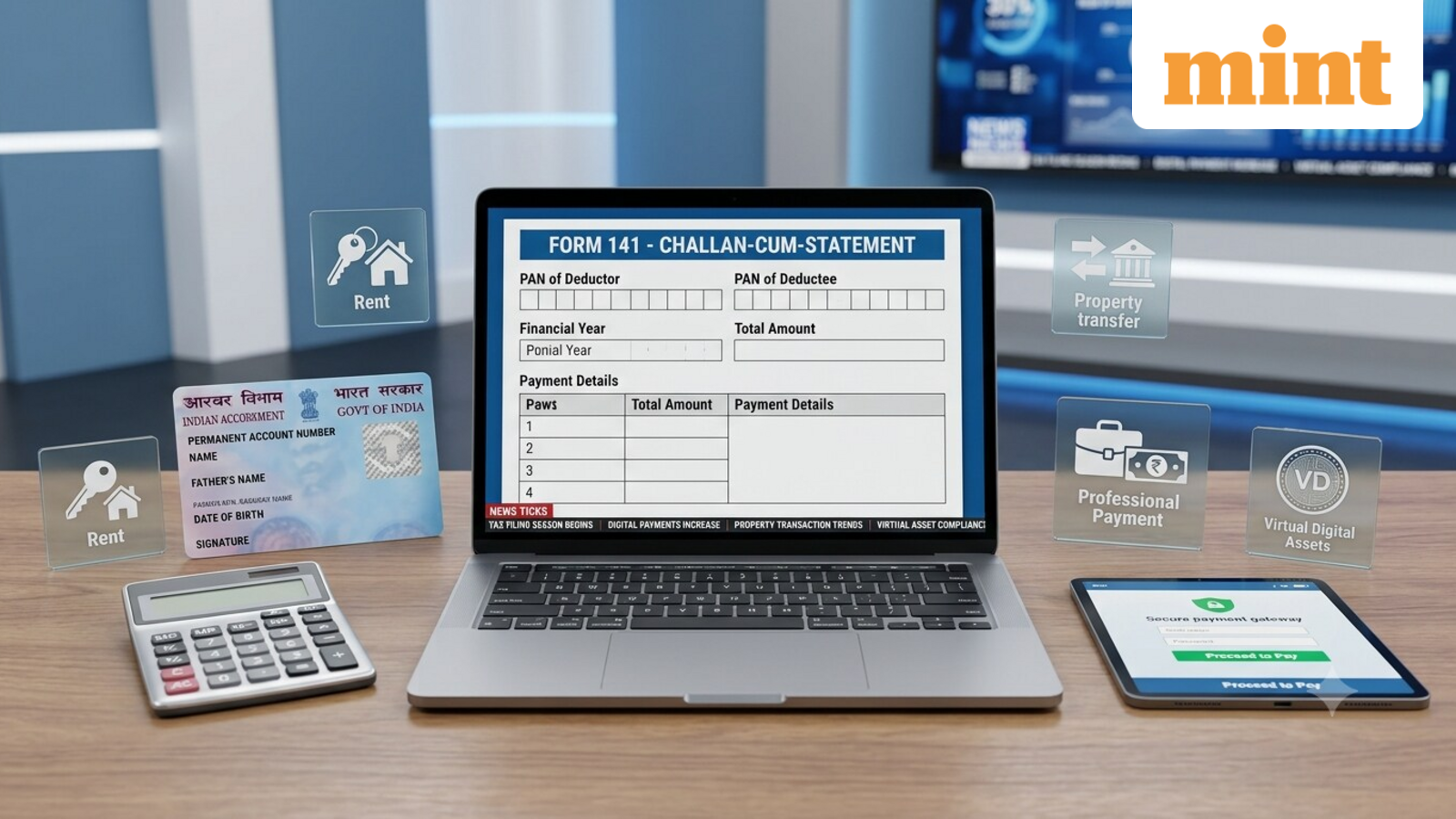
Form 141 for TDS: What taxpayers need to know about the new challan-cum-statement under the Income Tax Act 2025
Taxpayers making certain payments that attract tax deducted at source (TDS) have a new consolidated reporting form under the Income Tax Act, 2025. Form 141, a challan-cum-statement, brings together reporting requirements that were earlier handled through separate forms.
The person making a payment and responsible for deducting TDS is the deductor. The person receiving that payment is the deductee.
The deductor is the one who has to deduct the tax, deposit it with the government, and file Form 141.
What is Form 141?
Form 141 is a unified challan-cum-statement for reporting TDS on specified transactions. It replaces the earlier Forms 26QB, 26QC, 26QD and 26QE used under the Income Tax Act, 1961.
The form is relevant only when the payment or transaction falls under the specified TDS provisions. It is not a form that every taxpayer has to file.
The form has four schedules:
Who can use Form 141?
Form 141 applies to transactions involving resident deductees (the person receiving the payment). This can be filed only after logging into the e-Filing portal through the taxpayer’s (deductor) PAN credentials.
A separate Form 141 is required for each transaction category. However, multiple deductees can be reported in one form if they belong to the same deductee type and have the same month of deduction.
Before filing, taxpayers need:
- A registered e-Filing portal user ID and password.
- An active PAN linked with Aadhaar.
When does the TDS payment and filing have to be completed?
The deducted tax must be paid to the Central Government within 30 days from the end of the month in which the tax was deducted. The payment is made along with Form 141.
For example, if TDS is deducted in September, the taxpayer has to deposit the amount and furnish Form 141 within 30 days after the end of September.
The month of deduction is the month in which the TDS was actually deducted. This is important because it can be different from the year in which the transaction itself took place.
How can taxpayers file Form 141?
Taxpayers can access the form after logging into the e-Filing portal. Once logged in, taxpayers can find the form through the “e-File” section, under “e-Pay Tax”. They then need to select the Income Tax Act, 2025, choose New Payment, and select Form 141.
After selecting Form 141, taxpayers need to:
- Choose Corporate Deductee or Non-Corporate Deductee.
- Verify the pre-filled deductee details.
- Enter the Tax Year of Transactions.
- Enter the Month of Deduction.
- Select the relevant schedule based on the nature of the transaction.
- Enter the required transaction and deductee details.
- Complete the challan-cum-statement and make the TDS payment.
Form 141 is available under the Income Tax Act, 2025, and is intended to consolidate PAN-based TDS payment and reporting for the specified transactions into one process. The form is applicable from 1 April 2026.
Disclaimer: This is only for informational and educational purposes. Please consult a qualified expert for the latest laws and regulations.