Home loan nearly over? 5 things to do with the EMI you are about to save
When you are left with just a few more EMIs on your ongoing home loan, it can feel like a major financial milestone. Still, when faced with such a situation, it is wise for borrowers to use this transition to their advantage and prepare for the future rather than immediately increasing discretionary spending or committing the freed-up cash flow to mutual funds or stock investments.
For example, if you have a monthly income of ₹50,000 and your home loan EMI is ₹15,000. Soon, your monthly home loan EMI is about to conclude, as you have completed the entire repayment as per the home loan terms and conditions.
Then you should spend the freed-up ₹15,000 recklessly or lavishly. Proper thought, time and planning must be dedicated towards making the most of the freed-up amount, so that you can meaningfully grow in life.
Keeping these basics in mind and recognising the importance of proper financial planning to achieve other financial goals seamlessly, here are several financial moves to consider once the home loan is fully repaid.
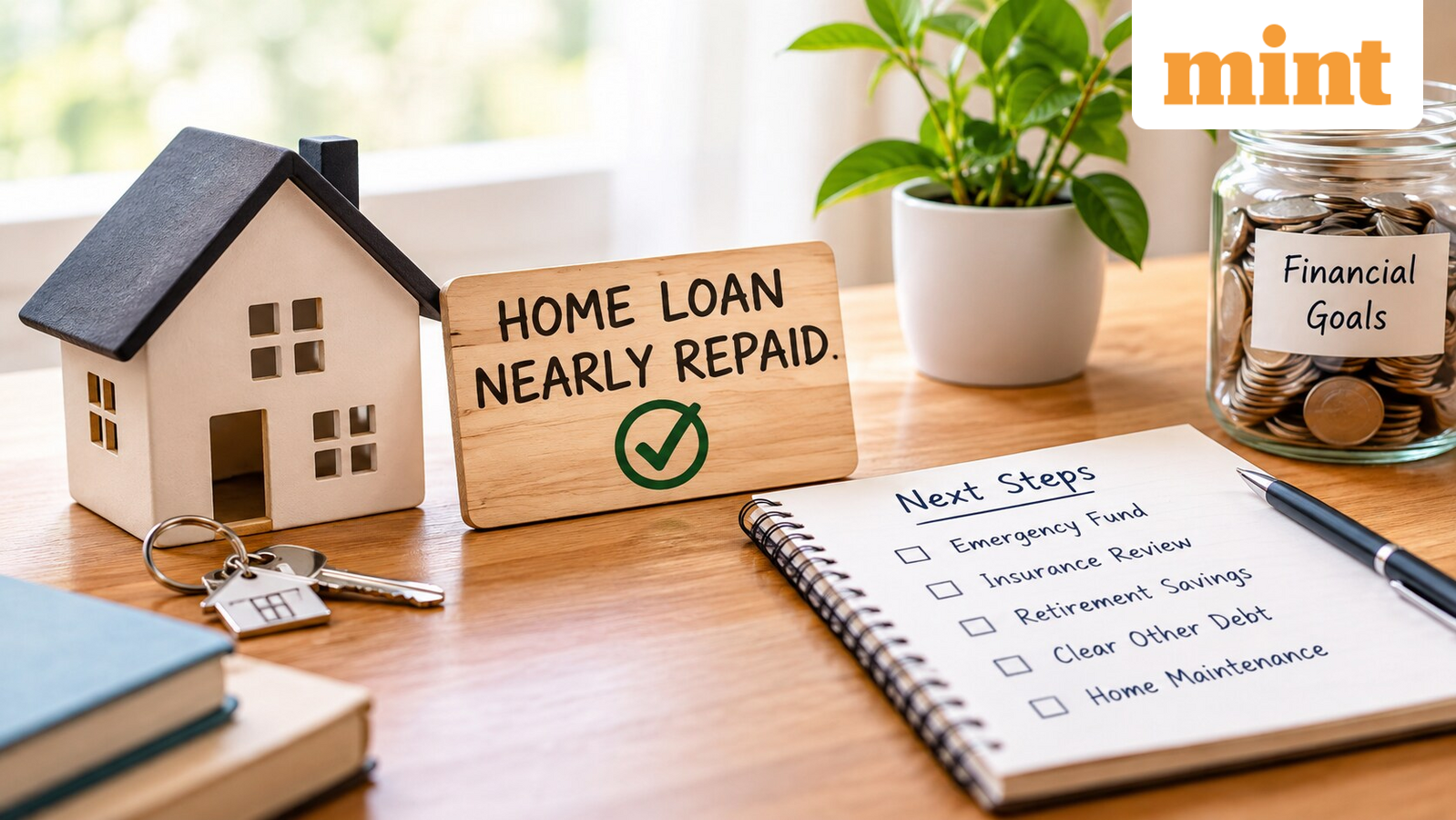
5 financial moves to consider once the home loan is fully cleared
1. Use the saved EMI to strengthen your emergency fund
Before redirecting your EMI savings towards growth-based investments such as stocks and mutual funds, it is prudent to ensure you have an adequately healthy emergency fund.
As a norm, the fund should cover about six months of your essential expenses. This includes household costs, school fees, insurance premiums, day-to-day expenses and other unavoidable payments. This amount can also be higher for borrowers with dependents, variable income or limited job security. An emergency fund should be kept in a relatively liquid, easily available and low-risk investment option so that it is accessible when required.
2. Use the extra cash to review your insurance cover
The end of a home loan is also an appropriate time to reassess and analyse insurance coverage. Borrowers should check whether their term insurance is sufficient to support their family if they are no longer around. They should also review their health insurance, especially if medical costs or family responsibilities have increased since taking out the home loan.
If the home loan included loan-protection insurance, borrowers should confirm whether the policy continues after the loan is closed and understand its terms. The idea should be to conduct a thorough review of core finances and ensure stability and long-term peace of mind.
3. Redirect the EMI towards retirement savings
Once the EMI stops, the same amount can be redirected towards long-term financial goals. Such a step will ensure that an individual can build a more robust and comprehensive retirement corpus.
Borrowers may consider increasing contributions to retirement-oriented options such as EPF, voluntary provident fund, PPF, NPS or suitable stocks or mutual fund investments, depending on their risk profile and investment horizon. Automating this transfer can help ensure that the money is invested regularly rather than absorbed into lifestyle expenses.
4. Use the freed-up money to clear costly debt
Becoming debt-free from a home loan does not necessarily mean that all debt has been cleared. Borrowers should review outstanding credit card balances, personal loans, vehicle loans and other liabilities. If expensive debt remains, using the freed-up cash flow to repay it may be more beneficial than immediately increasing investments. This can reduce the interest burden and improve monthly cash flow.
5. Set aside part of the EMI for home maintenance costs
A repaid home loan does not eliminate the cost of maintaining and caring for a new property. Homeowners should continue setting aside money for repairs, renovations, property taxes, society charges, insurance, and other maintenance expenses. A separate home-maintenance fund can help prevent these costs from disrupting other financial goals.
Borrowers should also collect the properly stamped lender’s no-dues certificate from the relevant authorities, along with the loan-closure documents. They should check that the lender’s charge on the property has been removed from the relevant records, wherever applicable.
The key takeaways
In summary, the end of a home loan is an opportune time for an individual to strengthen financial stability and prepare well for the future. That is why, before increasing spending, borrowers should build an emergency buffer, review their term, life and health insurance, clear any costly debt, and ensure that they redirect their EMIs towards long-term economic objectives.
The best possible use of the freed-up funds will eventually depend on the borrower’s financial situation. An individual with inadequate savings may need to prioritise an emergency fund, whereas another borrower with no other debt to manage may be better positioned to focus on retirement investments.
There is no single rule that applies to everyone here; that is why, when faced with such a situation, it is wise to seek professional guidance to ensure meaningful personal financial planning and long-term economic well-being to make the most of such a situation.