FASTag OneTag launched: Change your bank without replacing the tag—here’s how it works
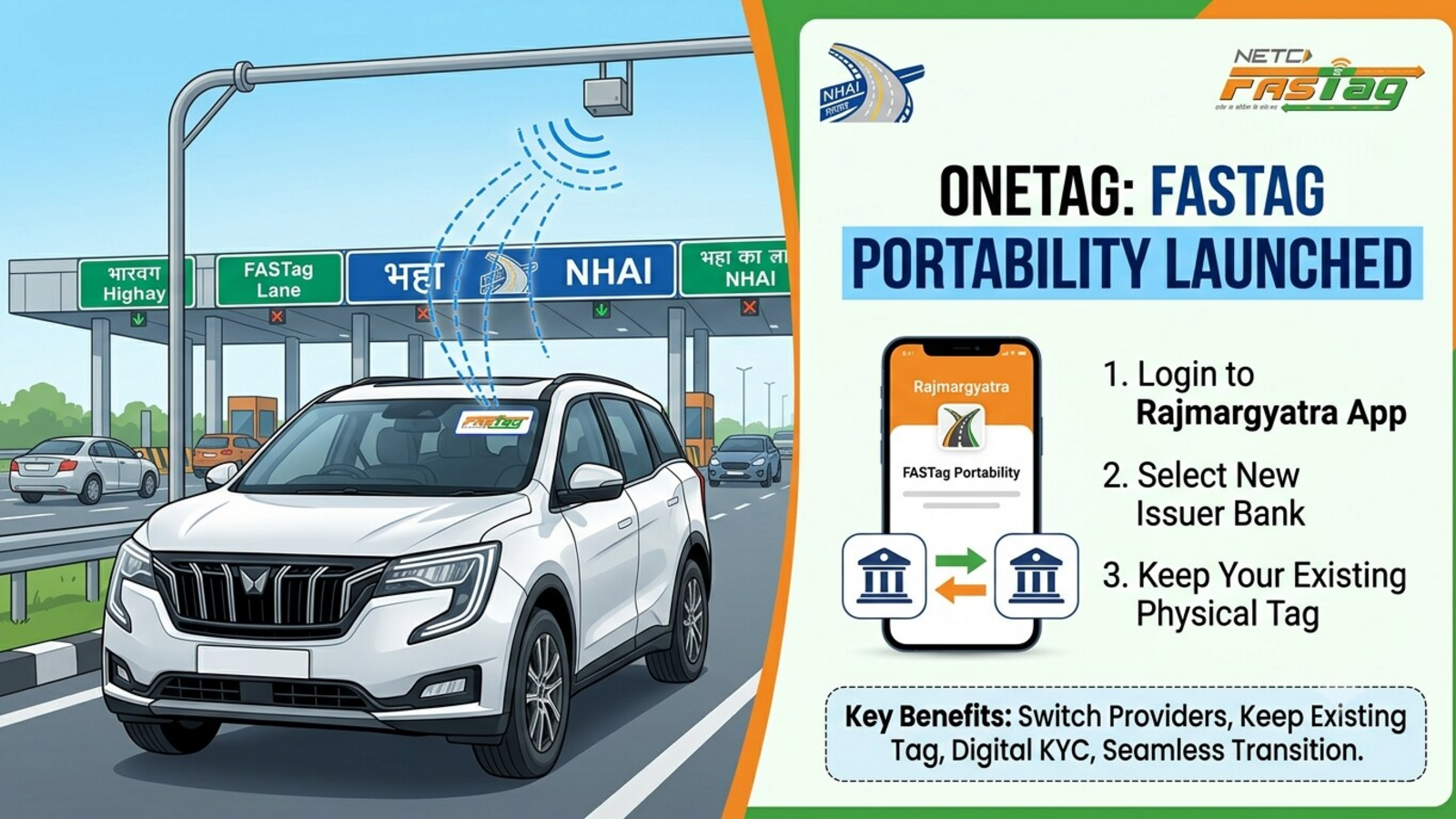
Motorists across India will soon have the flexibility to switch their toll tag provider without replacing their physical tag or closing their active National Electronic Toll Collection (NETC) account. Nitin Gadkari, Union Minister for Road Transport and Highways, officially launched ‘OneTag’—a pioneer portability initiative designed to let drivers change their issuer bank while retaining the RFID tag currently affixed to their windshield. The update raises key questions about wallet balances, re-verification procedures, and overall functionality.
Navigating the OneTag Portability Process via Rajmargyatra
Vehicle owners can initiate and complete the bank switching process through the National Highways Authority of India’s (NHAI) official Rajmargyatra smartphone application. The digital portal simplifies the transition by conducting eligibility evaluations, sending secure verification codes, capturing user consent, and facilitating new issuer selection.
To initiate portability, drivers sign into the application and enter their Vehicle Registration Number (VRN) to verify eligibility. The existing issuing bank then transmits a six-digit Mobile Verification Code (MVC) to validate the user’s authorization. Once validated, the driver selects a new bank, fulfills onboarding steps, and completes the swap. The underlying FASTag ID tied to the registration number stays identical, ensuring the current physical sticker continues functioning seamlessly at toll booths.
Understanding Re-KYC Requirements and Wallet Balance Transfers
Switching issuer banks through OneTag requires fresh Know Your Customer (KYC) verification with the chosen financial institution. The Rajmargyatra application prompts users through these verification checks during the onboarding process to comply with official Ministry guidelines.
Regarding existing funds, the original issuer bank automatically closes the previous digital wallet upon successful portability. Any remaining funds—after adjusting for pending tolls or administrative fees—are refunded directly to the user. Additionally, account holders must observe a mandatory six-month cooling-off window after porting before they can transfer their FASTag to another provider again.
Enhancing Choice within the Digital Toll Ecosystem
‘OneTag’ was created to eliminate the procedural friction historically required when changing toll account providers. By letting commuters preserve their physical tags while choosing banks that offer better service or rewards, the system fosters healthy competition among partner financial institutions. It also reinforces a more integrated, user-centric structure across India’s electronic toll network.
Core Features and Statutory Mandates of FASTag
FASTag relies on Radio Frequency Identification (RFID) technology to process automatic, electronic toll deductions while vehicles pass through plazas without stopping. Linked directly to a prepaid wallet or bank account, the tag mounts onto the inner windshield glass to enable instant payments.
The primary advantages of the system include:
- Uninterrupted passage through highway toll lanes
- Complete cashless convenience for commuters
- Reduced congestion and shorter travel times
- Easy access to digital statement histories via email or web apps
Under historic updates to the Central Motor Vehicles Rules (CMVR) 1989 enacted by the Ministry of Road Transport & Highways, FASTag usage has been mandatory for all Category M and N four-wheeled vehicles carrying passengers or goods since January 1, 2021.