State Street Launches New RIA Custody Business
About five years ago, State Street made a deal to exit the registered investment advisor custody space, selling a majority stake in its Wealth Manager Services business to FNZ, a U.K.-headquartered technology platform provider. (State Street still owns a minority stake in that business.)
But over the last couple of years, the asset management firm has signaled that it is building a new RIA custody offering, and it is finally marketing it to wealth managers. The asset manager went live with its State Street Wealth Services this week, with the intent to bring on its first anchor client, a top U.S.-based RIA, in the next couple of months. There are about 40 additional RIA firms in the pipeline.
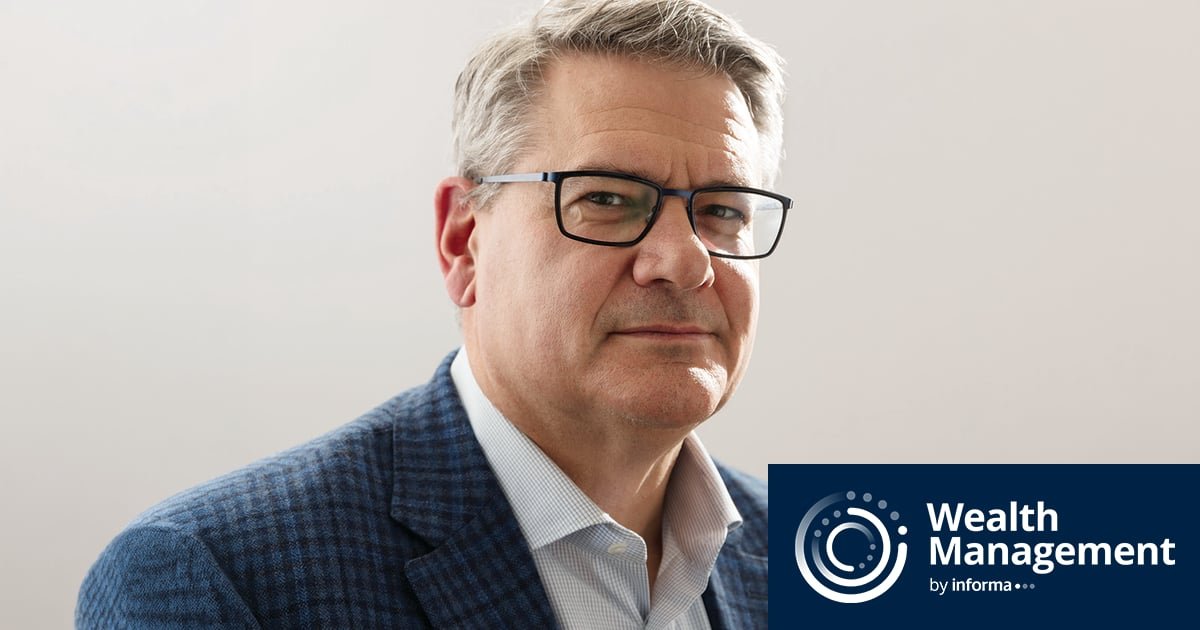
John Plansky, executive vice president and head of State Street Wealth Services, recently spoke with Wealth Management about the launch and what he and the team have been building over the last couple of years.
For one, last year, the asset manager made a minority investment in Apex Fintech Solutions. Apex’s digital clearing and custody platform sits at the core of State Street’s efforts. State Street, which serves as the introducing broker, has built its own layer of data, services and AI capabilities around that.
Plansky has also been busy building out the team, hiring Jennifer Stokes, the former head of clearing operations at Altruist, as head of wealth custody and clearing. Late last month, the firm hired Pete Dorsey, a well-known RIA custody exec with experience at LPL Financial, Altruist and TD Ameritrade, as chief revenue officer for wealth custody and clearing.
One thing Plansky made clear is that the custodian would not go after smaller RIAs, although this is an underserved market that many incumbents have moved away from.
The following has been edited for length and clarity.
Wealth Management: State Street has a history in the RIA custody space, and got out of that business about five years ago when it sold a majority stake to FNZ. Why did State Street sell that business, and why is the firm getting back in now?
John Plansky: I joined State Street in 2017 with the express purpose of helping the firm move into more technology-based services and solutions for the industry. And when I joined State Street, I had already worked with State Street in a past life, so I was very familiar with the firm when I joined, along with a few other executives. I led the acquisition of Charles River Development, which was really our big statement to say that we are going to be in the software investment platform business.
When we bought Charles River, they also had a number of wealth managers as clients. Right around that same time, State Street was exiting the retail custody offering, which they were in the process of selling to FNZ. We ended up keeping a little less than 20% of it. I can honestly say I wasn’t directly involved in that decision because it was before my time when I joined State Street. But after I joined State Street, I think the statement with Charles River made it clear that we were going to be very much on our front foot in terms of technology and platforms and not experiment anymore in these things, but rather get quite serious about it.
And then along the way, I helped create something called State Street Alpha, which is the formal integration of Charles River with everything else we do at State Street for custody and operations.
Then in 2022, I took on an extra job at State Street, which was helping our CFO with our strategic planning for a couple of years. But I asked the question, “Why aren’t we doing more in wealth?” And it was kind of a leading question, and that led to a two-year process where we spent a fair amount of time assessing, analyzing and deciding what we should do in the wealth market.
We luckily already had our State Street Investment Management business being a leader in ETFs, but also target date income-based solutions sold through the retail channel. So we weren’t starting completely from scratch. Also, Charles River, which I knew very well, has done a nice job of positioning itself as a portfolio management trading system for the largest wealth managers who are buying best of breed. So we had some idea about what the wealth market needed, but really hadn’t made a decision as a firm to prioritize wealth. It took a couple of years.
A big question we asked ourselves was, do we want to be a wealth manager ourselves? It wasn’t lost on us that almost all of our competitors, one way or the other, actually are wealth managers, either directly through their private bank or direct to consumer. We made the decision not to do that.
We felt that there was an opportunity for State Street to offer the wealth manager market an integrated offering that included software platforms, custody and clearing, investment solutions, and the ability to do financing and trading at the institutional level, and not be conflicted with them.
WM: What were the next steps after that decision was made?
JP: In 2025, we started to operationalize the strategy. I transitioned the Alpha business to another executive. Then, we started to work across all of State Street to educate our executives on wealth becoming a top priority. Now, if you look at recent earnings calls and investment sessions, we talk about three frontiers of State Street, and one is wealth as a market.
Now we had this one glaring issue: we didn’t have a custody and clearing business for wealth, a minor detail. In our opinion, to be relevant and truly be a strategic partner to wealth managers, we believed we should be in the custody and clearing business. Even though we custody $50-something trillion in assets, those platforms and services really aren’t built for the wealth market.
We said, instead of trying to do this ourselves, what is the best firm out there that has a truly digital platform for custody and clearing? That led us to Apex FinTech Solutions. We were just in the process of completing a whole new platform to get off Broadridge that was proprietary, all cloud native. And we felt they were the only firm in the industry that has that real-time books and records capability.
Secondly, they’re the No. 1 custodian for fintechs. Third, CEO Bill Capuzzi is fantastic. He’s exactly what State Street’s looking for, an accountable leader, really credible.
Then they’re big enough. One thing with State Street, we’re a really huge company, and we have a very big ambition to be a global provider, not just a U.S. provider. And so if we’re going to partner with somebody, the firm had to be big enough to help meet our ambition.
So last October, we closed on the partnership with Apex, where we took a minority interest in them. As importantly, we constructed a series of agreements that they would power our custody and clearing offering for the wealth market around the world.
We decided to target the RIA market initially. We felt that there was an opportunity in the marketplace given what’s happening with the legacy providers. We thought we would also get a nice balance of mostly domestic clients, but also a handful of the largest RIAs are global.
And we felt that would be a really interesting way to forward our global ambition as well. And so that’s what we’ve been working on. I think from last, let’s say fall until literally this week, we worked on setting the service up and getting all the approvals with the regulators and internally. We’re a Global Systemically Important Bank, which means we’re regulated by everybody in the world.
WM: What differentiates State Street’s custody offering?
JP: Simply put, the power of leveraging Apex’s digital platform with State Street’s ability to offer institutional trading, financing capabilities, our balance sheet is massive. And as a new entrant, unlike the current firms, we’re not beholden to existing legacy business models. And so things that might be happening in the industry, like the inability to support long/short strategies, the changing nature of the referral network programs, the upcharging on certain things, we’re a new entrant. We’re interested in making RIAs happy, not frustrated.
Also, because we do custody a huge percentage of asset managers, hedge funds and private markets firms, we have a lot of interested parties that want to work with us.
Think about us as plumbing and piping to the wealth manager community. We have a lot of firms—from the big private asset firms to asset managers that we currently work with—are really keen to figure out, if we’re doing custody and admin with them, is there a way to make it easier to trade and custody on the wealth side? All of that positions us really well.
Finally, on AI, we are at the forefront of responsible AI. As a regulated entity like we are, we’ve got a lot of capabilities leveraging centralized data, all the different LLMs, but also a mandated reputation for doing it in a very responsible way. Our service model will be very much a great experience for clients because we’ll have excellent people leveraging AI-based and centralized data in addition to processing. We’ll also be working with our clients on their strategies as they think about how to leverage AI-based solutions and resources becoming available to them.
WM: What type of RIA firms are you going after? Is there an end client that you’re targeting?
JP: The offering is resonating with larger RIAs, those with $1 billion or more in assets, not smaller ones. They resonate with State Street; they know who we are. They themselves are trying to scale at a really high level of assets. Also, the RIAs using Charles River tend to be larger RIAs with $10 billion-plus.
Also, what’s emerging are high-net-worth and ultra-high-net-worth clients. And that gets to this institutional trading and financing capability we have. At State Street, we are financing some of the well-known hedge funds that offer long-short offerings to the retail market. We can offer that to RIAs directly that have such an investment management offering.
Because our other two major strategic initiatives are alternative assets and digital assets, as those become more and more relevant to the end client of these advisors, we’re extremely well-positioned. We already partner with companies like iCapital. We’re an investor in iCapital.
We have relationships with all of the ‘who’s who’ on the private asset side as an administrator, and on digital assets, we are very much engaged in our existing business around tokenized assets. As those asset classes get more relevant, we’re committed to this ability to deliver on a hybrid asset class offering for these advisors.
WM: Was this custody offering built from the ground up, or did you use any tech or systems from the old custodian?
JP: No, that business we sold to FNZ, and we made a decision to say, “We’re going to go all in with a digital platform with Apex.” When we sold it, it wasn’t really a material business for State Street.
We have Apex as a core partner, but then we have built a layer of data and services and AI capabilities, for lack of a better word, around Apex so that we take their APIs, package them in a way that they’re consumable by the RIA. We’re adjacent, so also when it comes to things like AML and KYC, we have certain standards that we had to make sure we can deliver against. And so there’s a fair amount of very advanced new software and platforms we built ourselves in concert with Apex that we think is super compelling.
WM: Does State Street still own a stake in FNZ’s custody business?
JP: Yes, we still have a minority stake in it.
WM: Does product distribution play into the strategy here in terms of getting State Street’s products in front of the RIA channel?
JP: It’s part of it for sure. We wouldn’t be doing our organization a service if we ignored that. However, we do think most RIAs don’t like the idea of only having one option, so our platform and custody and clearing will give SSIM the opportunity for sure to be something that RIAs know will work out of the box really well. But to be relevant, in our opinion, you have to be able to do that for all the leading asset managers.
We’re trying not to put people in a position where these upcharges are happening. There are opportunities for us not to do certain things the legacy firms do to make it easier for them to select State Street as a custodian, whether it’s SSIM or other investment solutions that are working through us. So that is part of it for sure.
WM: When you’re talking about the upcharges, are you referring to other custodians upcharging asset managers on their platforms?
JP: Typically, we’ve seen things like the existing legacy folks might charge an ETF provider a certain amount now to be on their platform. That was part of the Vanguard decision to buy Altruist, according to the pundits. We tried to analyze this Vanguard decision to buy Altruist. It made us look pretty smart to be ahead of this a little bit, not reacting to it. We already have a strategy.
And one of the statements one of the analysts made was around just this issue of custodians charging ETF providers maybe for the first time. So we see this as an opportunity for us as a new entrant to not put either our clients as RIAs or people who we’re working with as asset managers in that position and trying to be much more like we always are at State Street. Be a place you can trust, be a place you can go. We’re not conflicted with you.
If we’re an RIA and your options are Fidelity, Schwab or Vanguard, they all have very powerful direct-to-consumer businesses. And it’s not lost on us that some of these firms have recently talked about AI and hiring thousands of advisors themselves. We’re not doing that. We chose not to be a wealth manager. We have the size, the digital capabilities, things that the other firms don’t have. And it’s resonating.
WM: Do you think that you will eventually run your own custody?
JP: I don’t think so. We’ve established a relationship with Apex for many, many years. It’s a minority investment, but it’s not a small investment. But in terms of the core offering, I would expect us to be working very closely with Apex for a long time.