Property boom beyond metros: 11 cities see 63% price rise in five years | Personal Finance
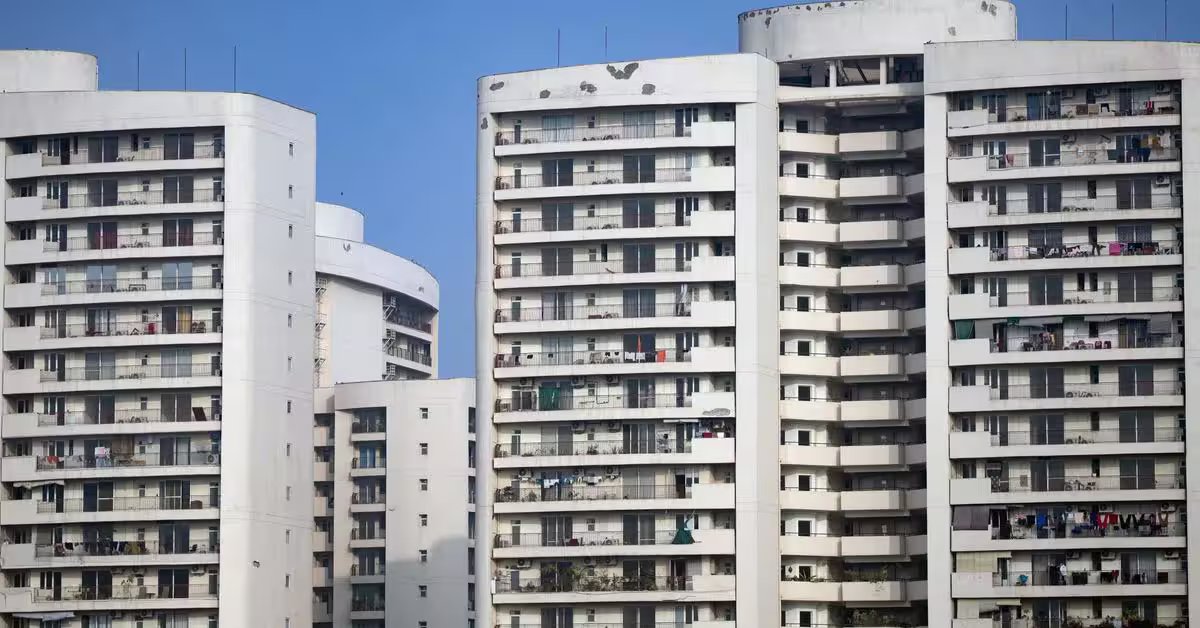
India’s property market is expanding beyond its traditional metropolitan centres, with 11 emerging real estate markets recording a 63% rise in residential prices over the past five years, according to a report by the Confederation of Indian Industry (CII) and Knight Frank India.
Residential prices in Bhopal, Bhubaneswar, Chandigarh Tricity, Goa, Indore, Jaipur, Kochi, Lucknow, Nagpur, Visakhapatnam and Coimbatore rose at an average annual rate of 8% between 2016 and 2026. This compares with a 4% CAGR across India’s top eight cities — Mumbai, Bengaluru, Delhi-NCR, Hyderabad, Chennai, Pune, Ahmedabad and Kolkata.
The divergence has become sharper in the more recent period. Between 2021 and 2026, prices across the 11 emerging markets increased 63%, compared with 42% across the top eight cities.
How much does property cost in these cities?
Prices vary significantly across the 11 markets, according to Knight Frank Research.
Goa has the highest quoted residential price range, at ₹11,500-13,500 per sq ft. Chandigarh Tricity follows at ₹7,500-10,500 per sq ft, while Jaipur and Kochi are in the ₹7,000-9,000 per sq ft range.
Bhubaneswar’s residential prices are quoted at ₹6,550-8,550 per sq ft, while Lucknow is at ₹6,500-8,500 per sq ft. Coimbatore is in the ₹6,000-8,000 range and Indore at ₹5,500-7,500 per sq ft.
At the lower end are Nagpur and Visakhapatnam, both at ₹4,500-6,500 per sq ft, while Bhopal is at ₹5,000-7,000 per sq ft.
For example, at a quoted price of ₹6,000 per sq ft, a 1,000-sq-ft home would have a base property value of about ₹60 lakh, before registration, taxes and other costs. At ₹12,000 per sq ft, the same-sized property would cost about ₹1.2 crore.
The comparison illustrates why “Tier-2 city” does not automatically mean “cheap property”. Prices differ considerably even among the emerging markets identified in the report.
What is driving the property boom?
Infrastructure investment is one of the major factors highlighted by the report.
The share of infrastructure expenditure in total government capital expenditure increased from 39% in FY2015 to 55% in FY2026, according to the report. It also points to a government three-year public-private partnership pipeline comprising 852 projects with a combined project cost of ₹17 lakh crore.
The report says infrastructure investment can strengthen the base for private capital and have a long-term positive impact on Tier-2 and Tier-3 markets.
But better roads, airports or rail links alone may not be enough to sustain property demand.
This distinction is important for property buyers. An infrastructure project can improve accessibility, but long-term housing demand is more closely linked to whether people and businesses actually move into the area. ““India’s real estate growth is increasingly broadening beyond the traditional metropolitan centres. The investable opportunity across Tier-2 and Tier-3 cities, satellite markets and emerging corridors will be shaped not simply by infrastructure creation, but also by their ability to convert connectivity into sustained economic activity. Cities that bring together employment, enterprise, population growth, consumption and urban capacity will be better placed to build deeper and more diversified real estate markets. For investors and developers, this represents a wider opportunity landscape, but one that requires greater selectivity and a sharper understanding of each market’s underlying economic drivers,” said Shishir Baijal, International Partner, Chairman & Managing Director, Knight Frank India.
Commercial activity is growing too
The residential story is accompanied by expansion in logistics and retail.
Key Tier-2 markets recorded 11.2 million sq ft of warehousing lease transactions in 2025, broadly unchanged from 11.4 million sq ft in 2024. Six of the emerging markets identified in the report — Lucknow, Jaipur, Nagpur, Indore, Coimbatore and Bhubaneswar — together accounted for 5.3 million sq ft, or nearly half of transactions across key Tier-2 cities.
Retail is also expanding outside India’s largest metros.
India had 134 million sq ft of organised shopping-centre stock across 32 cities and 365 shopping centres in 2025. Tier-2 cities accounted for 36 million sq ft of this stock.
Ten of the 11 emerging markets identified by CII and Knight Frank — excluding Goa from this particular calculation — accounted for approximately 60% of total Tier-2 shopping-centre stock, the report said.
For a homebuyer, the development of retail and warehousing can offer an additional indicator of economic activity beyond the residential construction pipeline.
Population growth could further shift the housing market
The demographic outlook also favours cities outside the biggest metros.
According to the report, cities currently contribute approximately 60% of India’s GDP while accounting for around 40% of the population, or about 597 million people. India’s urban population is projected to reach around 740 million by 2050.
The population growth gap is particularly notable. Cities beyond India’s eight largest metros are projected to record 28.2% population growth, compared with 8.7% for the top eight cities.
The report also points to the growing role of smaller cities in India’s enterprise ecosystem. MSMEs account for around 31% of GDP, 35% of manufacturing output and 49% of exports, while Tier-2 and Tier-3 cities account for around 50% of India’s more than 200,000 registered start-ups, according to figures cited in the report.
If employment and enterprise expand alongside infrastructure, these cities could see greater demand for housing, offices, retail and logistics.
Does faster price growth mean better returns?
Not necessarily.
The 63% price increase is a historical figure, not a forecast of future returns. The report identifies these cities as markets with potential for the next phase of real estate growth, but it also stresses that their future development depends on factors including employment creation, enterprise formation, infrastructure and urban capacity.
“While the top eight cities will continue to anchor the sector given their volume, Tier-2 and Tier-3 cities are becoming increasingly important growth anchors. India’s real estate sector output is projected to reach $5.8 trillion by 2047, with Tier-2 and Tier-3 cities estimated to contribute 25–30 %, representing $1.4 –1.7 trillion in output. Realising this opportunity will require infrastructure that generates employment and enterprise, supported by demand-led formal supply, serviced land, efficient approvals, reliable utilities and liveable urban conditions,” said the report.