Digital gold is booming: Are investors overlooking hidden risks? Experts compare it with gold ETFs
Investors can buy digital gold in tiny quantities through apps such as PhonePe, Paytm, and other digital platforms, often starting with ₹1, ₹10, or ₹100. However, gold ETFs are SEBI-regulated products that trade on stock exchanges.
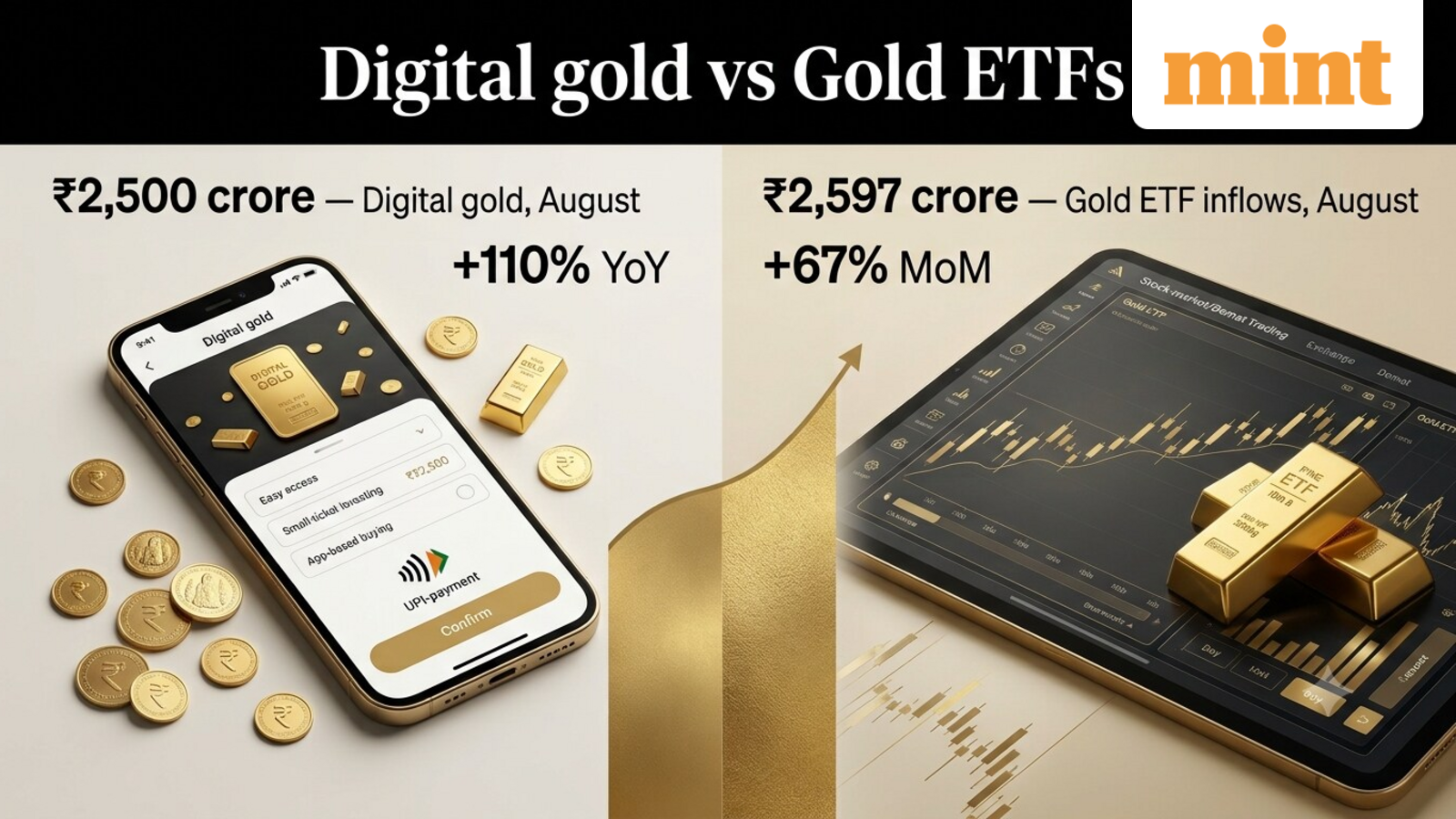
Demand for both products has remained strong. According to the latest World Gold Council research, digital gold buying in India held steady from June to August, averaging around ₹2,500 crore per month, with August 2026 purchases rising 110% year-on-year.
Inflows into gold ETFs rose 67% month-on-month to ₹2,597 crore in August. While this was below the exceptionally strong levels seen in the first quarter, inflows remained positive on a near-sustained basis throughout the year, according to the World Gold Council.
But this raises an important question: why is digital gold attracting strong demand even though it does not come under SEBI’s regulatory framework? Are investors overlooking the risks? Here’s what you need to know before investing.
Why is digital gold gaining popularity?
Gaurav Mathur, Founder & CEO, SafeGold, highlighted two key factors. One is the ability to take physical delivery of gold, particularly through seamless integration between digital-gold platforms and jewellery brands.
The other is the possibility of earning a yield in grams of gold by leasing out digital gold. For example, a 100-gram balance at the beginning of the year could grow to around 103-104 grams by year-end, he noted.
Gaurav Arora, Head of Research, SAHI, said the appeal also comes from the low entry barrier. Investors can start with very small amounts through an app without opening a demat account or understanding the securities market.
“For many consumers, buying digital gold feels similar to buying a gold coin or jewellery online, so the regulatory distinction may not be top of mind when making small, recurring purchases,” Arora mentioned.
What key risks investors overlook in digital gold?
“Digital gold is not governed by SEBI or the RBI,” noted Harsh Vardhan Dawar, ACA, CFA, FRM, Founder of Wealth Cafe. SEBI mandates physical audits of gold ETF holdings, while apps selling digital gold have private vault arrangements in place.
“This means any grievances need to be managed with the private app directly, without any regulatory mechanism in place. In case of bankruptcy or insolvency, ETFs have a better recovery mechanism in place,” Dawar added.
Arora noted that investors should therefore examine who provides the product, how the underlying gold is stored and what happens if the platform faces operational or financial problems.
What are the cons of digital gold over gold ETF?
“Digital gold comes with a buy-sell bid-ask spread of 3% to 6%. In addition, it attracts GST at 3%. So, an investor is down 6% to 9% immediately after purchase,” Dawar noted.
Physical conversion can add another cost. Making charges for small coins or holdings can be around 5-10%, he added.
By comparison, a gold ETF typically involves a visible annual expense ratio of roughly 0.3-0.8%, along with a small brokerage cost, Dawar said.
Who may prefer digital gold and who may prefer gold ETFs?
Investors looking to invest purely from a financial perspective with a 1-2 year horizon should choose gold ETFs. For those who want the option for physical delivery or are likely to stay invested for more than 2 years, digital gold is a great option, Mathur said.
Dawar highlighted another distinction. Investors without a demat account, or those wanting to invest very small amounts, may find digital gold more convenient. It can be purchased through payment apps with a UPI transaction and is available 24/7, unlike ETFs, which trade during market hours.
Is there any industry framework for digital gold?
To match the regulatory setup available for ETFs, DPMACI (Digital Precious Metals Assurance Council of India) was formed by major industry participants—including vaulting firms, refineries, sellers and fintech distributors—as a Self-Regulatory Organization (SRO) to bring standardization to the sector, Dawar mentioned.
Mathur said DPMACI standards ensure that all customer gold is 100% backed by physical gold as regularly verified by an independent auditor. DPMACI standards specify that gold is securely stored only with leading custodians with full insurance under the protection of an independent trustee.
What regulatory safeguards could digital gold need?
The main priority should be consumer protection – all digital gold must be 100% backed by physical gold of the stated purity. If a digital gold provider goes bankrupt, customer assets should always be protected and segregated from company assets, Mathur added.
Dawar suggested that SEBI or RBI could consider giving legal backing to an SRO such as DPMACI and bring entities across the digital-gold ecosystem under a common framework. He also suggested RBI oversight of vaulting and custody arrangements and minimum net-worth requirements for digital-gold platforms, linked to their sales volumes.
Disclaimer: This story is for educational purposes only. The views and recommendations made above are those of individual analysts or broking companies, and not of Mint. We advise investors to check with certified experts before making any investment decisions.
About the Author
Sheetal Goel is a Content Producer at Livemint, where she covers corporate developments, personal finance, business trends, markets, and SEBI-related updates. She focuses on simplifying complex financial concepts and presenting them in a clear, reader-friendly manner, thereby helping audiences better understand investment trends, personal finance, and market developments. Her writing focuses on making finance more accessible to everyday readers while maintaining clarity, accuracy, and relevance.
She holds a degree in Economics (Hons.) along with an MBA in Finance, which has helped her develop a strong foundation in financial analysis, market understanding, and business reporting. Before joining journalism, she worked with finance and broking firms, where she closely followed market developments, investment strategies, and evolving industry trends. This practical exposure strengthened her understanding of financial markets. She has also written content across multiple formats and platforms, including YouTube, LinkedIn, and Instagram.
Over time, she has developed expertise in covering market-linked stories, investor-focused topics, and regulatory updates in a simplified yet informative style. She also enjoys reading and listening to Hindi poetry, reflecting her appreciation for literature and creative expression beyond the world of markets and numbers.