Treasury Rethinks AML Rules for Banks That Know Customers
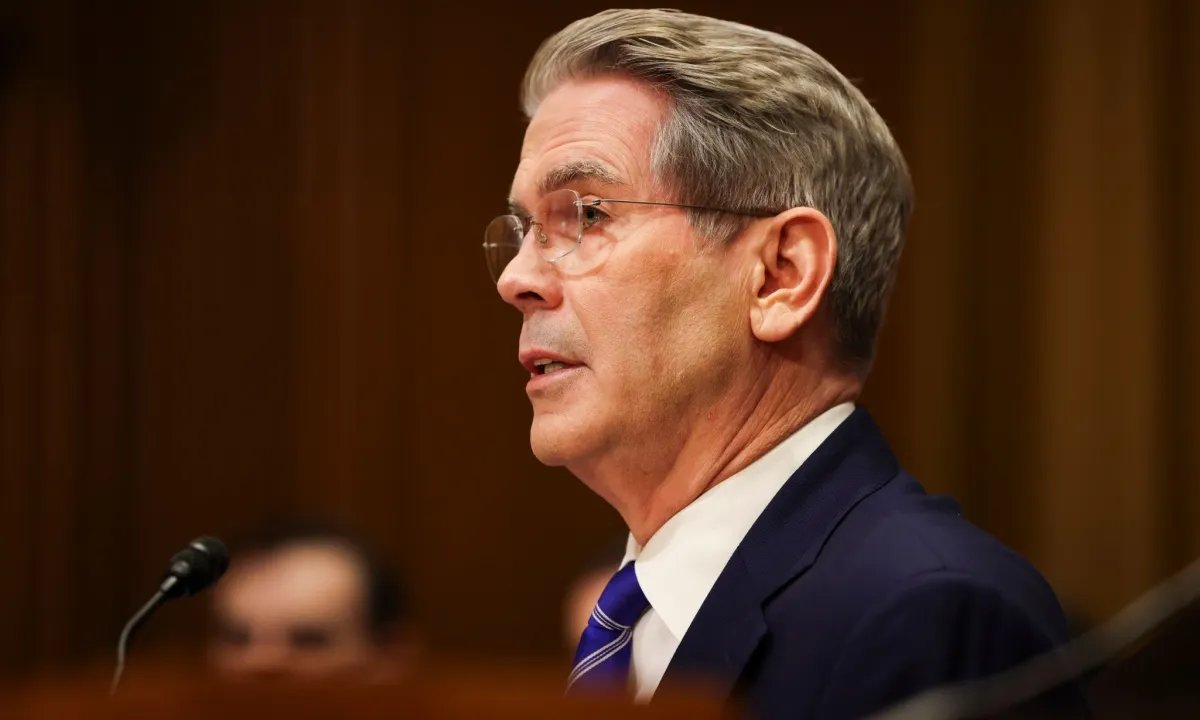
Treasury may raise longstanding bank reporting thresholds and take into account how long financial institutions have known their customers, Treasury Secretary Scott Bessent told lawmakers Tuesday (Sept. 15).
House Financial Services Committee Chairman French Hill, R-Ark., asked Bessent about updating thresholds for Suspicious Activity Reports (SARs) and Currency Transaction Reports (CTRs), saying the thresholds were decades old and that a Treasury report to Congress on updating them was five years overdue.
“We believe that we must get this right,” Bessent said. Treasury wants to approach the issue with “a combination of potentially raising the thresholds and also giving credit to institutions for the duration that they have known their clients.”
Bessent said Treasury was “in the midst of this” and cited small and community banks, saying the department would seek to avoid excess expenses for those institutions while maintaining the safety and soundness of the financial system.
Current bank SAR thresholds range from no minimum for insider abuse to $5,000 or $25,000 depending on the suspected violation and whether a suspect can be identified, while the CTR threshold remains more than $10,000 in cash.
The exchanges came during Bessent’s annual testimony before the House Committee on Financial Services at a hearing titled “The Annual Testimony of the Secretary of the Treasury on the State of the International Financial System.” Bessent’s testimony and lawmakers’ questions covered the international financial system as well as banking regulation, financial crime, digital assets and financial-sector technology.
Bessent addressed the issue again when Rep. Mike Flood, R-Neb., asked whether SAR and CTR thresholds could be raised under AML rules for community banks.
“On AML/BSA thresholds, we are actively working on threshold increases based on customer tenure to relieve community bank burdens,” Bessent said.
Stablecoins and Bank Deposits
Bank deposits came up when Rep. Brad Sherman, D-Calif., questioned Bessent about stablecoins.
Sherman raised concerns that interest associated with stablecoins could reduce bank deposits. He argued that a reduction in deposits would leave banks with less funding for small business lending and also raised questions about the effect on Community Reinvestment Act activity.
Sherman also asked about know-your-customer requirements and accountability in decentralized finance and stablecoin arrangements. He questioned Bessent about systems in which responsibility may be distributed among participants and asked what that would mean for illicit finance and the international financial system.
Bessent responded by pointing to digital asset legislation.
“That’s why I’m pushing the passage of the Clarity Act, because it gives Treasury more authority,” Bessent said. Sherman responded, “The Clarity Act emboldens and makes more popular the rival to the U.S. dollar, which is crypto. It’s as if America owns Coke and your suggestion is, ‘Let’s invest and glorify Pepsi.’”
Flood later asked Bessent how stablecoins authorized under the GENIUS Act would reinforce the U.S. dollar.
“Dollar-backed stablecoins increase demand for U.S. Treasury bills and reinforce the dollar,” Bessent said.
Treasury Discusses Banks and Cybersecurity
Rep. Bill Huizenga, R-Mich., questioned Bessent about Treasury’s work on technology security, including artificial intelligence, cybersecurity and the financial sector.
Bessent said Treasury began its work with financial services and had been coordinating with other parts of the government for more than six months.
He also said Treasury had met with large banks to discuss cybersecurity resilience.
“The largest banks have very good cybersecurity resilience and they have been very helpful in terms of creating more resilience,” Bessent said.

We’d love to be your preferred source for news.
Please add us to your preferred sources list so our news, data and interviews show up in your feed. Thanks!
He said that work was moving “down the capitalization chain from super-regionals to regionals to small and community banks, and then populating that out into service providers.”
Huizenga asked whether the working group’s concern centered on financial system “plumbing.”
“Well, it’s the plumbing and it is the patching of a lot of open-source code,” Bessent said.
Lawmakers Question Bessent About Meme Coins
Rep. Al Green, D-Texas, questioned Bessent about meme coins and how they acquire value.
Green described their value as depending on buyers being able to sell to someone else at a higher price and asked Bessent whether that amounted to a Ponzi scheme.
“Representative, I don’t think it meets the criteria for a Ponzi scheme,” Bessent said. “Every market system relies on appreciation, whether selling a house, equities, or bonds.”
Green responded that gold is tangible while a digital token is intangible and said such tokens were being used to take advantage of people.
Beneficial Ownership Reporting
Rep. Troy Downing, R-Mont., questioned Bessent about beneficial ownership information (BOI) reporting requirements for small businesses.
Downing asked whether Bessent supported removing BOI reporting requirements for 33 million domestic small businesses.
“100%,” Bessent responded. “State insurance regulation is robust. Removing BOI reporting for 33 million small domestic businesses while keeping it on foreign entities is a major victory for common sense.”
The BOI question followed Bessent’s earlier exchanges with Hill and Flood about the information financial institutions report under the Bank Secrecy Act.
Bessent did not provide new reporting thresholds or a timetable for changing them. He told Hill that Treasury was considering “potentially raising the thresholds” and “giving credit to institutions for the duration that they have known their clients.” Later, he told Flood that Treasury was “actively working on threshold increases based on customer tenure to relieve community bank burdens.”