How mortgage businesses can manage interest rate risk
Mortgage companies typically price in the consensus expectation regarding whether or not there will be a Fed rate change heading into a meeting like this week’s, and it typically materializes, but there’s always the risk it won’t.
Processing Content
And this time, there is a contingent within the market predicting that the upcoming decision on whether to move forward with the widely-anticipated 25 basis point rate-hike will be a squeaker as current Fed Chair Kevin Warsh looks to
To help housing finance firms navigate a market where managing interest-rate risk is becoming more important, we asked some experts to weigh in with some advice.
Maintain historical perspective
Headlines about Treasury bond yields
“It feels like it’s something extreme to the industry because things were so good, and our future looked pretty pretty great at the start of the year and now there’s a lot of doom and gloom,” Chris Bennett, chairman of Vice Capital Markets, said.
But when put in historical perspective, recent market movements look milder.
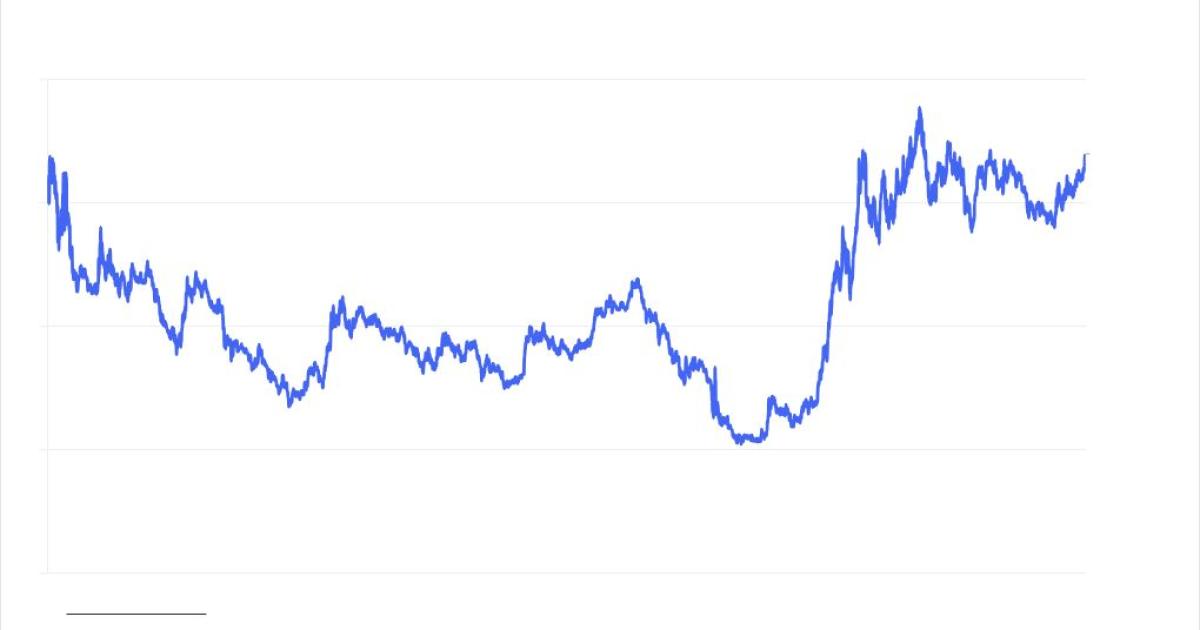
The base interest rate at which a 30-year fixed rate mortgage can be sold at par while retaining servicing has run up by around a percentage point since March but more recent fluctuations have been in a historically narrow range, Vice Capital Markets’ data since 2008 shows.
“It’s a very objective way to measure what our mortgage rates are without taking surveys,” Bennett said of the daily data, which his hedge advisory firm shares with the market.
It’s specifically how the speed and steepness of the runup looks compared to prior periods that provides a more realistic sense of how much the industry might be impacted, said Les Parker, managing director at consultancy Transformational Mortgage Solutions.
“Rapid change, that’s what mortgage bankers have trouble with,” Parker said.
Some lenders focus on “point analysis” that measures immediate risk, but Parker said they may want to consider a strategy incorporating scenario shocks that incorporate a longer-term view.
Address real borrower reactions
While the Fed meeting may raise the profile of mortgage rate movements to some degree, the average borrower is more likely to be focused on aspects of their daily lives like their jobs or kids’ soccer games than what mortgage-backed securities prices are doing.
“Sometimes people have this impression that if mortgage rates are up, all their borrowers are going to renegotiate and that’s not true,” Bennett said. “Companies overreact; that can really just amount to throwing some of their margin away unnecessarily.”
Lenders can put in place objective fallout models based on how their consumer base has actually performed instead, he suggested.
Watch out for the impact on specified pools
Fed rate-hike cycles can also be tough on
“What’s difficult in the specified pool space is that they don’t like uncertainty. They don’t like periods of Fed hikes. They prefer periods of Fed stability or easing the fed funds rate,” he said. “For a period of time back in January, February, even March, where we had some very nice elevated spec pool pay-up levels, and now a lot of those have shrunk fairly dramatically.”