Pacific Park’s Next Phase Plan Draws Board Concerns

Community development board members have some questions about the long-delayed housing LCOR, Cirrus and ESD plan to build atop the Atlantic Terminal rail yards.
“The goal of this sequencing and this structure is to ensure that the largest buildings with the most and deepest affordability are commencing as quickly as possible,” Arden Sokolow, Empire State Development’s executive vice president of real estate and planning, said at an Atlantic Yards Community Development Corporation board meeting Monday.
The proposed amount of deeply affordable units and the metrics being used to determine their affordability raised red flags for at least two board members. The memorandum of understanding between ESD, LCOR and Cirrus Real Estate Partners released last month for the Pacific Park (née Atlantic Yards) megadevelopment aims for up to 4,600 rentals with 1,242 set aside as affordable units, plus 1,000 condo units.
The project has already been through more than two decades of defaults and missed deadlines. Atlantic Yards initially aimed for 900 apartments set aside for those earning less than 60 percent of area median income, while the most recent Pacific Park plan only targets 232 such units, according to Gib Veconi, the state Assembly’s appointee to the board and Prospect Heights Neighborhood Development Council chair.
“There are different types of new subsidies coming into this project, but I think we have to understand why we’re not delivering on at least the base number of those units that were called out in the original SEQRA papers,” he said at the meeting. “I do believe that we have to be responsible to the goals that were originally cited in getting this project approved.”
More than $700 million in state funding needed for the platforms decking over the rail yards, which under previous plans were intended to be subsidized by the real estate atop those platforms, was the subject of pointed questions from Veconi and former planning commissioner and longtime advocacy planner Ron Shiffman, who cautioned against using area median income and argued that building mostly market-rate and luxury housing on the site would compound displacement issues in the area.
ESD is currently working with the Governor’s office to secure the remaining $175 million needed to fully fund the first platform, but Sokolow said that the exact source couldn’t yet be disclosed.
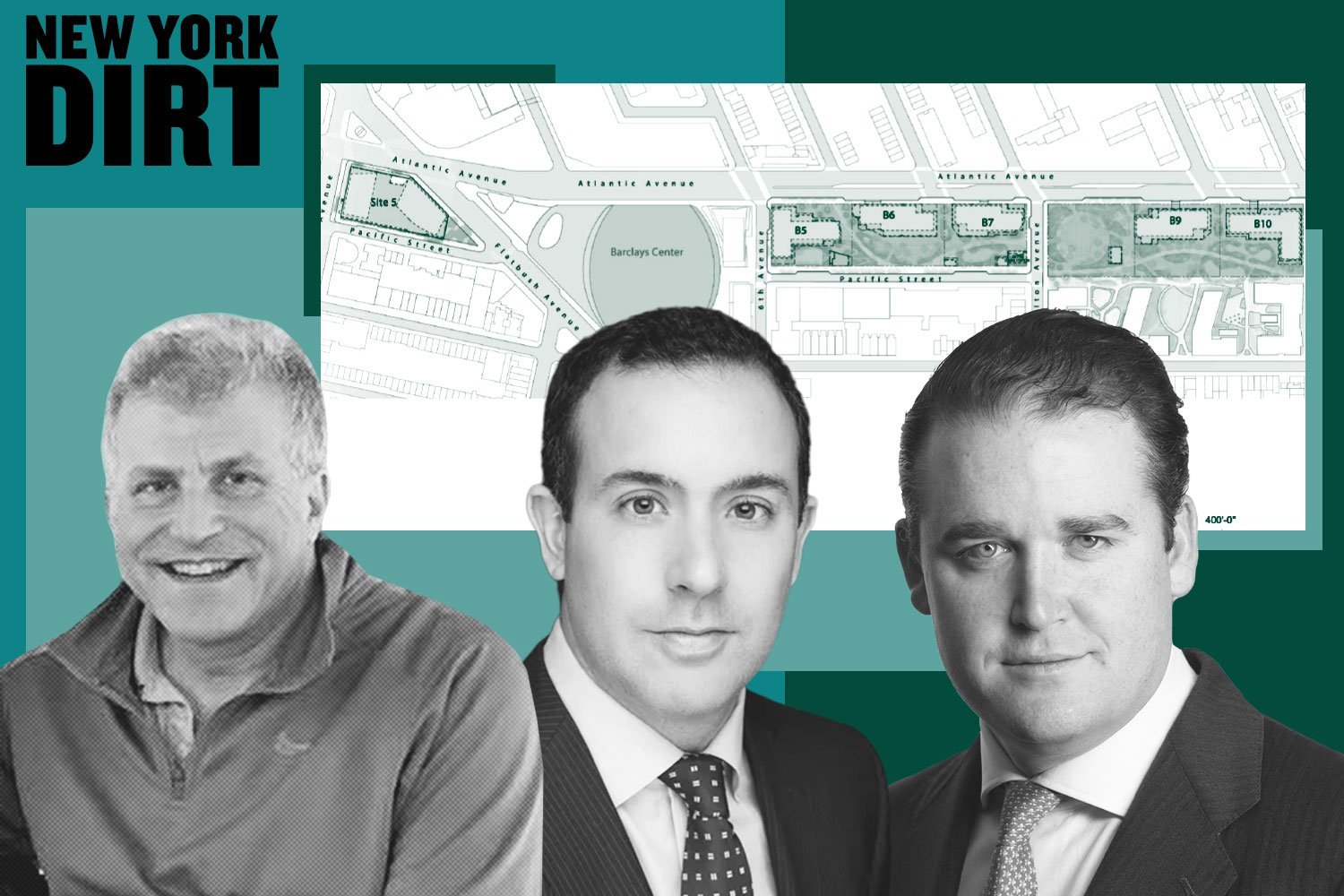
Board members were also worried that the current proposal could reach a quagmire similar to the past version led by Greenland USA, in which the developer defaulted but the transfer proved onerous. According to the new MOU, construction of the $400 million second platform cannot begin until developers have commenced all vertical portions of buildings on the first platform and Site 5, located on solid ground across from the Barclays Center.
“I do have a little bit of a concern that, as an accountability mechanism, this is kind of straightjacketing us into a single-developer approach,” Veconi said. “One thing that could be explored here, leaving these provisions basically in place, is to just try to transfer those obligations with the transfer of the lease.”
Sokolow said that ESD imagines any lease transfer would also entail taking on the timeframes and sequence of obligations required of LCOR and Cirrus under the initial MOU terms, which are subject to change as the developers finalize their binding legal documents.
Cirrus Managing Partner Joseph McDonnell added that the MOU’s structure allows the developers to bring in another party to work on the project without having to use the “blunt tool” of a default and yet another request for proposal process.
“One of the things that we heard through the community engagement is that there is a worry — which I think, given Greenland’s prior presence, is a legitimate worry, hopefully you don’t think that about us — that somebody will effectively build the easy site … and then kind of disappear into the night,” McDonnell said.
Other board members simply wanted to see some movement forward.
“The state now has an obligation to finish the project and address that blight,” Chair Daniel Kummer said. “In the situation it’s in now, it’s impossible to address it anything other than imperfectly. We have to accept that, in my view. We have to get this done, perfectly or imperfectly.”
What we’re thinking about: Do you think getting anything built on top of Atlantic Terminal rail yards is a win for the beleaguered Pacific Park development? Are LCOR and Cirrus the right partners for ESD to finally make progress on the next phase of the project? Let me know at ben.miller@therealdeal.com.
A thing we’ve learned: More than eight months into his term, Mayor Zohran Mamdani still hasn’t been approved for federal security clearance, which would allow him to receive key briefings on crisis-level threats, Gothamist reports. Former Mayor Bill de Blasio also waited a long time to receive his clearance, in part because he applied for it late. Other recent New York City mayors have been granted clearances relatively quickly, including Michael Bloomberg and Eric Adams, who respectively got approvals within four and five months of their start dates.
Elsewhere…
— Gov. Kathy Hochul said Monday that the state will start sending out energy rebate checks of up to $200 to 8.2 million households across the state starting on Sept. 21, amNY reports. The money comes from the state’s $1 billion Protecting our Wallets Energy Rebate program and is intended to provide relief to New Yorkers facing higher utility and energy costs, with eligibility determined using information from 2024 state income tax returns.
— A state supreme court judge blocked Brooklyn Democratic boss Rodneyse Bichotte Hermelyn’s bid to hang onto control of the county party chair seat, ruling that an overhaul of party bylaws passed last month was ‘improper” and stating that the vote results “must be declared a nullity,” City & State reports. Monday’s ruling could clear the way for District Leader Julio Peña III to take over control as chair.
— Mayor Mamdani and other mayors around the country filed a joint lawsuit Monday seeking to block President Donald Trump’s attempt to make it more difficult for lawful immigrants to receive green cards or visas, with State Attorney General Letitia James leading a separate coalition that filed a concurrent suit, Politico reports. The federal rule change would give immigration agents more room to deny green cards or visas on the basis of being a “public charge,” meaning anyone using social safety net programs like Medicaid or food assistance.
Closing time
Residential: The most expensive residential sale recorded Monday was $11.4 million for 45 Douglass Street. The new construction condo unit in Cobble Hill is 5,500 square feet. Douglas Elliman’s Aran Scott, Anthony Robles and Peter Perez had the listing.
Commercial: The most expensive commercial transaction was $18.3 million for three commercial condo units at 100 West 18th Street. The Chelsea condo has 43 units and is 10 stories, with mixed-use commercial retail units on the ground floor. ACHS Management Corp. is listed as the buyer.
New to the Market: The highest price for a residential property hitting the market is $28 million for 300 East 77th Street, Unit PH2/3. The Lenox Hill condo at The Seville is 8,000 square feet. Brown Harris Stevens has the listing.
— Joseph Jungermann