Oil Prices Surge as Saudi Pipeline Outage Fuels Supply Concerns
Oil Prices Climb as Saudi Pipeline Attack Sparks Global Supply Fears
Market Reaction and Global Supply Concerns
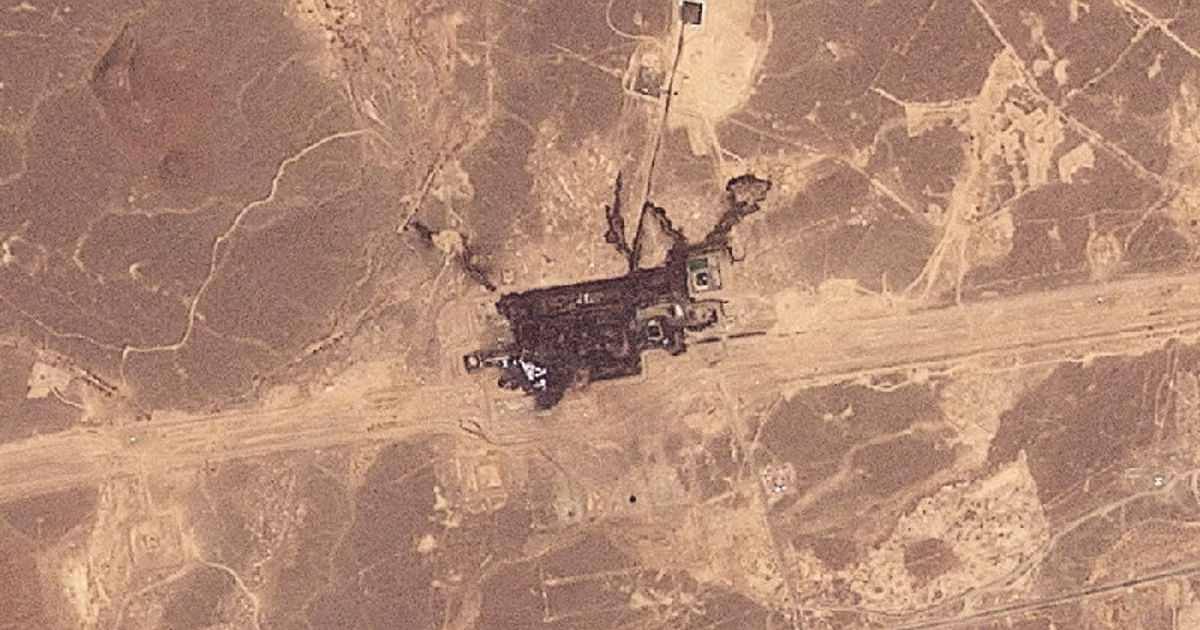
Sept 15 (Reuters) – Oil prices rose on Tuesday as concerns over supply disruptions persisted after attacks on Saudi Arabian energy infrastructure left the kingdom’s East-West pipeline offline and cast doubt on efforts to ease shipping risks in the Gulf.
Oil Price Movements
Brent crude futures rose $1.24, or 1.18%, to $106.93 a barrel at 0026 GMT, after climbing 1% previously, while U.S. West Texas Intermediate futures were up $1.29, or 1.24%, at $102.65 a barrel, after gaining 1.3% in the previous session.
Escalating Middle East Tensions
Recent Attacks and Regional Impact
Iran-backed Houthi forces in Yemen launched fresh attacks on Saudi Arabia on Monday, while Gulf Arab states postponed planned discussions with Iran, fuelling concerns that the Middle East conflict could widen and disrupt global oil supplies.
Details of the Khamis Mushait Attack
The Houthis carried out a missile and drone attack on the Khamis Mushait military airbase in southern Saudi Arabia, hitting aircraft hangars, radar systems, runways and ammunition depots in retaliation for Saudi strikes in Yemen.
Previous Pipeline Attacks
This followed attacks on Friday on Saudi Arabia, which Riyadh blamed on Iranian-backed fighters in Iraq, that disrupted the country’s East-West pipeline, which allows oil exports to bypass the blockaded Strait of Hormuz.
Market Analyst Perspective
“Oil traders are treating every fresh attack or infrastructure hit as incremental supply risk, while staying highly sensitive to any sign that the East-West pipeline or Hormuz flows could normalise,” said Tim Waterer, chief market analyst at KCM Trade.
Shipping Disruptions and Supply Risks
Strait of Hormuz Traffic Decline
Commodity vessel traffic through the Strait of Hormuz dropped to fewer than 10 transits a day over the weekend, from a 10-day average of 14, raising concerns over a route that typically carried about one-fifth of global oil supplies before the U.S.-Israeli war on Iran began on February 28.
Potential Impact on Global Oil Supply
Saudi Arabia could begin to exhaust oil available for export within days unless it restores operations on the East-West pipeline, potentially removing as much as 4% of global oil supply from the market, according to Saudi buyers and traders.
The world’s biggest exporter has used the pipeline to reroute around 4 million barrels per day — around 4% of global supply — to the port of Yanbu on the Red Sea.
“The big question for traders right now is the duration of the East-West outage. Any prolonged disruption and the associated supply loss could easily push prices to the next level higher,” Waterer added.
International Reactions
Separately, President Volodymyr Zelenskiy said on Monday that Kyiv was ready to support a U.S. proposal for a Russia-Ukraine ceasefire on energy sites only if Washington could ensure Moscow was genuinely ready to end its war on Ukraine.
(Reporting by Pranav Mathur in Bengaluru; Editing by Christian Schmollinger)