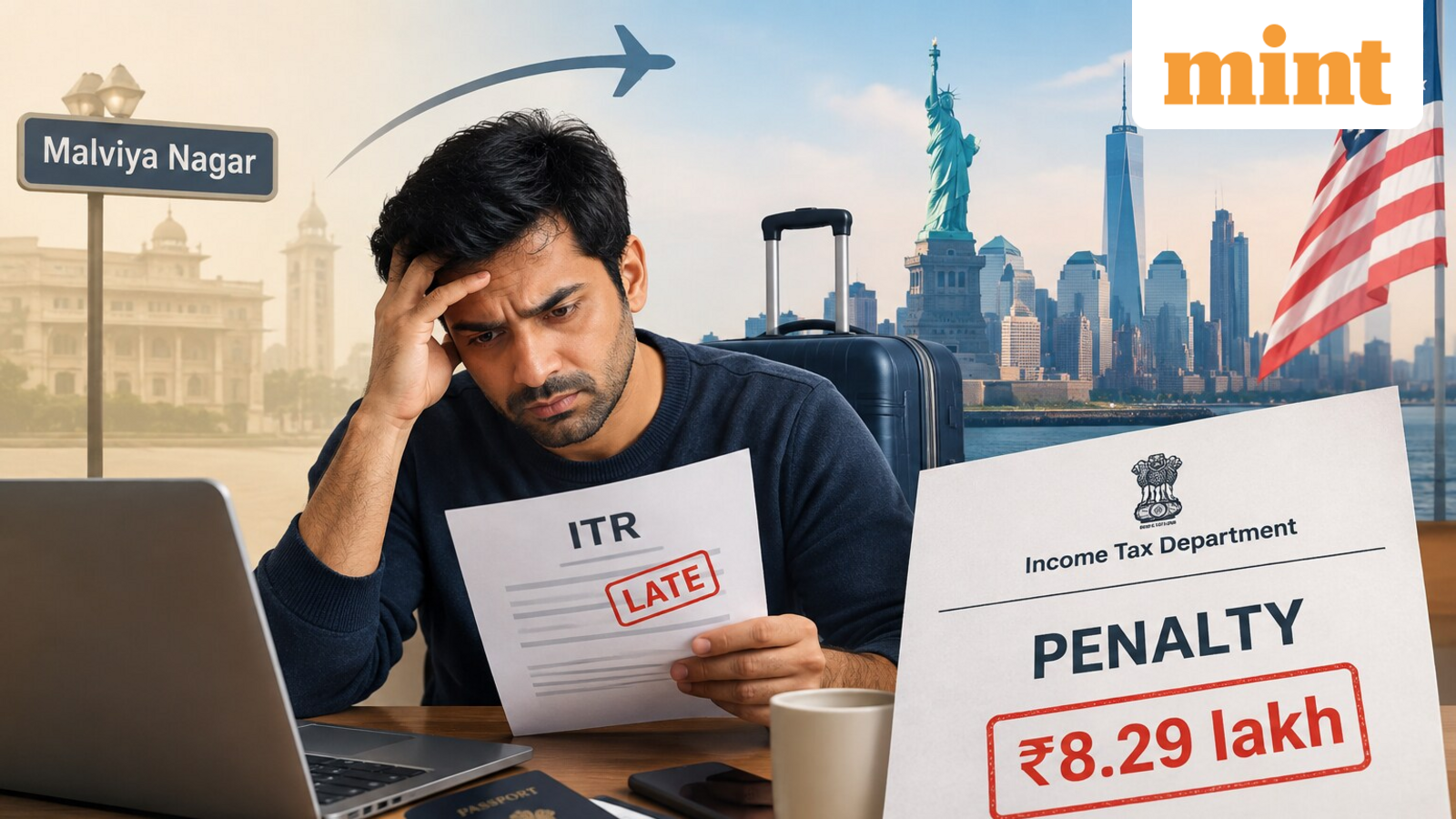
Indian man moves to US for job, forgets to file ITR; here’s why ITAT Jaipur still canceled penalty
A new job in the United States came with the usual rush of relocation and adjusting to a new workspace. In the middle of all this, Abhishubham Bahadur Saxena missed filing his income tax return (ITR) in India and by the time he remembered, even the belated return due date had passed.
Saxena, who is from Malviya Nagar, got an onsite job offer from a multinational company in America and moved there in August 2018. Nearly a year later, on August 23, 2019, he paid approximately ₹1.62 lakh in self-assessment tax in India, along with applicable interest and late fee.
He made the payment voluntarily, before any reassessment proceedings had been initiated against him. Like any other taxpayer, Saxena may also have hoped complying with his tax obligations would spare him a penalty. However, the income tax department eventually imposed one.
Why did the I-T dept impose penalty?
As per submissions made to Income Tax Appellate Tribunal (ITAT) Jaipur, the income tax department reopened Saxena’s case after noticing that he had received a salary income of nearly ₹26.06 lakh in that financial year.
He was consequently hit with a hefty penalty of ₹8.29 lakh, on the grounds of misreporting of income. The tax department noted that Saxena had earned an income that’s way above the basic exemption limit and yet he failed to file his tax return within the prescribed due date.
In response to the notice under Section 148 of the Income-tax Act, he filed his return declaring a total income of ₹20.49 lakh.
The income tax assessing officer (AO) accepted Saxena’s return without making any changes to the income assessed during the reassessment. However, the officer subsequently initiated penalty proceedings under Section 270A of the Income-tax Act, treating the income disclosed for the first time in the Section 148 return as under-reported income.
The AO also classified the case as “misreporting” under Section 270A(9)(a), alleging misrepresentation or suppression of facts. The Commissioner of Income Tax (Appeals) [CIT(A)] also upheld the penalty.
Under Section 270A, the penalty is 50% of the tax payable on under-reported income and 200% of the tax payable on misreported income.
Taxpayer approaches ITAT Jaipur
Saxena attempted to put forward his explanation and convince the income tax officer that his intention was not to avoid tax but he inadvertently forgot, so he paid the tax but the ITR due date was missed.
“Due to my relocation and the demanding schedule of settling into a new country, coupled with my lack of familiarity with the procedural requirements for filing an income tax return in India at that time, I inadvertently missed filing the return by the due date,” he said, as per ITAT Jaipur submissions.
The assessee also claimed that at the time, he was unaware of the specific procedures and timelines for filing returns, particularly the provisions allowing for belated filing under Section 139(4). “This was an unintentional oversight, as I had limited experience with the complexities of tax compliance, especially while transitioning to a new professional and personal environment abroad,” he added.
However, the income tax officer did not accept his explanation and went ahead with the penalty. Aggrieved by the decision, Saxena approached ITAT Jaipur for a resolution to his issue.
On August 17, 2026, Saxena won the case in ITAT Jaipur as the tribunal cancelled the penalty and granted him full relief.
In its final judgement, the tribunal held that he was entitled to the protection of Section 270A(6) and directed deletion of the entire penalty of ₹8,29,034.
ITAT Jaipur also condoned the 49-day delay in filing the ITAT appeal, accepting that the delay arose from a genuine jurisdictional mismatch on the income-tax portal between Kanpur and Jaipur, which the Saxena had actively sought to rectify over the period.