Bengaluru tenant gets only ₹19,000 of ₹1.3 lakh security deposit: What does the law say on arbitrary deductions
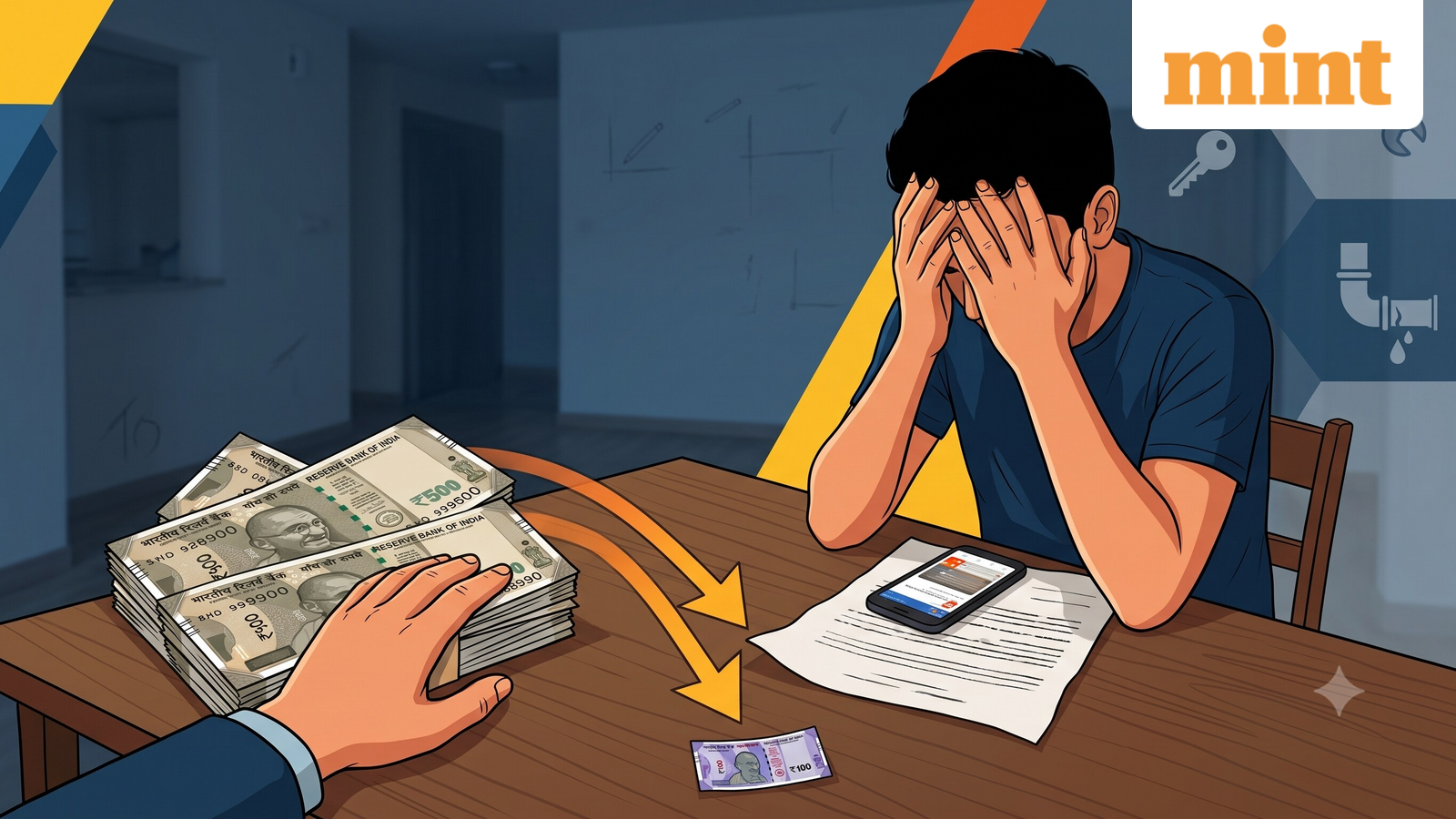
A Bengaluru tenant paid a ₹1.30 lakh security deposit for a 3BHK villa, lived there for two years, and walked away with just ₹19,000. The rest, a staggering ₹1.11 lakh, was withheld by the landlord for repainting, labour, and a full month’s rent despite vacating mid-month.
“Out of ₹1.3 lakh, approximately ₹1.11 lakh is being deducted, leaving us with only about ₹19,000,” the tenant wrote in the viral Reddit post.
It has reignited the contentious debate over arbitrary security-deposit deductions in Bengaluru’s rental market and the lack of financial accountability at move-out.
In the viral post, the tenant said they vacated the villa in Bidadi on 15 June 2026 and acknowledged the standard agreement clause requiring repainting upon exit.
However, the scale and manner of the deduction left the tenant blindsided, with the primary contention being the complete absence of transparency or supporting documentation.
“Our concern is not that we should pay nothing for painting. We understand that there was a painting obligation in the agreement,” the tenant wrote in the post. “The issue is that the amount being deducted appears excessive and exorbitant, particularly when we haven’t been provided with proper bills/receipts or a clear itemised calculation supporting such a large deduction.”
The landlord also deducted ₹16,000 as “last month’s rent,” even though the property was handed over on June 15. The Redditor asked: “We want to understand whether the owner can deduct the entire ₹16,000 as ‘last month’s rent’ in these circumstances.”
What does the law say on security deposit deductions?
A security deposit is the tenant’s property, held in trust by the landlord against proven dues, and cannot be arbitrarily deducted under Indian tenancy law and property jurisprudence.
Under Section 108(m) of the Transfer of Property Act, 1882, faded paint, minor scuff marks, ageing fixtures, and carpets wearing out over time are generally considered normal deterioration resulting from ordinary occupation. These are not necessarily costs that can be passed on to the tenant.
Fazl Askari, senior associate at PSL Advocates & Solicitors, told Business Standard that a landlord may deduct unpaid rent, unpaid dues, and the actual cost of repairing damage caused by the tenant beyond ordinary use.
However, under Section 74 of the Indian Contract Act, 1872, if a rental agreement provides for forfeiture or liquidated damages upon breach, the landlord may claim reasonable compensation, subject to the legal limits applicable to such a clause.
But a landlord cannot arbitrarily name a lump sum; any deduction must be justified by actual, authenticated expenses, such as GST-compliant labour and material invoices.
Divya Alexander, advocate, D. M. Harish & Co. LLP, Advocates, told BS that deductions should generally be restricted to specific, identifiable expenses provided for in the rent agreement or permitted under applicable rent laws.
As for the payable rent in the Redditor’s case, unless the registered lease agreement specifies a liquidated full-month notice forfeiture, rent is payable on a pro-rata basis for actual occupancy. If possession was officially surrendered on June 15, following a valid notice, demanding rent for the entire calendar month is legally indefensible.
“A landlord cannot ordinarily withhold the security deposit merely because the tenancy has ended,” Rohit Jain, managing partner, Singhania & Co, reiterated. He also noted that deductions for damage beyond ordinary wear and tear may be permissible where supported by evidence and reasonable repair costs.
What legal options are available to tenants?
The legal experts noted that a rental agreement is important. A charge that was never agreed upon and has no clear contractual or legal basis can be challenged in court.
Initially, a tenant should ask the landlord in writing for the refund and an itemised statement of any deductions, including supporting bills if deductions are made for repairs.
If the landlord does not resolve the matter, the tenant can send a formal legal notice demanding repayment. The specific legal remedy depends on state laws, the rental agreement, and whether an arbitration clause exists.
According to Fazl Askari, a legal notice must clearly demand the refund and provide an itemised account of the disputed deduction; if the issue remains unresolved, the tenant can pursue an appropriate recovery mechanism.
Throughout this process, the tenant should retain the rental agreement, deposit and rent payment records, photographs and videos, proof of handover, correspondence, and the legal notice.
A security deposit is not automatically forfeited at the end of a tenancy, the experts noted. If there is no unpaid rent, outstanding tenant liability, or proven damage beyond normal wear and tear, the justification for a landlord’s retention of the deposit becomes significantly weaker. However, the final outcome will depend on the contract and the tenancy law applicable in that state.