Trump Supports United Ireland, Avoids Scotland Independence Comments
Trump Backs United Ireland, Holds Off on Speaking About Scottish Independence
Trump’s Comments Stir Debate on Irish Unity and Scottish Independence
By Bo Erickson and Padraic Halpin
Trump’s Support for Irish Unity
DOONBEG, Ireland, Sept 13 (Reuters) – U.S. President Donald Trump on Sunday reiterated his support for Northern Ireland breaking from the United Kingdom to unify with the Republic of Ireland, but said he would not talk about Scotland becoming independent “yet”.
Trump surprised officials in Dublin and annoyed pro-British politicians in Northern Ireland and London by enthusiastically backing Irish unity during a visit to Dublin on Saturday, saying he would “love” to see it happen sooner rather than later.
Doubling Down on Irish Unification
“You have Northern Ireland and you have Ireland and it would seem to me that one of the ‘naturals’ of all time is to put them together,” Trump told reporters during a visit to a golf tournament at one of his resorts, doubling down on his initial comments.
Trump’s Stance on Scottish Independence
“You asked about Scotland. That one I won’t talk about yet. I’ll save that for another day,” he added.
Scotland, where the Trump family also owns a golf resort, voted against independence from the rest of Britain in 2014. British Prime Minister Andy Burnham has ruled out another vote, as well as a referendum on Northern Ireland leaving the UK.
Reactions from Irish and British Leaders
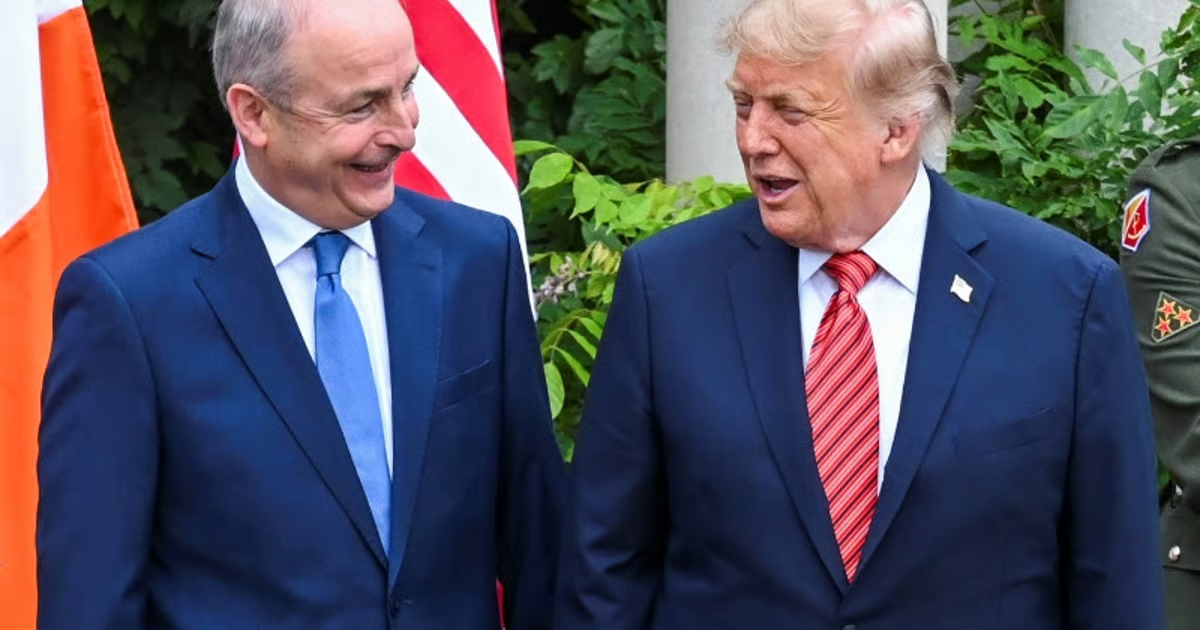
Trump made his comments about Irish unity after a meeting with Micheal Martin, the country’s prime minister. In his first comments since Trump’s remarks, the Irish premier said the response from some unionist politicians was “an overreaction”.
Irish Prime Minister’s Response
“It shouldn’t be a surprise. He takes a different sort of perspective on things,” Martin told reporters on Sunday after meeting Trump again for lunch at the golf course.
Martin said the pair discussed Northern Ireland and its relationship with the Republic of Ireland and that he also went through with the president how the British-run region achieved peace.
The 1998 Peace Agreement
A 1998 peace agreement ended three decades of violence between Irish nationalists seeking a united Ireland and unionists who wanted Northern Ireland to remain part of the UK.
“I support unity, I don’t see it happening now. I’ve been very clear about that,” Martin told BBC News in a separate interview.
“The chances are if one (vote) was held next week, it would find great difficulty in getting through.”
Reporting Credits
(Reporting by Bo Erickson in Doonbeg; Padraic Halpin and Conor Humphries in Dublin, Alistair Smout in London; Editing by Alistair Smout and David Gregorio)