Banks will take 3-4 months to deploy FCNR(B) flows, says C S Setty | Finance News
Banks will take three to four months to deploy funds mobilised through FCNR (B) deposits and that is unlikely to trigger any “abnormal lending”, said C S Setty, chairman of State Bank of India (SBI), on Thursday.
Setty’s comments come amid banks mobilising more funds through foreign currency non-resident (bank) deposits than anticipated, raising concerns that the additional liquidity could fuel a sharp rise in credit.
“It will take about three to four months for the deployment of the liquidity,” Setty said, although he didn’t say how much SBI has mobilised through FCNR(B) deposits. The state-owned lender had set a target of nearly $10 billion.
Inflows through the Reserve Bank of India’s (RBI’s) concessional swap facility reached $136.4 billion by August 31, with banks mobilising $127.2 billion in FCNR(B) deposits — well above market estimates of $90-100 billion. The FCNR(B) window closed on August 31. The RBI had operationalised the concessional swap facility for fresh FCNR(B) deposits, overseas foreign currency bonds and external commercial borrowings on June 8. The initial deadline for the FCNR(B) window was September 30, 2026, but the central bank advanced it by a month following a strong response.
The larger-than-anticipated FCNR(B) inflows have pushed system liquidity to nearly Rs 10.5 trillion as of September 9. According to industry experts, banks have three broad options for deploying the funds: Invest in five-year government bonds, replace high-cost deposits, or lend to corporates. But with credit growth already strong, particularly in the corporate segment, there are concerns over how much more banks can lend.
AI’s costs
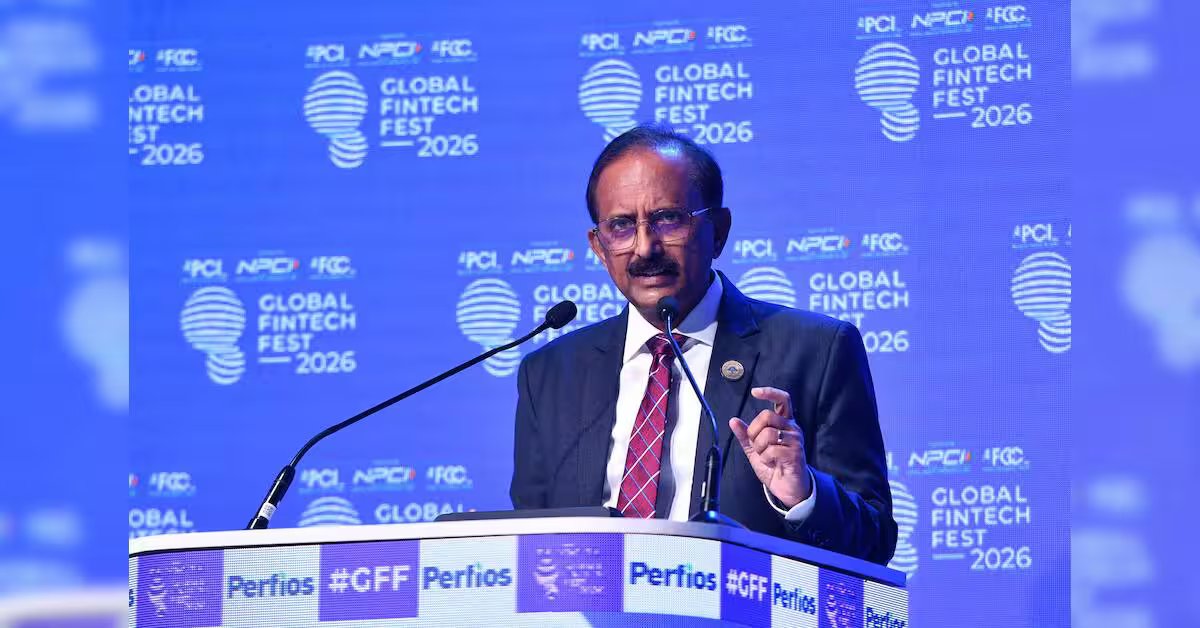
Setty said costs need to fall sharply if agentic artificial intelligence (AI) is to be deployed widely in India. “While the initial fixed cost of agentic AI can be high, the incremental cost can be low, creating the economics of scale,” Setty said at the Global Fintech Fest 2026 in Mumbai.
Agentic AI in banking goes beyond assisting users with individual tasks to systems that can act on behalf of customers and respond to changing circumstances, Setty said.
For banks, such systems could operate across the financial lifecycle: From fraud and new-account detection, know-your-customer (KYC) and anti-money laundering processes to loan appraisal, underwriting and reconciliation.
On the customer side, they could enable more proactive and contextual engagement, he said. The next opportunity, however, is to move from digital banking to “intelligent banking”.
“The next frontier for Indian AI is not merely about building larger models, but building models that understand India’s diversity and uniqueness,” Setty said.
Setty said the more significant opportunity from agentic AI was not simply automation but the democratisation of finance.
Sophisticated financial advice and wealth-management capabilities are now largely available to affluent and financially savvy customers. Agentic AI could potentially extend personalised financial assistance to hundreds of millions of customers across different stages of their financial lives, he said.
But the use of AI should augment rather than replace human capabilities in banking, he said.
Routine, high-volume and data-intensive activities can be handled by AI, while complex and high-risk financial decisions should continue to have appropriate human oversight.
“As a significant number of financial activities become increasingly automated, employees can devote more of their time and capability towards value-added relationships, problem-solving, and deeper customer engagement,” Setty said.
The greater autonomy of AI systems, however, also creates new risks for banks.
An error in an autonomous system could trigger a sequence of actions across multiple systems, potentially affecting customers, counterparties and institutions at machine scale, he said.
Setty said trust therefore needed to be built into AI systems rather than added later. He outlined three principles for “trust at scale”: Accuracy, accountability and access without asymmetry.
AI systems used in financial services need to be accurate consistently and across customer segments, rather than relying on average accuracy, he said.
Accountability would require monitoring, traceability and the ability to understand why an important action was taken, particularly when AI moves from recommendation to execution.
AI will also give risk management a new dimension, Setty said.
Banks have spent decades developing systems around “knowing your customer”; as AI agents begin participating in financial transactions, they will increasingly need to think about “knowing your agent”.
This would require mechanisms covering agent identity, authentication, customer consent, transaction limits, audit trails and location.
Banks could also increasingly operate in an “AI versus AI” environment, requiring a combination of identity, behavioural and transaction intelligence with real-time risk assessment, he said.
Setty said the transition would require cooperation between governments, regulators, banks, fintech companies and technology firms.
“No institution, however large, can build trust and scale alone,” he said, adding that India’s experience with digital financial infrastructure showed that transformation was most effective when an entire ecosystem built infrastructure that could be trusted.