₹1 lakh investment: NSC vs KVP — Which Post Office scheme offers a higher maturity value? Check out the calculations
Are you an investor looking for safe, government-backed investment options? Then you can look towards prominent post office schemes. This is because investors seeking to put their money in these schemes often compare prominent schemes such as the National Savings Certificate (NSC) and the Kisan Vikas Patra (KVP) to decide the best way to deploy funds and generate the highest possible returns.
In this case, both NSC and KVP are Post Office savings schemes; however, their interest rates and maturity periods differ.
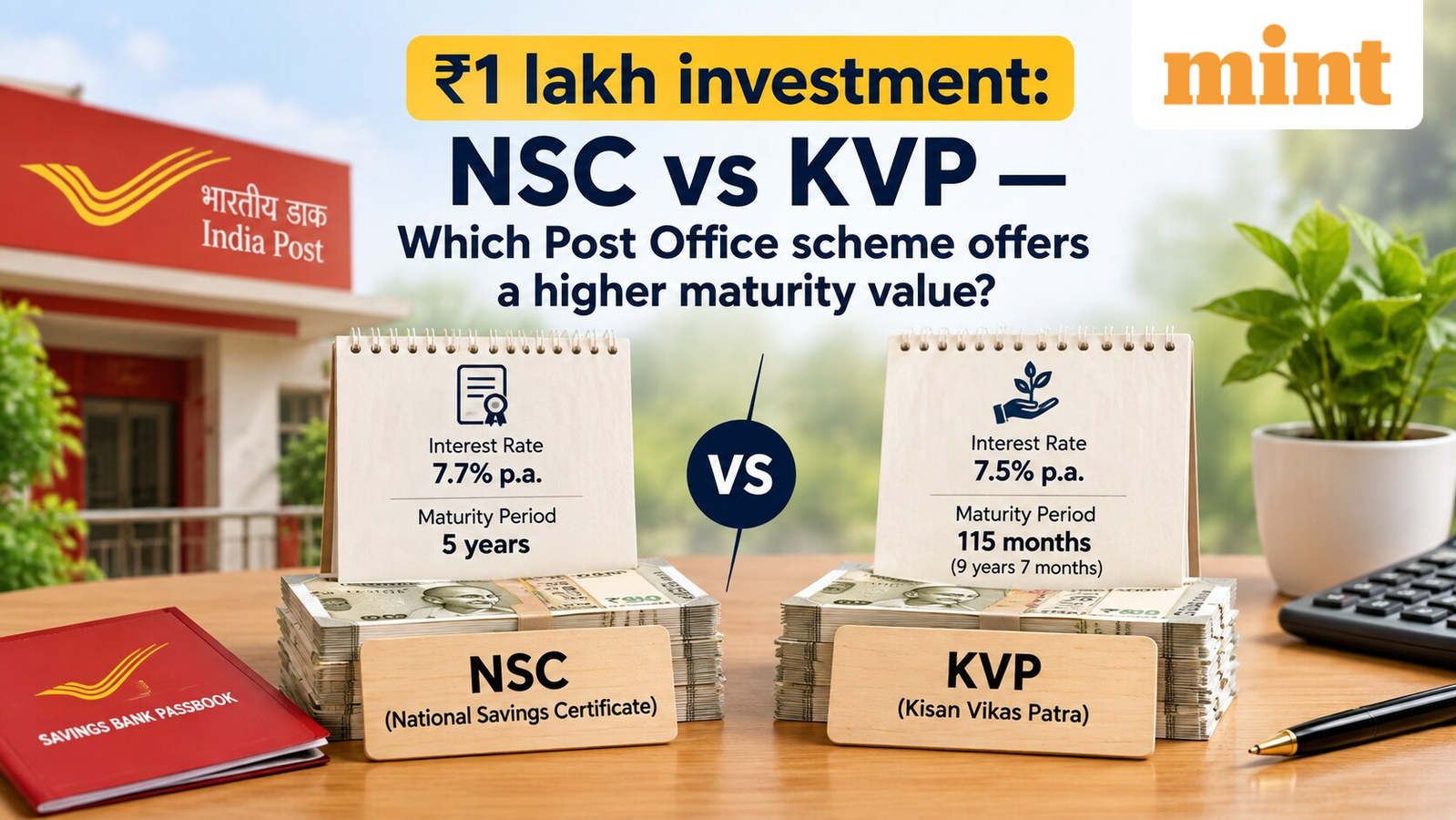
As of today, i.e., 12 September 2026, NSC offers an annual interest rate of 7.7%, while KVP offers 7.5%. NSC matures in five years, whereas KVP doubles the investment in 115 months, or nine years and seven months.
Still, before taking an investment call, there are a host of other factors that must be given due consideration. Keeping these basics in mind, let us discuss the salient features of both schemes and how they can grow wealth when chosen as investment options.
NSC vs KVP: How much will ₹1 lakh grow?
It is vital to acknowledge that the applicable interest rate for both schemes is only one factor in the investment decision. The maturity period also determines how much money you receive and when you can eventually use it for meeting your financial needs.
Salient features of NSC and KVP
|
Particulars |
National Savings Certificate (NSC) |
Kisan Vikas Patra (KVP) |
|---|---|---|
| Investment | ₹1,00,000 | ₹1,00,000 |
| Interest rate | 7.7% | 7.5% |
| Maturity period | 5 years | 115 months |
| Maturity value | ₹1,44,900 | ₹2,00,000 |
| Interest earned | ₹44,900 | ₹1,00,000 |
Note: The salient features discussed above are illustrative; for complete details, refer to the official website of India Post.
Now, the NSC maturity value is based on the official maturity factor at 7.7% interest. KVP investment, on the other hand, doubles the initial investment at maturity under the current scheme terms and conditions.
Which Post Office scheme is better for you?
In a direct comparison of returns, KVP offers investors the higher maturity value. Still, investors must wait for nearly 9 years and 7 months to receive ₹2 lakh. The NSC investment, on the other hand, matures in 5 years and might be more suitable for those who are seeking a shorter investment horizon.
Still, the answer to which scheme is better for an individual investor depends entirely on their financial situation, current needs, long-term financial objectives, level of debt, family responsibilities, and other factors.
Furthermore, NSC also qualified for Section 80C taxation benefits, subject to applicable income-tax rules. KVP does not offer the same Section 80C deduction to eligible investors. This is yet another marked difference between the two investment options that warrants due consideration.
NSC or KVP: Key takeaway
An investor should opt for an NSC if they aspire to invest for 5 years with potential tax benefits. KVP, on the other hand, might be suitable for investors who can keep their money invested for extended periods and are focused on doubling their initial investment.
Finally, before investing, it is wise to check the latest government-notified rates, maturity rules, and tax treatment regulations. In case of doubt, it is prudent to consult a certified financial advisor before making any investments, as the eventual returns depend on the applicable scheme terms at the time of investment.
Disclaimer: This article is for informational purposes only and does not constitute financial or tax advice. Investors should verify the latest official scheme terms and seek professional guidance before making investment decisions.