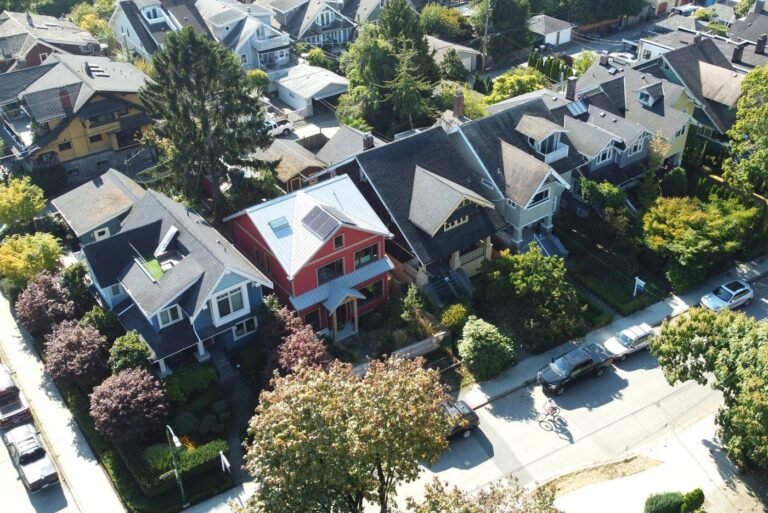
U.S. Properties in Highly Regarded School Districts Priced Higher Than the Average Home
The average cost of a U.S. home situated in a highly rated school district is $580,000, which represents a 35% increase compared to the typical overall home price of $430,000, according to a recent report by Redfin.
To purchase a home in a highly rated school zone, a U.S. household would need to have an income of $159,157. This figure is approximately $41,000 higher than the $117,995 required for the typical overall home. While both amounts exceed the median U.S. income of $87,599, the disparity is more pronounced for those seeking to buy a home in a highly rated school zone.
Redfin’s analysis evaluates home sale prices in highly rated school zones (defined as those with a GreatSchools rating of 8-10 out of 10) in comparison to the average home price in the respective metropolitan area. In this context, a school zone pertains to the local public high school. The price data is based on Redfin’s analysis of sales that occurred between January and June 2026 across 81 U.S. metropolitan areas included in the report.
Additionally, Redfin examined various affordability metrics to illustrate the differences between purchasing a home in a highly rated school zone and acquiring the typical U.S. home:
- Homes in highly rated school districts consume more than half of a household’s income. A median-income American family purchasing a residence in such a district would need to allocate over half (54.5%) of their earnings towards housing, in contrast to 40.4% for an average U.S. home.
- Middle-income families can only afford 1 out of every 8 properties in these desirable school zones. Merely 13% of home listings in highly rated school districts across the country are within reach for a household earning the median income, compared to 27.6% of listings overall. This assessment is based on the guideline that a home is deemed “affordable” if it requires no more than 30% of a household’s income for housing expenses.
Homeowners selling properties in highly rated school districts may also find that the premium is advantageous, as homes in these areas typically fetch higher prices on average.
“Access to a highly rated school zone can come with a steep price tag, but house hunters who consider school ratings in their search may find smaller price differences in metro areas where highly rated schools are more common,” said Yingqi Xu, a Senior Economist at Redfin. “The findings also highlight an opportunity for homebuyers with other priorities to get more house for their money by shopping outside the most sought-after school zones. And it’s worth remembering that a school rating is just one data point: Families should weigh it alongside their commute, overall costs and the programs and resources that matter most to their children.”
| 10 U.S. Metro Areas With the Smallest Premiums For Homes in Highly Rated School Zones | |||||||
| U.S. Metro Area | Median price of home in highly rated school zone | Median price of typical home in the metro overall | % premium for home in highly rated school zone | Income needed to buy home in highly rated school zone | Income needed to buy home in metro area | Estimated median local income | Share of schools that are highly rated (8-10) |
| Little Rock, AR | $237,450 | $250,000 | -5.0% | $62,163 | $65,448 | $73,170 | 14.8% |
| Anaheim, CA | $1,325,000 | $1,250,000 | 6.0% | $343,810 | $324,349 | $126,178 | 69.7% |
| Charleston, SC | $484,000 | $448,990 | 7.8% | $123,329 | $114,408 | $92,452 | 25% |
| Chicago | $420,000 | $389,000 | 8.0% | $127,765 | $118,335 | $98,502 | 40.4% |
| Greenville, SC | $367,550 | $340,000 | 8.1% | $93,429 | $86,426 | $77,128 | 46.4% |
| Elgin, IL | $424,995 | $389,990 | 9.0% | $131,873 | $121,011 | $108,913 | 28% |
| Oxnard, CA | $981,500 | $895,000 | 9.7% | $257,997 | $235,259 | $119,133 | 44.4% |
| Baton Rouge, LA | $307,500 | $274,950 | 11.8% | $80,013 | $71,544 | $76,675 | 22.9% |
| Minneapolis | $450,000 | $395,000 | 13.9% | $124,557 | $109,333 | $108,714 | 48.2% |
| Fresno, CA | $485,000 | $425,000 | 14.1% | $128,221 | $112,358 | $80,511 | 24.2% |
Locating Homes in Highly Rated School Zones with the Smallest Price Premiums
In Little Rock, AR, the average home located in a highly rated school district is priced at $237,450, which is approximately 5% lower than the overall typical home price of $250,000. This is the only metro area in the United States analyzed where homes in highly rated districts are less expensive.
In Anaheim, CA, the average home in a highly rated school district is valued at $1,325,000, representing a 6% increase over the overall typical home price of $1,250,000. This is the smallest premium among the metropolitan areas examined by Redfin. Notably, 70% of schools in Anaheim are highly rated, the highest proportion in the nation, and this abundance contributes to the relatively modest premium. Additionally, home prices in the region remain elevated regardless of proximity to highly rated schools.
Charleston, SC follows next, where the average home in highly rated school zones is priced at $484,000, reflecting a 7.8% premium over the typical home price in the area. The comparatively low premiums in Little Rock and Charleston can be attributed to a disparity between home values and school ratings. Some of the priciest neighborhoods are served by lower-rated schools, while highly rated zones are often found in more affordable regions.
Next in line are Chicago and Greenville, SC. In Chicago, a home situated in a highly rated school zone has a median price of $420,000, which is 8% higher than the overall typical home price of $389,000. In Greenville, the average home in a highly rated school zone costs $367,550, representing an 8.1% premium. The modest premiums in both Chicago and Greenville are due to the prevalence of highly rated schools; approximately 40% of school zones in Chicago and 46% in Greenville are highly rated, compared to the national average of 30%. This means that many highly rated zones encompass ordinary, relatively affordable suburbs with numerous homes.
Completing the list of the top 10 metro areas with the smallest premiums are Elgin, IL (9.0%), Oxnard, CA (9.7%), Baton Rouge, LA (11.8%), Minneapolis (13.9%), and Fresno, CA (14.1%).

In Which Metros Are the Biggest Price Premiums Found?
Many locations with the lowest premiums for highly rated school districts are quite affordable for the average local household. In Little Rock, purchasing a home in a highly rated school district would require 26% of the income of a median-earning household. Additionally, Little Rock is recognized as the most affordable metropolitan area for combined childcare and housing costs, as reported by Redfin and Winnie.
Following Little Rock is Baton Rouge, LA, where the average household would allocate 31% of their income to acquire a home in one of the metro area’s highly rated districts, and Des Moines, IA, where the expenditure would be 33%. The top five also includes Indianapolis (34%) and Minneapolis (34%).
In each of these five metropolitan areas, the percentage of income that a household would devote to purchasing a home in a highly rated school district is not significantly different from the percentage spent on an average home. For instance, in Baton Rouge, the allocation is 31% for a highly rated district compared to 28% for an average home.
In various regions across the country, even when properties in metropolitan areas are relatively affordable, purchasing a home within a highly rated school district is often not the case.

Philadelphia exhibits the highest price premium for access to esteemed schools. The average home in one of Philadelphia’s top-rated districts is priced at $600,000, which is nearly double (93.5% more than) the average home price of $310,000 in the metro area.
Following closely is Fort Worth, Texas, which has the second-largest premium. Here, the average home in a highly rated school district is valued at $645,000, representing an 81.7% increase over the metro-wide average price of $355,000. In both Philadelphia and Fort Worth, homes are generally within reach for median-income households. However, purchasing a home in a highly rated school district pushes these homes beyond affordability: a property in a top-rated zone consumes 67% of the typical income in Philadelphia and 60% in Fort Worth.
Next in line is Akron, Ohio, where homes in highly rated districts are priced at $413,000, reflecting a 78% premium. Completing the top five are Detroit, with a premium of 77.2%, and Jacksonville, FL, where the premium stands at 68%.
These significant premiums may indicate the limited availability of highly rated school districts. Only 8% of Fort Worth’s school zones are highly rated—the lowest percentage in this analysis—while 15% of Jacksonville’s fall into this category, compared to 30% nationwide. All five metropolitan areas with the highest premiums have below-average proportions of highly rated school zones.
However, buyers are not solely paying a premium for the schools themselves. These premiums also take into account factors such as location, housing quality, and neighborhood wealth. For example, in Philadelphia, many of the highly rated schools are situated in affluent suburbs like Radnor, which also provide convenient access to town centers and large, historic residences.
Completing the top ten are Austin, Texas (60%), San Antonio (57.1%), Louisville, KY (54.5%), Columbus, Ohio (49.2%), and New Haven, CT (48.1%).
To read the full report, click here.