Is a Stock Market Crash Imminent Under President Donald Trump? Here’s What History Says Could Come Next.
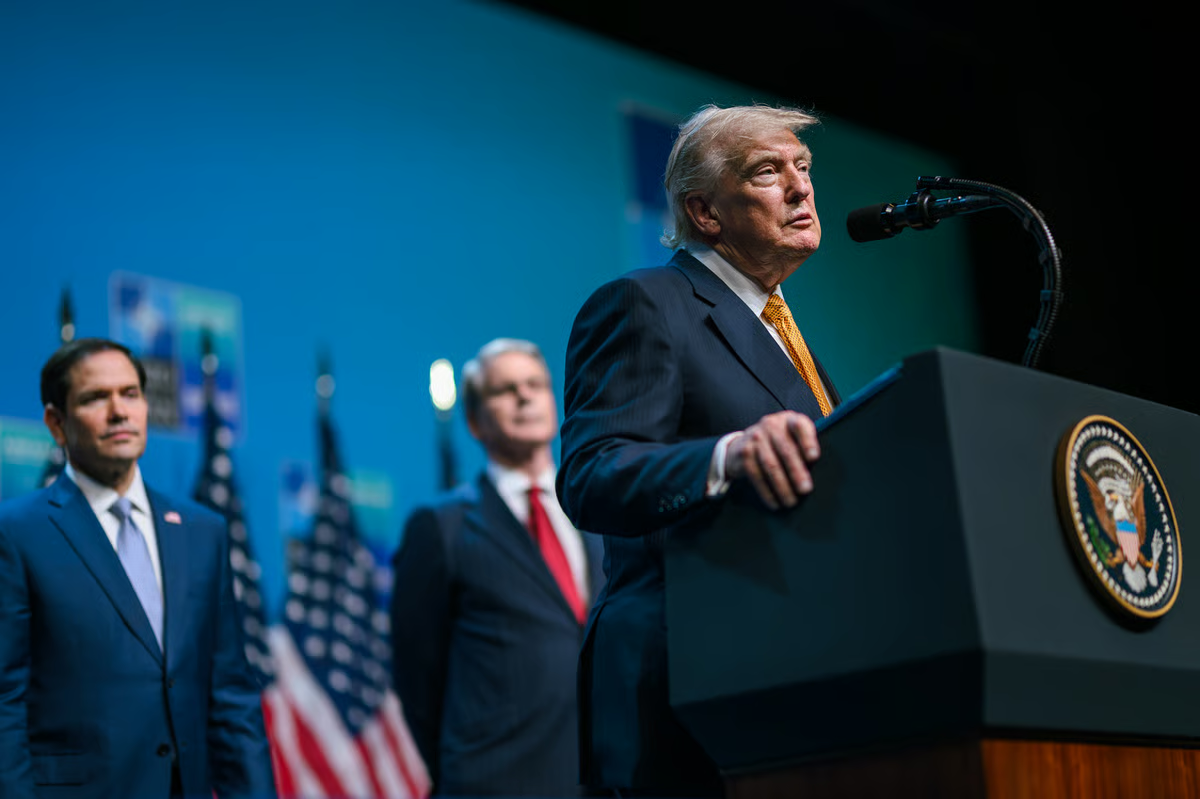
There are a lot of ways to describe the second Trump administration, but the word “volatile” seems to sum it up quite nicely. Within less than two years, the president has waged a trade war against most U.S. allies, launched a kinetic war in the Middle East, and repeatedly harangued two successive Federal Reserve chairmen to lower interest rates, despite the inflationary effects of his other two policies.
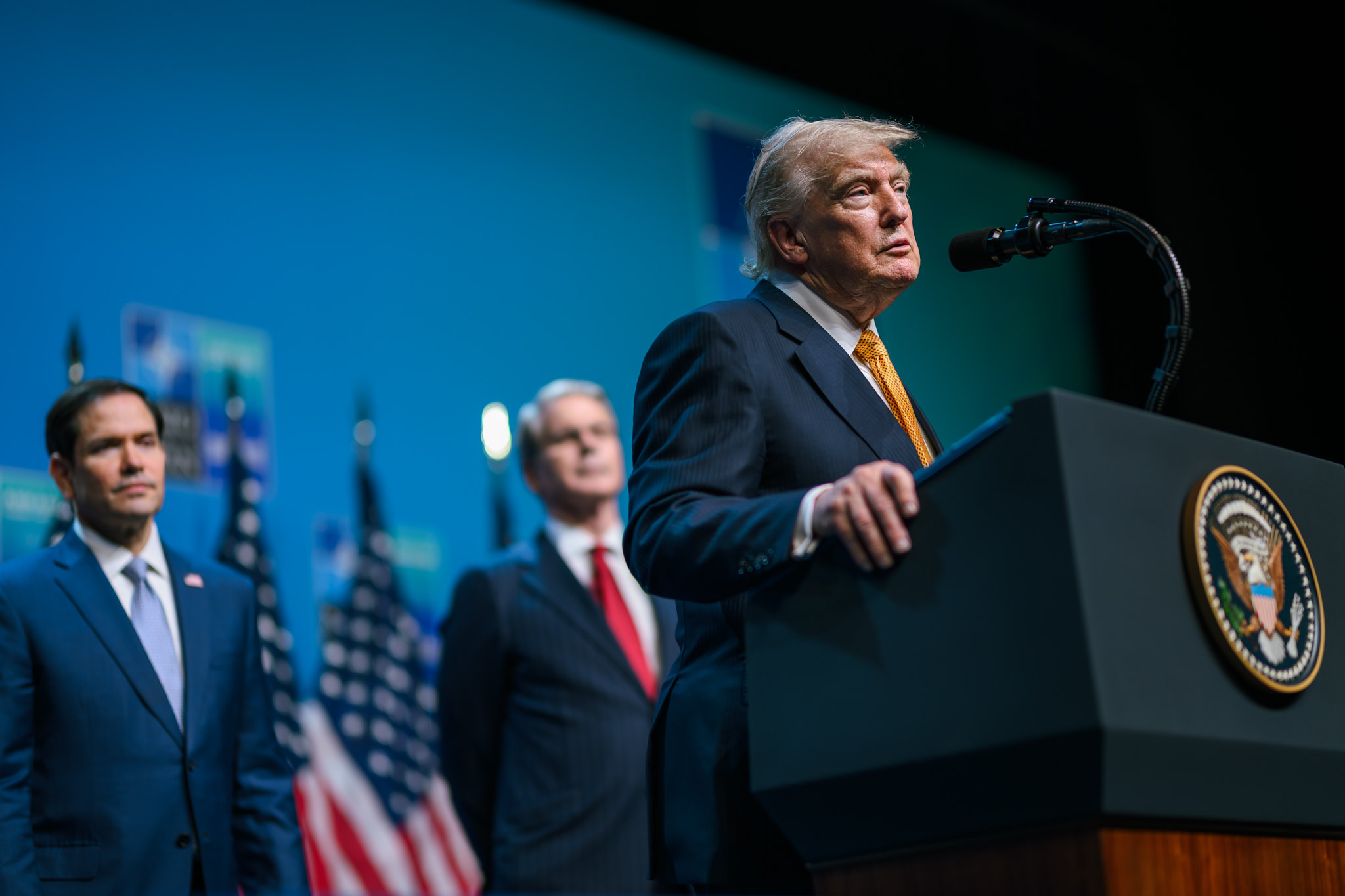
Image source: Getty Images.
Amid the chaos, the S&P 500 (^GSPC -0.38%) has continued to chug upward, returning an impressive 33% since Trump’s election victory on Nov. 5, 2024. The surging growth in new industries like artificial intelligence (AI) has allowed Wall Street to ignore the increasingly uncertain political situation. Let’s dig deeper to find out why a stock market crash could be imminent and decide what investors should do to come out ahead.
Today’s Change
(-0.38%) -29.11
Index Level
7,718.60
Key Data Points
Day’s Range
7,706.12 – 7,750.19
52wk Range
6,316.91 – 7,816.70
The Trump contradiction
Under Trump, U.S. government policy has begun to sharply diverge from many of the administration’s stated economic goals, including lowering inflation and reducing the national debt. The escalating war in Iran has caused the U.S. inflation rate to hit 3.4% year over year in July, well above the Federal Reserve’s target of 2%.
The persistently high inflation makes it harder for the Fed to justify lowering rates. That’s because while lower rates would stimulate the economy by reducing borrowing costs, they could also cause prices to rise even faster, worsening the overall economic situation.
The nation of Turkey is a cautionary tale. From 2021 to 2023, the Eurasian country slashed rates amid high inflation, exacerbating a massive cost-of-living crisis that it is still struggling to overcome.
Trump doesn’t seem to have learned from other countries’ mistakes. In an ongoing pressure campaign, the president is now threatening to halt trade with all countries that have a surplus with the U.S. unless the Fed lowers rates. If such an extreme policy were implemented, it would likely cause inflation to spike further and make rate cuts even more unfeasible.
Can the stock market withstand more political uncertainty?
Historically, stock market performance has been driven more by economic fundamentals, innovation, and corporate earnings than by the direct impacts of government policy. That said, there are growing signs that Trump’s unorthodox decisions are bleeding into the regular economy.
One of the biggest signs that the market is getting skittish comes from the bond market. Yields are rising sharply, with the 10-Year U.S. Treasury yield now hovering around 4.80%. These bonds represent the risk-free rate in the U.S. economy, and when they rise, so do borrowing costs for corporations and individuals. This comes at an extremely bad time for the technology sector, as it pours hundreds of billions of dollars into capital expenditures to build artificial intelligence data centers.
The risk of a crash is exacerbated by the S&P 500’s historically high valuation. The cyclically adjusted price-to-earnings (CAPE) ratio now stands at 41.4, well above its average of 17.4 and close to an all-time high of 44 reached in 1999 before the dot-com bubble turned into a crash.
What should investors do next?
Generally, time in the market beats trying to time the market. And even though the likelihood of a crash is rising, it is impossible to know exactly when it will happen, which creates the risk of selling too early.
That said, Trump’s policy instincts seem to be getting worse, not better. Investors can help protect their portfolios by diversifying into profitable, reasonably valued companies that don’t have much room to fall. It may also be a good idea to keep some cash ready to shop for deals if stocks get significantly cheaper over the next few months.