India’s reform express will move forward at an even faster pace: PM Modi | Finance News
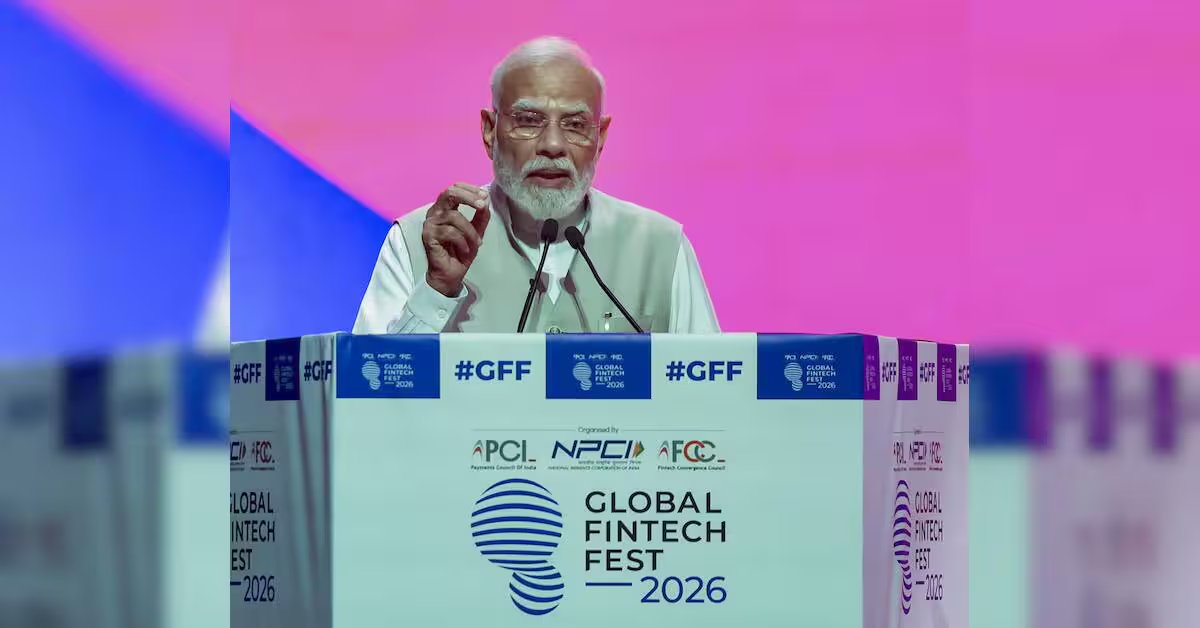
Amid turbulent times globally, marked by geopolitical tensions, pressure on global supply chains and trade tensions, India’s economy grew 7.8 per cent in the April-June quarter (Q1FY27), giving the world “a new sense of confidence”, Prime Minister Narendra Modi said on Tuesday, inaugurating the Global Fintech Festival 2026 in Mumbai.
He said the growing global confidence in India was also reflected in Japan’s credit rating agency upgrading the country’s sovereign rating to “A-”, calling it a testament to India’s growth momentum, macroeconomic stability and the structural reforms undertaken over the past several years.
“India’s reform express will move forward at an even faster pace,” PM Modi said.
India’s GDP growth of 7.8 per cent in Q1FY27 beat expectations of most forecasters, making it one of the fastest-growing major economies, with China expanding 4.3 per cent and Indonesia growing 5.3 per cent in the June quarter. India’s economy had grown 6.9 per cent in the June quarter of the last financial year.
Forecasts by agencies for June quarter GDP growth had ranged between 6.9 per cent by India Ratings & Research (Ind-Ra) and 8 per cent by the State Bank of India (SBI). The Reserve Bank of India had estimated growth at 7 per cent for the same quarter.
“…the quarter from April to June has been particularly challenging. And even in such circumstances, when India grows at 7.8 per cent, it gives the world a new sense of confidence,” PM Modi said.
Meanwhile, PM Modi also highlighted the success story that India’s ubiquitous digital payments platform, UPI, has been in the last decade since its launch. PM Modi, quoting French President Emmanuel Macron, said UPI is not just a technology story, but a civilisational story.
Launched on August 25, 2016, UPI has transformed India’s digital payments landscape and emerged as the backbone of the country’s digital payments ecosystem. Over the past ten years, UPI’s annual transaction volume has surged from 1.78 crore transactions in FY2016-17 to over 24,162 crore in FY2025-26, an almost 13,000-fold increase, while transaction value has risen from Rs 0.07 trillion to approximately Rs 314 trillion, more than 4,000 times higher. Its scale, reliability and interoperability have earned global recognition, with the International Monetary Fund (IMF) acknowledging UPI as the world’s largest real-time payment system by transaction volume, underscoring India’s leadership in building scalable and inclusive digital public infrastructure.
But PM Modi cautioned that India should not stop at UPI’s domestic success. With UPI now live in 11 countries, the next step should be to link India’s payment system with the payment rails of other countries, he said. India has already linked UPI with Singapore’s payment system, allowing transactions between the two countries to be conducted almost as easily as domestic payments, he said.
Similar linkages should be pursued wherever large numbers of Indians live, where India conducts significant trade or where countries are willing to partner with India. Such interoperability could also help reduce the cost of remittances, PM Modi said, noting that Indians are among the largest remittance senders globally and that a portion of the money sent home is currently lost to transaction costs.
PM Modi also used UPI’s success to make a broader point about India’s role in global financial infrastructure. For years, India adopted payment standards and rules created elsewhere because it did not have an alternative of its own.
The success of UPI, however, should not mean that India’s fintech story remains centred on payments, Modi said. The next phase should see a greater share of fintech activity in credit, insurance, savings, investments and pensions, particularly for sections of society that remain underserved by traditional financial models.
PM Modi also highlighted that agentic AI, tokenisation, etc. are opening new possibilities in finance, and asked fintechs to set four priorities for themselves. The first is to make cybersecurity in India world-class. The second is for the industry to develop its own ethical data-protection standards. The third is to build a stronger fintech regulator-industry-innovation ecosystem. And the fourth is to establish a FinTech Consumer Protection Index that would allow companies to be transparently rated on consumer protection.
If the industry can hold itself to these standards, India’s fintech sector can become a “gateway to countless possibilities”, PM Modi said. “The success of our FinTech story so far has been built on scale, scope, secure systems, democratisation through technology, and the trust of the people,” he said, adding that the next phase must build on those foundations while embracing next-generation innovation.