Data Centers Emerge as Midterms Flashpoint as Trump Declares ‘Let Data Reign’
A broad national revolt against data center development has surged to the top of voters’ minds this year. And across the country, that’s left candidates in tight midterm races scrambling.
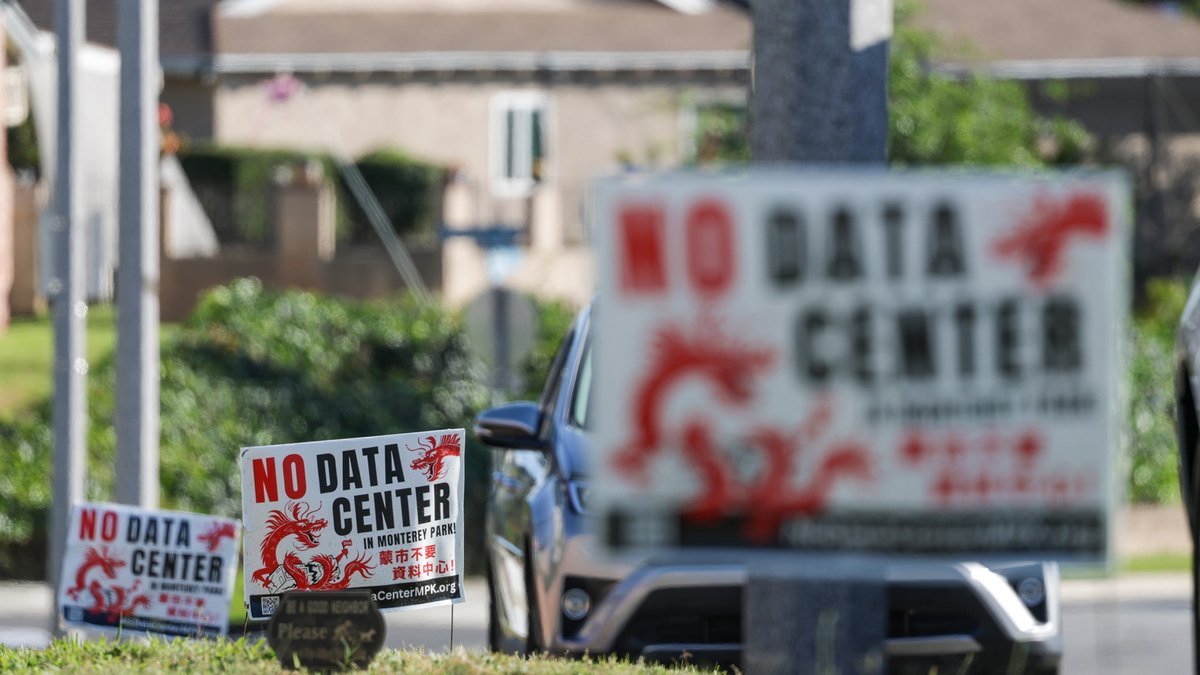
Thousands of data center projects proposed and underway around the nation have become a political flashpoint. These projects are being built in increasingly remote areas of the country, bringing worries about water and air quality, power bills, and property values. Many cities are pausing or halting construction.
Public opinion on these projects has shifted. Separate polls released this summer by Fox News, Gallup, and the Washington Post all found about 70% oppose building data centers to support artificial intelligence near their homes. Voter sentiment on data centers has sharply dropped in just a few years.
But President Donald Trump has expressed defiant support for data center development.
“The only reason that communities throughout the U.S.A. should not want Data Centers is if they want to end up being backwards and poor,” Trump said in an Aug. 31 post on Truth Social. “If they want to be successful and rich, with far lower taxes and jobs all over the place, let Data Reign.”
The remarks left some Republican candidates scrambling to create distance from Trump’s position, without losing support from the base. For Democrats, the comments offered a new line of attack in close races for candidates seeking to seize on public concern about data centers.
Trump’s post comes as the potential buildout of data centers promises immense investment. McKinsey estimates the industry will pour $7 trillion into infrastructure by 2030, fueling economic growth that supporters tout.
“The good news is that there are plenty of other places that want them,” Trump continued. “If we kill the Golden Goose, you will only have yourselves to blame. China could not be happier with this anti Data Center movement. Actually, they can’t believe it is happening!”
Political crossfire
As with other recent real estate issues, data centers have scrambled traditional political lines.
A leaked memo from the National Republican Senatorial Committee suggested data centers are the “centerpiece” of Democrats’ strategy against Sen. Jon Husted (R-OH), who is running against Sherrod Brown, a longtime former senator who lost his last reelection bid.
“If he loses and data centers get the blame, politicians across the country will take notice—and they will not go near the next one,” the memo says, according to Axios. “This has become a sleeper issue for the entire election cycle.”
On the other hand, unions representing the thousands of construction jobs the centers create are hardening their resolve in favor of the data centers.
In an open letter, posted on its site, Steamfitters UA Local 602, represents HVAC and pipe workers in Washington, DC; Maryland; and Virginia‘s ‘data center alley,’ vowed not to support any data center opponents. It called potential data center restrictions a “catastrophic economic blow.”
“If responsible data center development across our region comes to a halt, several thousand Local 602 members will be out of work—and the impact will extend far beyond our local union,” Local 602 business manager Sidney Bonilla said. “It will ripple across all construction trades, threatening work for thousands of skilled men and women whose families depend on a steady pipeline of projects”
Ed Brady, CEO of the Home Builders Institute, told Realtor.com® there’s space to benefit politically from the buildout. Data centers mean a boom for skilled trades, though they could compete with housing if there aren’t enough training programs in place.
“We welcome the investment into skilled labor,” Brady said. “But the federal government has to react and reposition some resources to train that next generation. I think that’s missing.”
Attack lines
In both parties, the message around data centers has crystalized. In Ohio, Republicans accused Brown of flip-flopping because he’d previously celebrated when the state its first set of data centers in 2015. With his own ads, Brown called Husted “the face of data centers in Ohio.”
And in Texas, Democrats are doing the same to Ken Paxton. They said he supported sales-tax exemptions for data centers in the state senate in 2013. He released a data center plan last month calling for their repeal.
The Texas Politics Project found in July that 56% oppose data center construction, especially in rural and suburban areas.
Charlie Blaettler, political director of The Guardrails Alliance, a left-leaning Super PAC backing candidates that support restrictions, said the Republican Party is “panicking” over the issue. That group urged Democrats to capitalize on voter dissent.
“It is time for the Democratic party to make it clear who they stand with: a handful of Big Tech billionaires or the majority of people in the country who want common sense regulation for this unprecedented technology,” said Blaettler.
And for Republicans, the goal is touting data center benefits. That includes keeping American technology competitive, especially against global rivals. It also includes laying out the benefits of data center development. But that’s also incumbent on the industry to do, according to the leaked memo.
At the Sept. 3 hearing, Rep. Dan Crenshaw (R-TX) said the Chinese government was “pushing anti-data center propaganda all over social media.”
“If you’re against data centers because social media got you all riled up, you are an unwitting propoganda tool for the CCP, I’m sorry but I’m not sorry,” said Crenshaw, who lost his primary for reelection this year.
Trump says ‘let data reign’
In July, the White House publicized a “ratepayer protection pledge” that highlights companies that would buy the power needed for their facilities. About 300 groups voluntarily signed, including major utilities like AEP Corp., Dominion Energy, and Duke Energy and big users like Amazon, Meta, and Google.
But as states have quickly enacted restrictions on data center development, Trump has argued the facilities, and AI development more broadly, are in the national interest. That’s played out in close congressional races such as Texas, where the state is pushing regulation.
In a follow-on interview, Trump called Texas’ proposed industry guardrails a “mistake.”
“They are tremendously important for the economics,” Trump said. “For Texas to say no to data centers is a mistake, in the sense that it could be bigger than oil … and there are a lot of communities that want them. But, more importantly, and bad for us, there are a lot of countries that want them.”
Then, Vice President JD Vance backed that view in a Sept. 3 press conference. He said the nation should build more power generation to offset data center use.
Wall Street Journal columnist Matthew Continetti suggested Trump’s view reflects his “unique blend of markets and mercantilism.” In a column supporting both data centers and AI, he suggested Trump is “willing to take a political hit in exchange for strengthening Washington’s position against Beijing.”
But political animus is quickly hardening against data center development. The Washington Post found 375 bills aimed at data centers in statehouses nationwide. That’s more than the past three years combined, though many didn’t pass. Meanwhile, tech investor Kevin Xu tracked 360 moratoria nationwide.
Walking a tightrope
For politicians, the potential backlash is palpable. Voters recalled multiple city council members in Festus, MO, and another in Independence, MO, who backed tax breaks for the industry last week.
So it’s an area where Republicans are more prepared to break ranks.
“President Trump and I don’t see eye to eye on this issue,” Darren Bailey, Republican nominee for Illinois governor, posted to X. “As I travel across Illinois, I hear the same concerns: massive data centers are threatening farmland, straining our power grid and driving up costs. My position is clear: Illinois families and communities come first.”
For Congressional lawmakers, posturing around data centers has had to shift quickly. Republicans have rallied around local governance, while Democrats have leaned into environmental impacts. At a Capitol Hill hearing Sept. 3 of the House Subcommittee on Environment, they presented dueling ideas over how to regulate water infrastructure and data center usage.
“Trump and House Republican leaders want to continue to give big tech free reign to build data centers with no guardrails,” Rep. Frank Pallone (D-NJ), said. “We need real substantial federal guardrails in place to restrict their impact on air, our water, our power grid, and utility bills.”
Rep. Rob Menendez (D-NJ), who is running for reelection this fall, pitched a bill that would require data centers to report on metrics about where they get water and how it’s used. He said Republican efforts to regulate the industry “fall far short.”
In response, Republicans pitched local control of data center development.
“I think multiple things can be true at once, and the acknowledgement that water that issue,” said Rep. August Pfluger (R-TX), who’s also up for reelection this year. “The acknowledgement that data centers are important, or really any other industry that uses water, any other commerce that we have.”
Get real estate news in your inbox