Temasek Trust’s philanthropy group expands India network, backs 2 ventures | Finance News
As it looks to expand in India, Philanthropy Asia Alliance (PAA), an Asia-focused collaborative philanthropy initiative by Singapore-based Temasek Trust, announced support for two India-based impact ventures on Tuesday: Rocket Learning, an early age education project; and Frontier Innovations’ She Leads Bharat: Udyam, a digital-first model that connects rural women shopkeepers with rural commerce platform, Frontier Markets, using an artificial intelligence (AI)-powered app, Meri Saheli.
It also onboarded Mumbai-based strategic philanthropy organisation, Dasra, adding to the three existing Indian members: Aditya Birla Education Trust, Shiv Nadar Foundation, and Bharti Airtel Foundation. Across the Americas, Asia Pacific, Europe and West Asia, PAA has a network of around 110 funder members, network and programme partners.
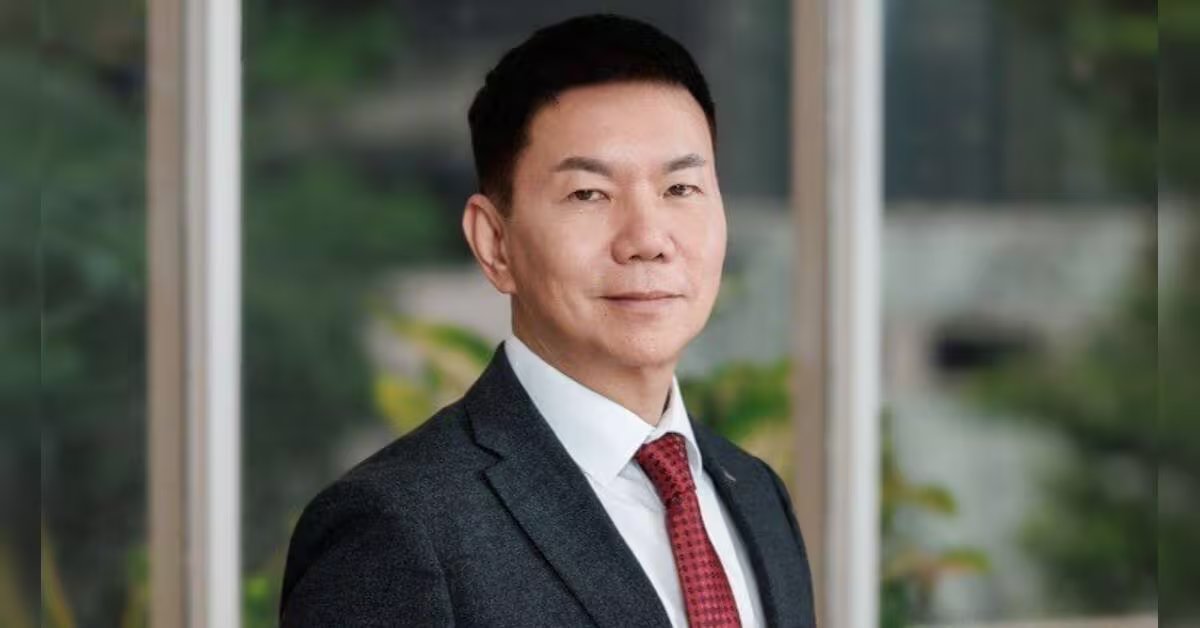
In an interaction with Business Standard, Shaun Seow, chief executive officer of PAA says that the next 12 months in India will be very interesting as they have a pipeline of programmes and funders to look at. “India offers a very rich tapestry to develop solutions. It is multifaceted. There are challenges, but there are also many interesting solutions emerging,” he says. PAA’s three key mandates are health, inclusive development and climate. “India is also producing solutions around extreme heat, its impact on health and parametric insurance.” This includes a mechanism where workers don’t have to go to the fields if the temperature rises beyond a certain level, and can instead receive compensation. “We are seeing solutions that are ready to scale within India and could also be relevant to the rest of Asia,” he says. In three years of its operations, PAA has mobilised about $615 million across 300 plus programmes.
On keeping the members limited but aligned, Seow says that they bring members together through broad convenings such as the Philanthropy Asia Summit, which takes place every May. There are also events throughout the year focused on climate, health and inclusive development.
“Within our membership, we group together funders interested in specific areas, such as energy transition, ocean philanthropy or health for human potential. We currently have five such communities,” he says.
The core idea of PAA is to enable two or three funders looking at a programme that has multiple phases, and eventually scale with the help of government policy or private capital. A project from Vietnam called OneSky, Seow says, is one such example of expansion. It looks at how you approach pedagogy in lower-middle-income countries and build children’s interest in science, technology, engineering, and mathematics (STEM). “The Vietnamese government has now adopted it and we are looking at taking this to the Philippines,” he says. Another example is a rice project that PAA funded with the Gates Foundation. It aims at helping farmers think about growing rice in a more climate-friendly way. “We have three pilots: one in South India, one in Indonesia and another in Laos,” Seow adds. For PAA, he says, the aim is to connect four major blocks: India, Southeast Asia, West Asia and China. “Building that connective tissue is extremely important.”
On taking Rocket Learning beyond India, Seow says that once the initiative gains more traction, we would work with a local partner in the Philippines to make sure it is fit for purpose there. “The learnings from India would be extremely useful, but the solution needs to be adapted, rather than simply transferred lock, stock and barrel to the Philippines. Local knowledge is extremely important,” he adds.
The challenges, according to Seow, differ from market to market. For the rice cultivation initiative, for example, some countries have stronger cooperative structures, as India does, while others do not. “Where cooperatives exist, it is easier to reach farmers and encourage behavioural change. Reaching individual farmers is much more difficult,” Seow says.
PAA also had conversations with Piramal Foundation, which is interested in tuberculosis work. “Both India and Indonesia suffer from this challenge, so there could be opportunities for collaboration,” he says.
Artificial Intelligence has also amplified the ambitions of the Alliance. In an attempt to enhance infectious disease surveillance, PAA, the Gates Foundation and Temasek Foundation are funding a pilot programme across five Southeast Asian countries to develop a machine-learning model for detecting pathogens, viruses and bacteria. “If a virus appears in a particular location, contextual information might tell you that people travelled from one city to another because of a music festival or large concert. From there, you can potentially trace where it originated much more quickly,” he explains, adding that then there’s also customisation in the education sector, where AI can help. However, responsible AI, Seow says, is also something that they try to work on. “AI datasets usually thrive on data recorded in English. It can lead to biases against communities interacting in other local languages. The more languages you capture, the more representative the datasets become of the people they are intended to serve.”