Reality Check: Mamdani’s “Transfer” Program Gets Started
When Mayor Zohran Mamdani on Thursday announced the “transfer” of a rent-stabilized portfolio, I thought: Have the socialist property seizures begun?
In one sense, yes, because the mayor is dangling city resources to steer buildings plagued by frozen rents to a buyer he likes. And because he likes the buyer, he is cheering the $86,000-per-unit sale just months after slamming an $88,000-per-unit sale as too expensive.
Mamdani’s press release wrapped up the transaction in a neat little bow.
“Today, Mayor Zohran Kwame Mamdani celebrated the transfer of three long-neglected, rent-stabilized apartment buildings in Crown Heights, Brooklyn, putting 88 homes on a path toward greater stability, investment and improved conditions,” it declared.
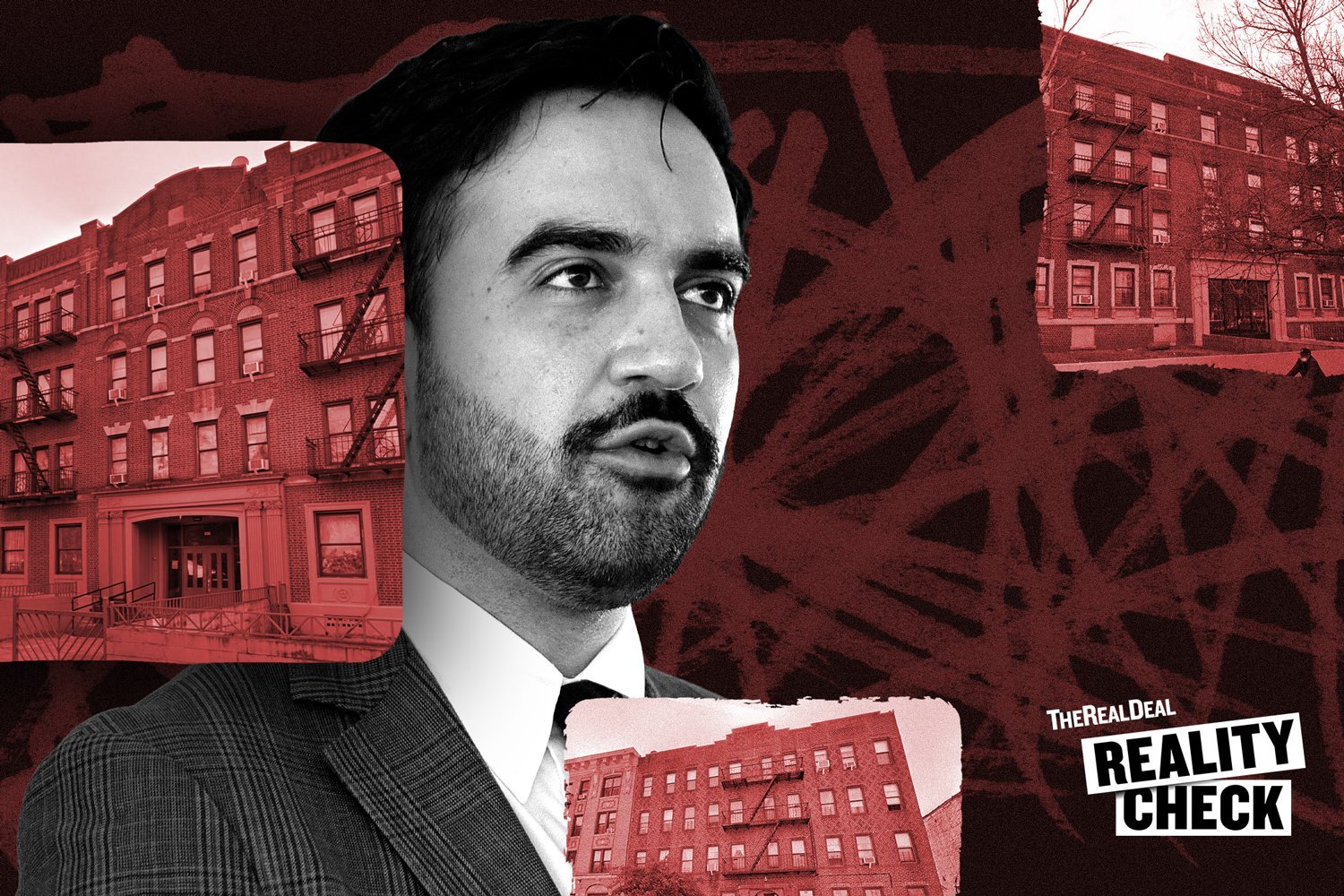
The buildings — 1018 and 1074 Eastern Parkway and 1392 Sterling Place — were “previously owned by Rubin Dukler, who routinely ranked among New York City’s worst landlords,” the release added.
Turns out Dukler has been dead for four and a half years, and this was a foreclosure sale with a complicated backstory, as my colleague Lilah Burke reported. The back-back-story is the devaluation of rent-stabilized buildings, socialists’ seizure dream and Mamdani’s plan for distressed properties.
It begins in late 2017 when Chayim “CK” Kirschenbaum’s Iris Holdings Group agreed to buy the portfolio from the Dukler family. The actual owner was Rikud Realty, an apparent portmanteau of Dukler and Sarah Richter, whose name I found on a 1973 mortgage.
Kirschenbaum backed out when a lead-poisoning case saddled Rikud with a $2.2 million judgment. Then something else further devalued the properties: the 2019 Housing Stability and Tenant Protection Act.
If not for that law, Kirschenbaum would likely have worked something out with the Duklers and fixed up the properties using Individual Apartment Improvements and Major Capital Improvements. But after the HSTPA strangled those programs and ended the 20 percent rent increase upon vacancy, he would have been crazy to pay the 2017 contracted price.
Decade of neglect
Kirschenbaum had toured 1392 Sterling and seemed eager to get to work, a tenant leader at the building told Curbed. But the law soon prevented owners from recovering the cost of significant improvements to rent-stabilized buildings. So the deal didn’t close, and the Dukler portfolio languished.
For the tenants, a full decade of suffering followed. They endured roaches, mice, rats, leaks, mold and frigid conditions, among other problems.
The city put the buildings into its Alternative Enforcement Program and made some emergency repairs, but AEP isn’t very effective, as Mamdani’s own housing team has acknowledged. Tenants’ misery persisted.
But at least their rents stayed low. That is the premise of the HSTPA: crappiness as an affordable housing policy.
Mamdani’s plan to rescue such buildings is to transfer them to “responsible stewards,” but there is no reliable mechanism to do that. The city’s days of seizing buildings for unpaid taxes and water bills are long gone, replaced by a lien sale and a program called Third Party Transfer. Both have been repeatedly suspended by the city pending reforms that never seem to happen.
A second problem is math. If a building’s operating expenses leave no money for maintenance and renovations, it doesn’t matter if the building is transferred to a “responsible steward” or to the tenants themselves. Someone has to pay for the housing.
Thus, Mamdani cannot confiscate properties as hard-core socialists want. He has to placate them by playing up distressed sales as “transfers.”
However, the city does have programs in its toolbox to facilitate deals that it favors. One is called Article XI.
It’s nearly impossible for traditional rent-stabilized buildings to get this discretionary property tax break from the city. But it can erase most of a portfolio’s property taxes, reducing them from 30 percent of rent revenue to single digits, freeing up money for improvements, salaries and profit. (Press releases never mention salaries and profit, but they are necessary for people to buy and repair buildings.)
Kirschenbaum tried to get Article XI to make the Dukler portfolio viable, but failed. Most Article XI applications do. Maybe he’s not one of the city’s preferred landlords. So he found someone who is: Mark Schwartz.
Clever deal
Kirschenbaum still needed to wrest the three buildings from the Duklers, whose patriarch had died in February 2022. So he worked a little real estate magic.
One of his firm’s investors bought the $2.2 million lead-poisoning judgment (probably for a fraction of that amount), used it for a credit bid to buy the portfolio in a foreclosure sale, and immediately flipped the buildings to Schwartz for $7.6 million, including all their liabilities.
That’s $86,000 per unit, about the same price that Mamdani said was too much for Summit USA to pay for the Pinnacle portfolio, which had far fewer violations per unit.
It’s a striking contrast. Mamdani went to court to block an $88,000-per-unit sale, arguing that it wouldn’t leave enough money to fix and maintain the buildings. Now he’s celebrating an $86,000-per-unit sale of buildings in even worse condition, and signaling that he will grant Schwartz a property tax break and a low-interest city loan to make it possible.
Schwartz happens to be the mayor of Teaneck, New Jersey. Being a mayor makes you a responsible steward, apparently.
Another winner will be whichever nonprofit receives fees to run the Housing Development Fund Corporation set up to be the nominal owner of the portfolio. Look for the Urban Homesteading Assistance Board to get that gig.
An HDFC, along with a 40-year regulatory agreement with set-asides for the homeless, is required to get Article XI. But Schwartz’s firm, Brooklyn Affordable Housing Associates, would remain the beneficial owner.
Confused? Don’t worry. Lawyers and consultants will be paid six figures to set all this up.
“Moving toward ownership”
Mamdani’s release made everything sound simple: “The tenant union has reached an agreement with Schwartz that commits to rehabilitating the three buildings with tenant oversight and moving toward resident ownership.”
It’s not clear what “moving toward resident ownership” means. You either own a building or you don’t.
Would ownership even make sense for these renters? Generally, rent-stabilized tenants have no capacity or reason to own their buildings. It would mean the end of their minimal rent increases, guaranteed lease renewals and succession rights. Instead of calling 311, they would have to fix problems themselves.
On the other hand, self-management makes a lot more sense than living in squalor or trudging through housing court and city bureaucracy every time you want to patch a mouse hole or nail down a loose floor board.
As owners, the residents of 1018 and 1074 Eastern Parkway and 1392 Sterling Place would have to pay the full cost of their housing. Even with a property tax break, that will end up being a lot more than they bargained for.
But that’s a story for another day.
Read more

How New York kneecapped rehabs
Bistricer snags massive tax break for crumbling Flatbush Gardens

The Daily Dirt: A tax exemption for rent-stabilized portfolios hasn’t been so helpful