European Union joins U.S.-led ‘Operation Economic Outcast’
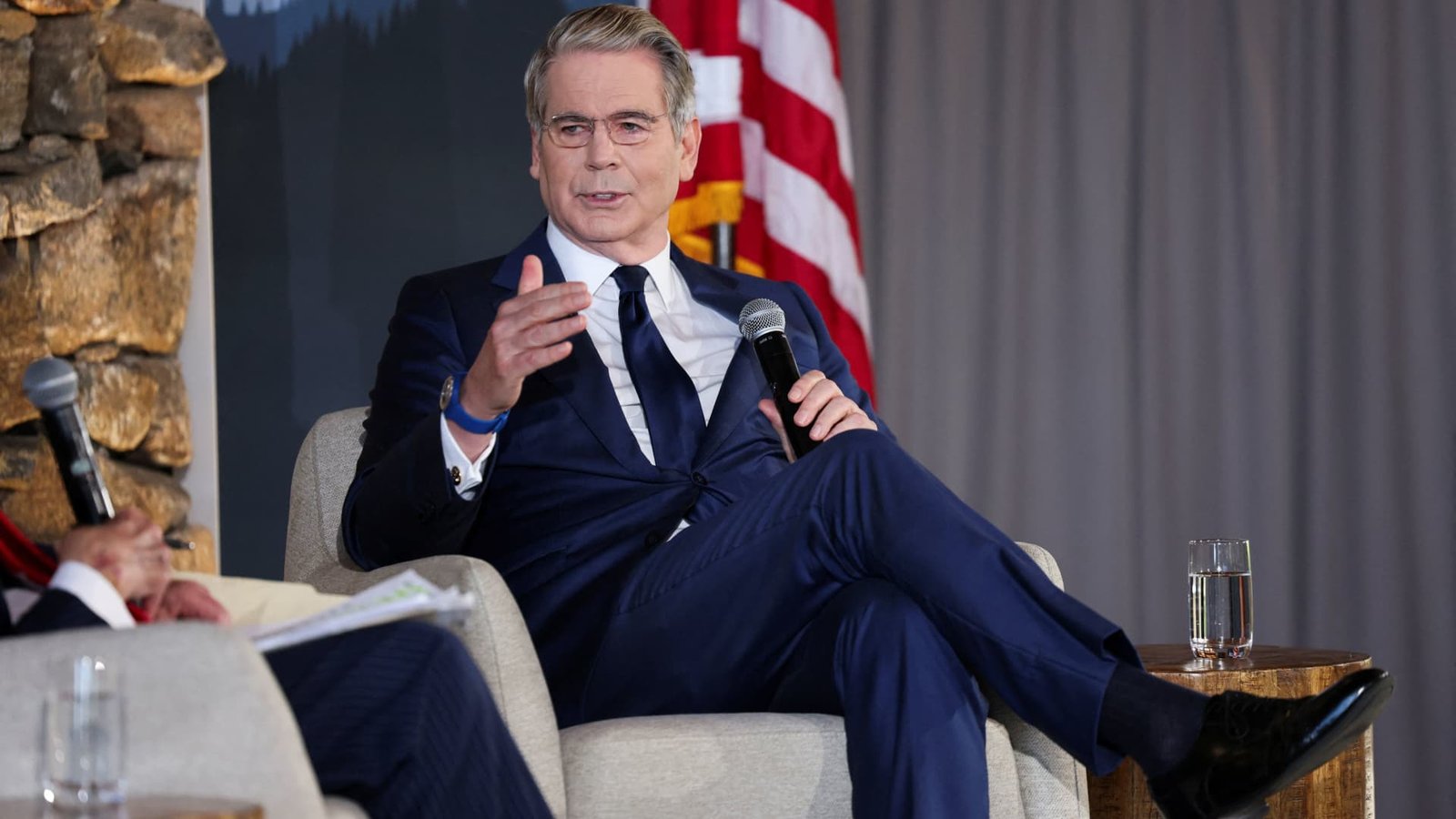
U.S. Treasury Secretary Scott Bessent speaks during a “fireside chat”, as finance ministers and central bank governors from G20 countries meet in Asheville, North Carolina, U.S., September 1, 2026.
Sam Wolfe | Reuters
U.S. Treasury Secretary Scott Bessent praised the European Union for formally joining “Operation Economic Outcast,” the U.S.-led sanctions campaign aimed at severing Tehran from the global financial system, as Washington widens its war to include economic pressure.
“We appreciate their strong and early stance,” Bessent said in a social media post Thursday evening stateside. “The world is sending a clear message to the Iranian regime: We will not stop until every remaining financial lifeline has been severed,” he added.
The comments came after Brussels, in a statement on Aug. 31, said it supported efforts aimed at stopping the “destabilizing activities” by Tehran and resuming peace talks, including through Operation Economic Outcast, to apply additional economic pressure against the Islamic regime.
The bloc’s endorsement came as the Group of 20 finance ministers and central bank governors gathered in Asheville, North Carolina, earlier this week.
“The United States stands firm with our allies in ensuring the murderous Iranian regime cannot exploit the global financial system to fund its nuclear ambitions, weapons programs, and terror proxies,” Bessent said in the Thursday post.
The Trump administration launched the “Operation Economic Outcast” campaign in late August, targeting Iran’s access to digital assets, advanced technology procurement, gold reserves, commercial aviation and shipping.
Iran’s foreign ministry spokesperson Esmail Baghaei pushed back against the EU’s move to endorse what he called Washington’s “economic terrorism.” Baghaei blasted in a post on Sept. 1 that the bloc had “surrendered its sovereignty, its laws and regulations, values and ethics to U.S. coercion.”

Bessent cast the campaign as an “economic onslaught” against Iran’s global financial connections, warning that countries aiding Tehran should “expect to share in the isolation of a withering regime.” China was the largest trading partner for Iran, buying around 90% of Iran’s sanctioned crude exports before the war.
The EU has separately maintained its own sanctions regime targeting Iran’s nuclear and ballistic missile programs and its military support for Russia.
Bessent had signaled ahead of the summit that he intended to press G20 counterparts to cut financial ties with Tehran, or face secondary sanctions. He also indicated new secondary sanctions each week with an initial focus on banks, warning to cut off institutions that facilitate Iran-related transactions entirely from the dollar-based financial system.
Standoff
Military hostilities in the region intensified in recent days, reviving fears of a return to broader war.
The U.S. military carried out a new wave of strikes earlier this week, hitting military targets in Iran in retaliation for attacks on ships and American forces in the region. Iran has retaliated, launching missiles on U.S. military bases across the Middle East.

Shipping through the Strait of Hormuz — a chokepoint for roughly a fifth of global oil flows before the war — remained subdued, with Iran launching periodic strikes on vessels using the southern shipping lane near the Omani coast.
The U.S. has maintained a naval blockade in the strait, blocking vessels entering or leaving Iranian ports to stall the country’s crude oil shipments. U.S. Central Command said on Friday that it has redirected 87 commercial vessels, disabled three and boarded two to ensure total compliance.