Manufactured Housing has an Affordability Problem
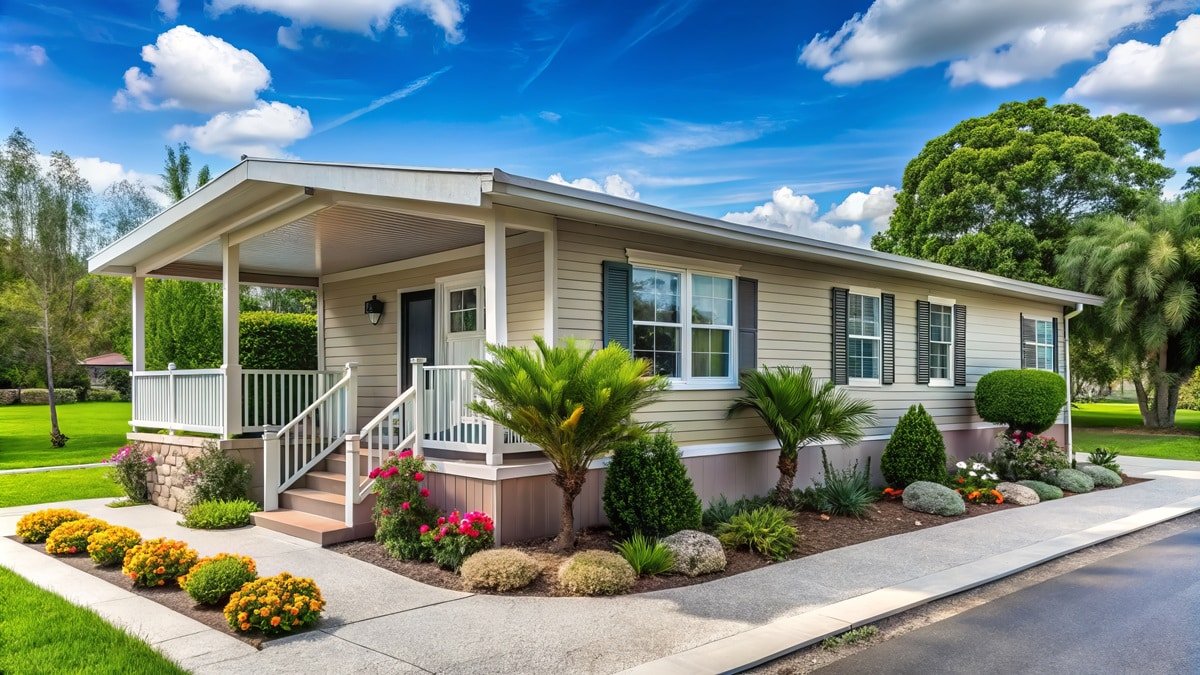
Manufactured homes are a part of the federal government’s plan to fix the nation’s lack of affordable housing.
According to a Politico report, loans to buy manufactured housing remain expensive, however.
Politico noted that Congress’s new, bipartisan housing law, the 21st Century Road to Housing Act, is expected to lower the price of units largely built off-site, often on land that is rented rather than owned. But the law does not fully address interest rates for the loans on those homes, which often reach near double digits. And that price could still lock out many prospective buyers.
The so-called personal property loans that are often used to buy manufactured houses generally can’t be bundled and sold off to investors, which increases the risk for the lender that could be stuck holding them. The result: rates that are multiple percentage points higher than typical mortgages.
Some people in Washington are hoping to ride the affordability wave to make factory-built home loans cheaper and more available by providing more federal government support for them, the report noted.
“Congress must capitalize on the momentum of the landmark 21st Century ROAD to Housing Act — which took important steps to support affordable manufactured housing by eliminating outdated requirements — and continue to invest in affordable housing for all Americans,” Sen. Jeff Merkley (D-Ore.) told POLITICO in a statement.
Permanent Steel Frame
The housing law directs the Department of Housing and Urban Development to strike the national requirement that manufactured homes have a permanent, steel frame. That provision is lauded as one of the most consequential pieces of the legislation.
Politico said the previous requirement stemmed from a time when manufactured housing was mostly synonymous with mobile homes that needed a steel base for transport, and the bill’s authors deemed it no longer necessary. The Niskanen Center estimates that Congress’ move to repeal that requirement could reduce construction prices by as much as $10,000.
Now, both the Trump administration and some congressional Democrats are trying to revamp previous efforts to increase the affordability of personal property loans — which are used by 44% of borrowers looking to buy manufactured homes, according to analysis from Pew Charitable Trusts.
Politico noted that some of those homebuyers were ineligible for regular mortgages because they rent their plot of land instead of owning it. Others own the land but state laws make it difficult to qualify for a typical mortgage with a manufactured home, Politico said.
Choosing a personal property loan means missing out on the support that the federal government provides for most mortgages.
The government keeps typical mortgages widely available and relatively low-cost by supporting a financial system that offers liquidity to the lenders and insulates them from risk, Politico noted. The government-controlled companies Fannie Mae and Freddie Mac purchase mortgages from lenders, package the debt and sell it as bonds to investors.
The federal government has pushed Fannie and Freddie to open a pilot program to include personal property loans for manufactured homes in the secondary market they uphold. So far, no program has materialized.
Fannie & Freddie
Some in Washington are hoping to change that.
Democratic Sens. Merkley, John Hickenlooper and Peter Welch introduced legislation in June that would establish a 30-month deadline for Fannie and Freddie to take on some of the financial risk from personal property loans.
“While there has been some interest at the federal level to address these loans, my bill is a necessary step forward to bring these ideas into action,” Merkley told POLITICO.
President Donald Trump, in a March executive order, also charged the Federal Housing Finance Agency, which oversees Fannie and Freddie, with finding a solution for personal property loans, Politico said.
Fannie and Freddie declined to provide comment for this story. In a 2024 progress report to FHFA, Freddie indicated it needed more time to gather and analyze industry data before launching a pilot program.
FHFA proposed changes in June to its regulations requiring Fannie and Freddie to target some of their purchasing power towards supporting low-income markets. The agency said at the time that it wants to make its requirements more flexible in an effort to encourage innovative approaches to boosting manufactured homes and other affordable housing.
“Thanks to President Trump’s leadership, Federal Housing [Finance Agency] is pioneering manufactured housing solutions for America’s families,” an FHFA spokesperson said in a statement. The agency is undertaking “ongoing work to implement the President’s order to develop appropriate policies for personal-property manufactured housing.”