3 years vs 5 years: How your investment strategy should change as your goal gets closer
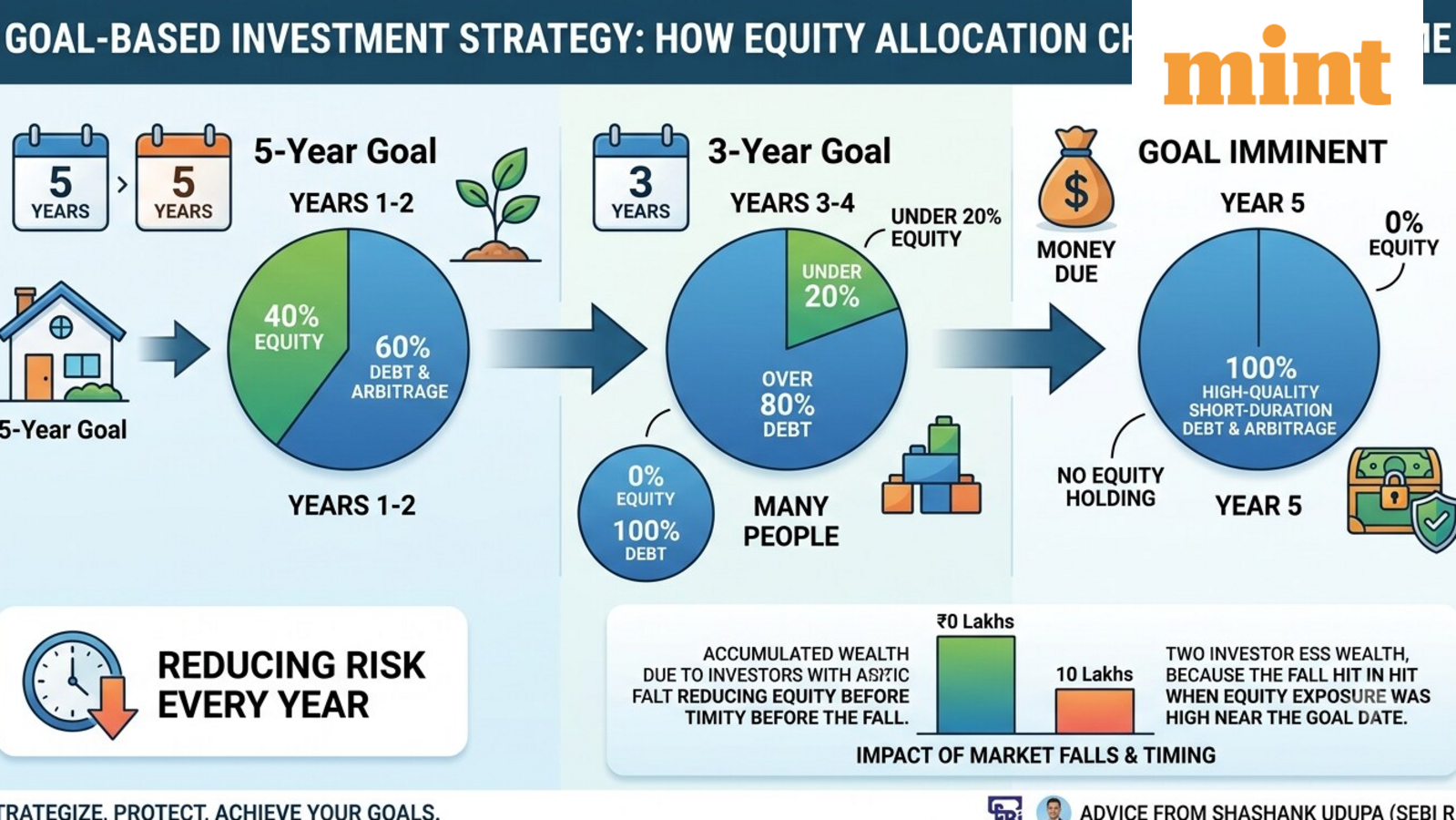
Starting your investment journey is exciting—until you realise that when you need the money matters just as much as how much it grows. If your goal is only three to five years away, going all-in on equity could leave you scrambling after a market fall. So, how much equity is actually enough—and when should you start cutting your risk?
The best way to build your investment strategy is to take a goal-based approach. If you’re saving for something big, for example, buying a house five years from now, then your investment approach should look very different from how you’d invest for a three-year goal. As your goal gets closer, protecting your money matters just as much as growing it.
Shashank Udupa (SEBI RIA) breaks down what a goal-based investment strategy should look like and how your equity allocation should change depending on how far away your financial goal is.
‘Do not stop SIPs’
Udupa also pointed out that stopping the SIP is the single most expensive habit in Indian retail investing.
“Look at what happened this year. Equity inflows in June were ₹28,973 crore, up 26.5% from May, so plenty of investors held their nerve. The ones who paused in January and February skipped every unit bought between 22,182 and 24,000 on the Nifty.”
Staying invested doesn’t mean sticking blindly to the same strategy. The goal is to stay disciplined while adjusting your portfolio as your goal gets closer. He pointed out that if a 16% market drop makes you panic or abandon your investments, it may be a sign that your portfolio was carrying more risk than you could afford in the first place.
“What does not work is switching funds every quarter based on last quarter’s return. That is how people end up earning less than the funds they own. A simple strategy I suggest using is to add lump sums during market downturns. Every 5% drop in Nifty, the investor should be adding 20% of their Liquid fund.”
Being fully invested can leave you with nothing to deploy when markets fall. Keeping some money in safer, liquid assets can change how you react to a correction—from panic-selling to seeing it as an opportunity to buy more units at lower prices.