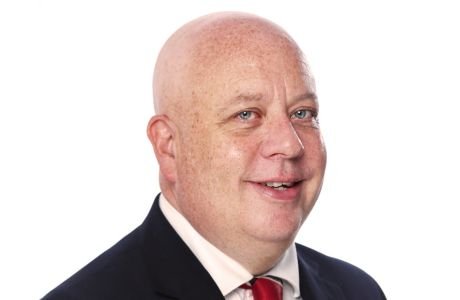
Julie Menin: City Council Speaker Balancing Mamdani, Real Estate
Beneath the roaring Cross Bronx Expressway, at the under-attended announcement of a study for 10,000 potential new homes, Speaker Julie Menin was not expecting to field any queries from the press.
The day before, Mayor Zohran Mamdani’s administration announced it wouldn’t send anyone to testify in person at a City Council oversight hearing on the pied-à-terre tax rollout. Asked about the implementation of the tax, which has roiled city government and suggested overnight political realignments, Menin was quick to contradict the mayor’s rationale: Mamdani said legal concerns prevented his administration from attending. Past mayors had gone before the City Council even during active litigation about the policy on the agenda, she said. Somehow, addressing a tiny crowd under the loud expressway, the speaker was in her element.
Menin, who has represented the Upper East Side on the Council since 2022, ascended to the role of speaker after unanimously winning in January, beating progressive contender Crystal Hudson. The first Jewish lawmaker in the top seat, the speaker’s background includes private-sector and nonprofit work, as well as leadership at a community board and multiple city agencies during Mayor Bill de Blasio’s administration. She is married to developer Bruce Menin, co-founder and principal at Crescent Heights, where she once worked as a development manager.
The shorthand for her politics is “centrist,” but while the speaker is far away from the popular democratic socialist slate, she’s also not an easy ally for the real estate industry, nor a reliable foil for the mayor’s less palatable (to them) positions. Menin might know developers more intimately than most, but she isn’t going to fight their battles, though she has gone against the mayor on housing-voucher expansion and bonuses for school paraprofessionals. Take the tax on second homes: though critical of the administration skipping the hearing, she called it a “smart, sensible proposal” when it was announced.
Politics can make strange bedfellows, and since his campaign, the mayor has surprised the industry by embracing the premise that a new supply of apartments will help keep rents from rising and that private firms could help deliver 700,000 new homes over the next decade, his housing goal. Menin has been largely conciliatory with Mamdani on the YIMBY aspects of his platform.
She maintains her independence vis-à-vis the mayor, refusing to be understood as his opposite pole. “Checks and balances,” she said, “are a good thing.”
That has meant sidestepping any direct confrontation with Mamdani over his idea to arrest Israeli Prime Minister Benjamin Netanyahu, focusing more on Council initiatives she introduced to address antisemitism.
“When there are areas of alignment with the administration, obviously we will partner on that, whether it’s around affordability or childcare.” Menin said. “When there are areas of disagreement, which happens no matter who the mayor or speaker are, then we just might have different approaches.”
Downtown past, Uptown present
Menin started her career in the private sector, with jobs as an attorney at Wiley, Rein & Fielding and Colgate-Palmolive, along with the stint at Crescent Heights.
She got married in 1999, the same year she opened Vine, the Lower Manhattan restaurant, market and caterer, which she then steered through post-9/11 challenges. This entrepreneurial experience was formative, she has said. She went on to found nonprofit Wall Street Rising and lead the local community board.
The seven years she spent leading Community Board 1 was a busy time for development across the district, prompting Menin to advocate for a Lower Manhattan Construction Command Center, a new agency that coordinated construction projects.
“Checks and balances are a good thing.”
“She could really relate to what was going on with a lot of the businesspeople down there,” Peter Braus, president of real estate brokerage Lee & Associates, who also sat on Community Board 1, said. “One of the big issues with community boards is that they are often so NIMBY and don’t really take into account the needs of business Gural, whose people.”
The Menins moved to the Upper East Side, where they raised their four children. Two college-age sons attend Harvard and Princeton; a third graduated Harvard last year. The luxury condo building she currently calls home, located a stone’s throw from Gracie Mansion, features a porte-cochère, a spa and a wine cellar. She also brings a decidedly UES aesthetic to the role of speaker, donning power suits, heels and meticulous blow-outs.
In the current political landscape, both news outlets and online commenters call out the couple’s wealth. Over the summer, a City & State article about a plane owned indirectly by Bruce Menin made the rounds on social media.The jet, registered to a Crescent Heights- linked LLC, was not only private, but it also used to be a CIA plane that transported suspects to “black sites.”
Menin has emphasized that she isn’t involved in her husband’s business dealings and tends to distance herself from the real estate industry.
Real estate fixes
Menin ran for the speaker seat on a platform of affordable housing, universal childcare and reducing healthcare costs. Speeches touched on her experience running city agencies. As the well-heeled representative of one of the city’s wealthiest districts, she also supported free buses and was early to praise the pied-à-terre tax, running counter to some wealthy neighbors’ opposition to signature Mamdani policies.
That didn’t necessarily worry the business base.
“I think it’s important to have someone like her with all the experience she has, because while Mamdani has some good ideas — obviously affordable housing is important and income inequality is a problem — he doesn’t have a lot of experience,” Jeff Gural, chairman of GFP Real Estate, said. “We’re all really thrilled that Julie was voted to become the speaker, it wasn’t easy.”
Menin has pushed to build housing atop the city’s public libraries and to revamp their facilities. She is also working on a small lots code reform program that could allow 35,000 new homes on properties currently too tiny for habitable buildings. Outside of real estate, she has vowed to hold insurers and other businesses accountable for predatory practices, while seeking to offer affordable alternatives, a position informed by her days in consumer affairs.

“These were new ideas, and that’s what’s so exciting about them,” Menin said.
She formed the Advisory Group on Housing Affordability, enlisting co-chairs Gary LaBarbera of the Building and Construction Trades Council of Greater New York, Barika Williams of Association for Neighborhood and Housing Development and James H. Simmons III, CEO and founder of Asland Capital Partners.
In her eight months at the helm, the Council has had a 100 percent pass rate for Uniform Land Use Review Procedure approvals, even after the dramatic changes tied to last year’s housing ballot measures.
“Consensus building and large coalition building” experience have been useful skills from Menin’s toolbox so far, she said.
During budget negotiations, she rallied voucher recipients and affordable housing landlord groups to secure funding for a new HPD-run expansion program.
“I have had a lot of experience in the private sector,” Menin said. “I try to utilize that experience to inform some of the policy.”
That’s saying something in a city where, per former Partnership for New York CEO Kathy Wylde, “you could count on one hand the number of Council members that have had serious business careers.”
Not quite ‘Kumbaya’
After Menin led the passage of the $10,000 one-time bonus for paraprofessionals, Mamdani in August sued the Council for circumventing the collective bargaining process.
Peace, in other words, is elusive. Menin’s moderate alignment and polished appearance may seem like anachronistic traits for the most powerful city lawmaker in an era of polarization and populism.
Where previous political leaders could turn to a well-worn playbook for messaging and outreach to the city’s diverse constituents, Menin is treading carefully among coalitions. She has a five-point action plan on antisemitism that foregrounds education and security initiatives; she makes calls to “bring the temperature down” after hate incidents.
“Physical health of the building follows the financial health.”
Despite their generational differences and positioning as “political competitors,” both Menin and Mamdani are committed to seeing the city thrive, according to Wylde, who met Menin in 2001 and worked closely with her on 9/11 recovery and has also served as an advisor to the mayor and member of his Commission on Government Efficiency.
“In terms of basic agenda, I think they’re very much on the same page when it comes to policy issues.” Wylde said. “She understands business and real estate, she has a good sense of what makes it work and what doesn’t, but I’ve never seen her tip the scales. In fact, she has at times gone the other direction in support of unions and community interests.”
Real estate players seem to agree that she has a better sense of their priorities than most lawmakers, even if that savvy isn’t directly informing the policies she champions on the Council. Gural, whose grandson works for the speaker as a personal assistant, cites her role helping to rebuild Lower Manhattan for showing Menin firsthand how real estate works.
“She’s a great friend to have for people who own property or who work in this business, I think she can be a good ally,” Braus said. “She probably is also quite sympathetic to the tenants’ side, and I don’t think you really advance in New York politics without being someone who is sympathetic to the tenants’ side.”
Back in the Bronx, under the highway, Menin credited local Council members Kevin Riley and Oswald Feliz for their leadership on the project of the day: the study for thousands of new homes that could come to the Tremont neighborhood, plus the new park. She introduced The Real Deal to Riley, her pick to chair the Council’s land-use committee, before heading back to City Hall.
“When this is all said and done, people are not going to look at this and say, ‘Hey it was the Council that did this and the admin didn’t do this,’” Riley said. “No, we’re working together!”