How Do You Get to Albany? Take a Left. – Commercial Observer
Albany could be ripe for revolution next year when a slew of socialists prepare to occupy the State Capitol for longer than a typical sit-in.
Two months ago, as Mayor Zohran Mamdani-backed candidates Claire Valdez and Darializa Avila Chevalier triumphed in their congressional primaries, a dozen lesser-known candidates endorsed by the Democratic Socialists of America (DSA) also won a clear path to seats in the New York State Legislature. Those DSA-endorsed candidates knocked out moderate primary opponents in reliably left-leaning districts with pledges to raise taxes on wealthy individuals, restrict aid to Israel, make housing more affordable, and build more public renewable energy.
“Our volunteer army elected the biggest socialist slate in New York history, and we’re going to bring that power to Albany to fight for the agenda they ran on,” Grace Mausser, NYC-DSA co-chair, said in a statement to Commercial Observer. “We don’t run candidates just to have friends in high places. We run candidates to put working people back in charge of our city and our state. The Democratic establishment should expect to hear a lot from us.”
The electoral victories were the culmination of a years-long effort by NYC-DSA organizers to recruit candidates and win races at all levels of government to move the state’s more moderate Democratic-controlled chambers further left on fiscal and policy priorities.
In recent years, socialist state legislators have helped expand rental protections for tenants, including enacting tougher rules on evictions and on turning over apartments in general, and pushed to establish a landmark climate law that requires the state to reduce greenhouse gas emissions by 2050. Now, DSA-aligned incumbents hope a surge of new colleagues will support a legislative agenda less wedded to industry interests.
“I think we’ll tax the rich. That’s not new, but that’s a continuation of the work we’ve been doing,” state Sen. Kristen Gonzalez of Queens told CO. “We’re really clear in what we believe in. We want to ensure every working-class person can build a dignified life, help New Yorkers have health care and affordable housing, tax the wealthy to fund social services, and have world-class transit for people to see their friends and get to work.”
The state primary’s results sent a shiver through the state’s business community, eight months after a majority of New York City residents gave the keys to City Hall to a 34-year-old Democratic Socialist. Now, real estate leaders warn that raising corporate taxes and additional government regulations could compel some companies to decamp to other states.
“These very policies have led to population loss, diminished representation and fewer electoral votes, and created the worst housing shortage in the city’s history,” James Whelan, president of the Real Estate Board of New York, said in a statement. “Albany should learn from those outcomes, not double down on the policies that helped produce them.”
But left-leaning lawmakers are undeterred after voters have demanded significant changes from the state’s political establishment over the past two election cycles.
“We had pledged not to take real estate money, fossil fuel money or AIPAC,” Brooklyn Assemblywoman Emily Gallagher told CO, referring to a lobby promoting stronger Israel-U.S. relations. “That changes the dynamics for how lobbyists move, what kind of legislation will be championed, and expectations districts have from us.”
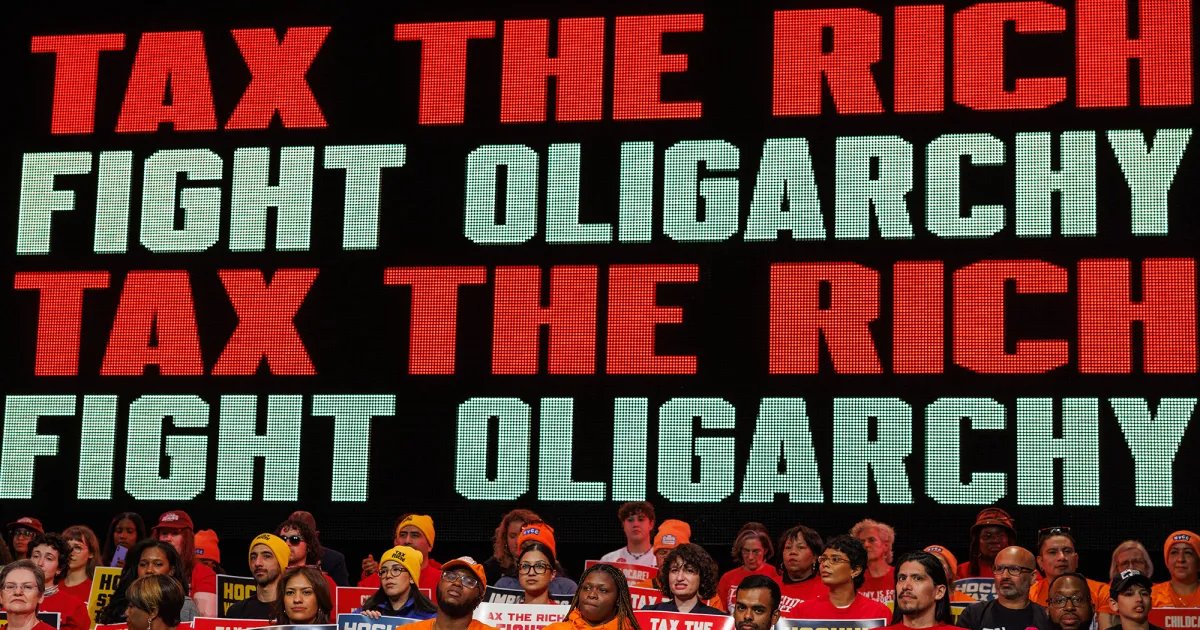
Each DSA and DSA-aligned legislator has pet priorities, but one policy key to their mission is increasing taxes on the wealthy and corporations to fund an expansion of social programs.
Earlier this year, Mamdani proposed boosting the corporate tax rate from 7.25 percent to 11.5 percent as well as adding an additional tax bracket for New York City residents earning more than $1 million in order to close the city’s steep budget shortfall. The DSA organized rallies in Albany to support this tax plan while both the state Senate and Assembly inserted higher tax rates in their one-house budget proposals.
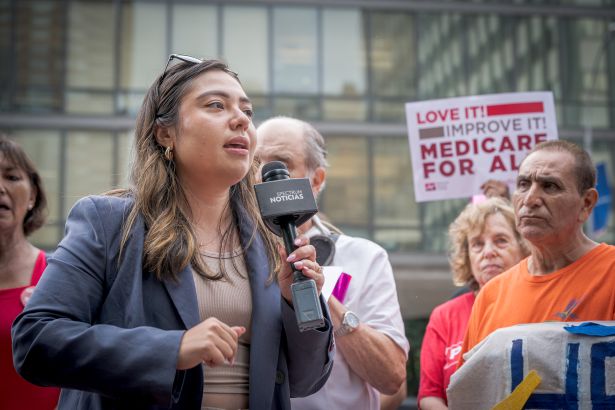
But the idea went nowhere in state budget negotiations due to Gov. Kathy Hochul’s opposition. Instead, she allowed a new pied-à-terre tax on New Yorkers’ second homes worth more than $5 million, a tax the Mamdani administration began to roll out this summer.
Now DSA legislators are regrouping. Brooklyn Assemblywoman Phara Souffrant Forrest — who introduced the Fair Share Act, which would impose a 2 percent surcharge on individuals earning more than $1 million — said she would make alterations to the scaling of tax brackets in the bill.
“We may make little changes in how we step up the taxes to 2 percent on the lower side of the brackets, so it’s not just a cliff,” she said.
But developers and lobbyists believe there will be little appetite for tax reforms next year, especially after the city’s muddled pied-à-terre notification that left thousands of homeowners scrambling to prove they lived primarily in New York City.
Steven Fulop, president of business group Partnership for New York City, cautioned that any move to increase taxes would be seen as punitive, since Wall Street’s strong performance helped close some of the state and city’s deficits.
“You should have a framework for a budget and a reason for doing a certain thing,” he said. “If New York considered a wealth tax similar to what California proposed, you’d see a mass exodus and it would ultimately lead to a larger challenge, because the budget is disproportionately carried by a small percentage of taxpayers.”
Most importantly, the governor remains skeptical of wealth taxes and retains significant control over the creation and passage of the budget. If Hochul is re-elected this year, lawmakers acknowledge she may continue to take an anti-tax stand without feeling any threat to her seat.
“The governor sees things very differently than the DSA cohort, but she sees how popular the movement is and how it’s spreading across the state,” Gallagher said. “Ultimately, she can do what she wants, that’s what she has done. We’re going to push for what we want and with a lot of aggression no matter what we think she wants.”
Instead, Democratic Socialist lawmakers may find common ground with the real estate community over some housing policies.
Many DSA candidates pledged to bring more affordable housing to their districts during their primary campaigns and supported Mamdani’s goal to build 700,000 new homes across the city over the next decade.
Lawmakers also expect to reintroduce a social housing bill that proposes creating a state-run authority that would issue tax-exempt bonds to finance the acquisition of land and construction of permanently affordable homes. And some want more state resources for repairs and equipment upgrades such as heat pumps for the city’s public housing complexes after the Trump administration sought to reduce the federal housing department’s budget.
Other proposals regulating retail rents and data center siting are expected to draw heated opposition from developers and the business community.
Gallagher and Brooklyn Sen. Julia Salazar are preparing to bring back a proposal that would create a nine-member board of mayoral appointees with the power to set rent increases for new commercial leases in the city and create a right to a 10-year lease renewal.
The commercial rent stabilization bill was first introduced in 2020, but Gallagher believes it has become more necessary after longtime small businesses have struggled with high inflation and competition from national chains. More than 15,000 city storefronts are currently empty and vacancies increased nearly 30 percent since 2020 while average rents fell by only 6.5 percent, according to a 2026 report from advocacy group Small Business United.
“There needs to be more attention paid to the differences between businesses raking in billions of dollars and controlled by private equity or major international interests and shareholders, and a local mom-and-pop shop,” Gallagher said. “Because real estate has become so much about maximizing profits, we’re seeing a lot of businesses then having to compete with insane rents.”
But business leaders warn that any intrusion into commercial landlords’ ability to set rents could threaten the vibrancy of retail corridors and their surrounding neighborhoods.
“We’ve seen significant fluctuation in retail rents over the last decade, but the idea that you want to lock in for perpetuity existing users is the antithesis of a growing city,” Jordan Barowitz, principal of Barowitz Advisory and a former executive at the Durst Organization. “If you disrupt that ebb and flow, you risk undermining New York’s formula of economic success.”
The fight over data centers could be even more explosive.
In July, Hochul enacted the first statewide moratorium on permits for larger new data centers and pledged to repeal sales tax exemptions for existing facilities across the state. A majority of New Yorkers support the one-year pause, but tech companies and unions representing building trades argue the industrial properties are significant for the advancement of artificial intelligence and computing capacity and the creation of high-paying construction jobs.
Socialist lawmakers like Sen. Gonzalez, who introduced legislation for a data center moratorium and recently went on a statewide tour of hyperscalers, want a longer pause on new projects because they say the state’s electric grid cannot handle their energy demands.
“If we acknowledge this energy crisis and that we’re on the brink of rolling blackouts, there is no way to bring on 30 new data center projects,” she said. “The solution can’t be building out more fossil fuel infrastructure.”